
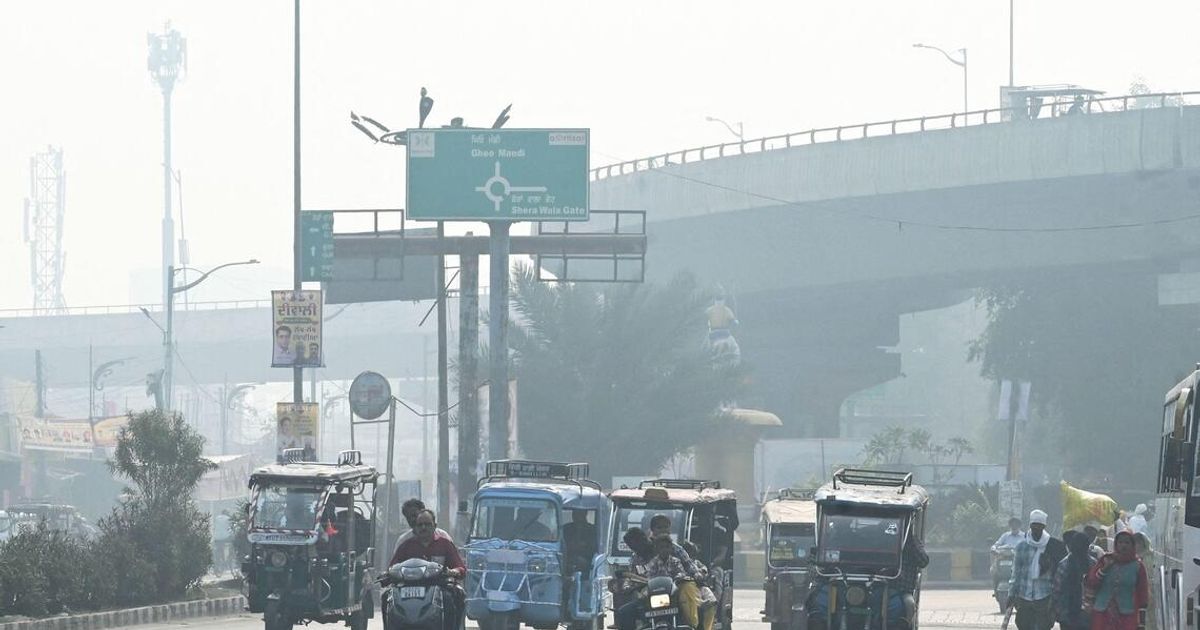
NEW DELHI – Each year, Diwali fireworks and crackers leave behind a familiar detritus of their burnt remains, along with a pall of smog that obscures our skies. But in recent years, their use has also led to a bitter public battle that continues to generate heat and fireworks long after the crackers have fizzled out.This year has been especially noisy. On one side are those who argue that letting off crackers during this festive season, which coincides with a recurring annual winter pollution peak across much of India, is suicide. Emissions from fireworks add to a worsening pollution load each year, and who in their right minds would want to add more to the toxic mix?I agree. Why saw the branch you are clinging to for dear life in the middle of a category 3 cyclone?Yet, on the other hand, there are those who defend the use of crackers in the name of religion, arguing they are intrinsic to Diwali, the festival of lights meant to celebrate Lord Rama’s return to Ayodhya after defeating the evil king, Ravana. If Christians can chop trees for Christmas and if Muslims can go on slaughtering animals for Eid, why can’t Hindus burst crackers on Diwali, they argue?Tell me, must we all compete in a race to ecocide?Between these two opposing camps in India today, crackers and fireworks – a source of joyous celebration in an ideal world – have become a deeply divisive topic as the country struggles to rein in its growing pollution crisis.Apocalyptic air quality readingsDelhi recorded its worst Diwali-eve air in a decade in 2026, and official data, often criticised for underreporting the crisis, revealed that Delhi’s average Air Quality Index (AQI) was 371 the day after Diwali, the worst post-festival reading in five years. Emissions from crackers and fireworks accounted for more than 80% of this pollution load.Any AQI reading between 301 and 400 is considered “very poor”, and anything between 400 and 500 is “severe”. Government AQI data readings are capped at 500, but other pollution monitoring sites reported local AQI readings as high as 3,000 in parts of Delhi after Diwali.Unfortunately, apocalyptic AQI readings are now brandished with pride and crackers are held up as symbols of a Hindu “awakening”. Battle lines are so entrenched, and logic so warped, that even people with “healthcare” and “climate action” on their social media profiles endorse the use of fireworks on Diwali.One such person posted a video selfie of a skyshot, an aerial firework, going up and leaving behind a generous trail of smoke, with the comment: “Contributed to the pollution without any guilt.” To which came a reproof from a user on the opposing side: “Never had the good fortune to see a dinosaur taking a selfie with a meteorite.”Others have dug deeper, claiming that fireworks were always used by Hindus on Diwali to guide the souls of dead ancestors back to their spiritual realm. According to some Hindu scriptures, the period preceding Diwali is a time when the gates of the afterlife open, allowing departed ancestors to visit their living descendants on earth.But they conveniently forget that Hinduism happens to be much older than fireworks – the former dates back more than 3,000 years, while firecrackers were invented in China only around the ninth century CE.And pray, why can’t traditional and beautiful earthen lamps guide our ancestors safely back to their realm? Why do we need to set off crackers?Even government rules go up in smoke in the name of religious practice. The Supreme Court’s order that only “green crackers” be burst during a narrow two-hour window on Diwali evening in Delhi and the wider National Capital Region was widely flouted. Neighbourhoods reported bursts well past midnight.The term “green crackers” also makes for a cracker of an oxymoron. It suggests they are not polluting when they are simply lower-emission items. It is also well known that normal polluting crackers are widely sold with this misleading label.Tackling firecrackers and other sources of pollutionAt times, fireworks cause more damage than just pollution. In Mumbai, which also struggles with a pollution crisis around Diwali, more than 200 firecracker-related incidents were reported in the city. This has prompted Mumbai and adjoining city Thane to ban the use of rockets and other aerial crackers till Nov 25.In an ironic twist this year, filmmaker Vivek Agnihotri, who has strongly defended the use of firecrackers during Diwali in the past, took to X to call errant rockets a “fire hazard” rather than a symbol of “cultural pride”.This came after one of them landed right on his balcony in Mumbai and set his sofa on fire. A massive online backlash ensued over his changed stance, forcing him to delete his post.Sure, I acknowledge firecrackers are a temporary polluting phenomenon, but their use is not limited to just one Diwali evening. They are used widely beginning on Dussehra – which usually falls three weeks before Diwali – till several days after the Festival of Lights, which some have now, alas, dubbed a “Festival of Smoke”.And certainly, cracking down on fireworks alone won't help. We have got to do much better at tackling other sources of year-round pollution, such as growing private vehicle use, industry and construction dust.Then there are other temporary sources that we have failed to take on, such as stubble burning by farmers and the use of biomass by the poor to keep themselves warm and cook their food.Raging against firecrackers alone is not going to make India win the battle against pollution, but their determined and wanton use amid a worsening pollution crisis makes light of a situation that ought to be treated as a public health emergency. Children and the elderly literally gasp on and around Diwali and doctors openly advise people to flee Delhi if they can.How can we expect the government to get its act together if the populace does not demand it?India’s leaders must rise above differences and urge the public to give up the use of crackers. Instead, they continue to be flippant about it, with Uttar Pradesh Chief Minister Yogi Adityanath telling an audience in Lucknow on Nov 11: “Some people are saying pollution has increased because of Diwali. So what if it has? It will subside as well.”And if people must have fireworks, why can’t city and other local authorities organise public fireworks displays on Diwali, limiting pollution? And meanwhile, also work to find other employment opportunities for workers in firework factories to ensure a just transition.It is time to salvage Diwali from the pollution nightmare it has become for many. After all, clean air will benefit everyone, irrespective of their political leanings. That is one thing, thankfully, all Indians can agree on.
Diwali firecrackers spark divide as India grapples with pollution crisis
Full Article
Original Source
Read the full article at Straitstimes →KhanList aggregates and links to publicly available news content. We do not host full articles from third-party sources. Always verify important information with original sources.