
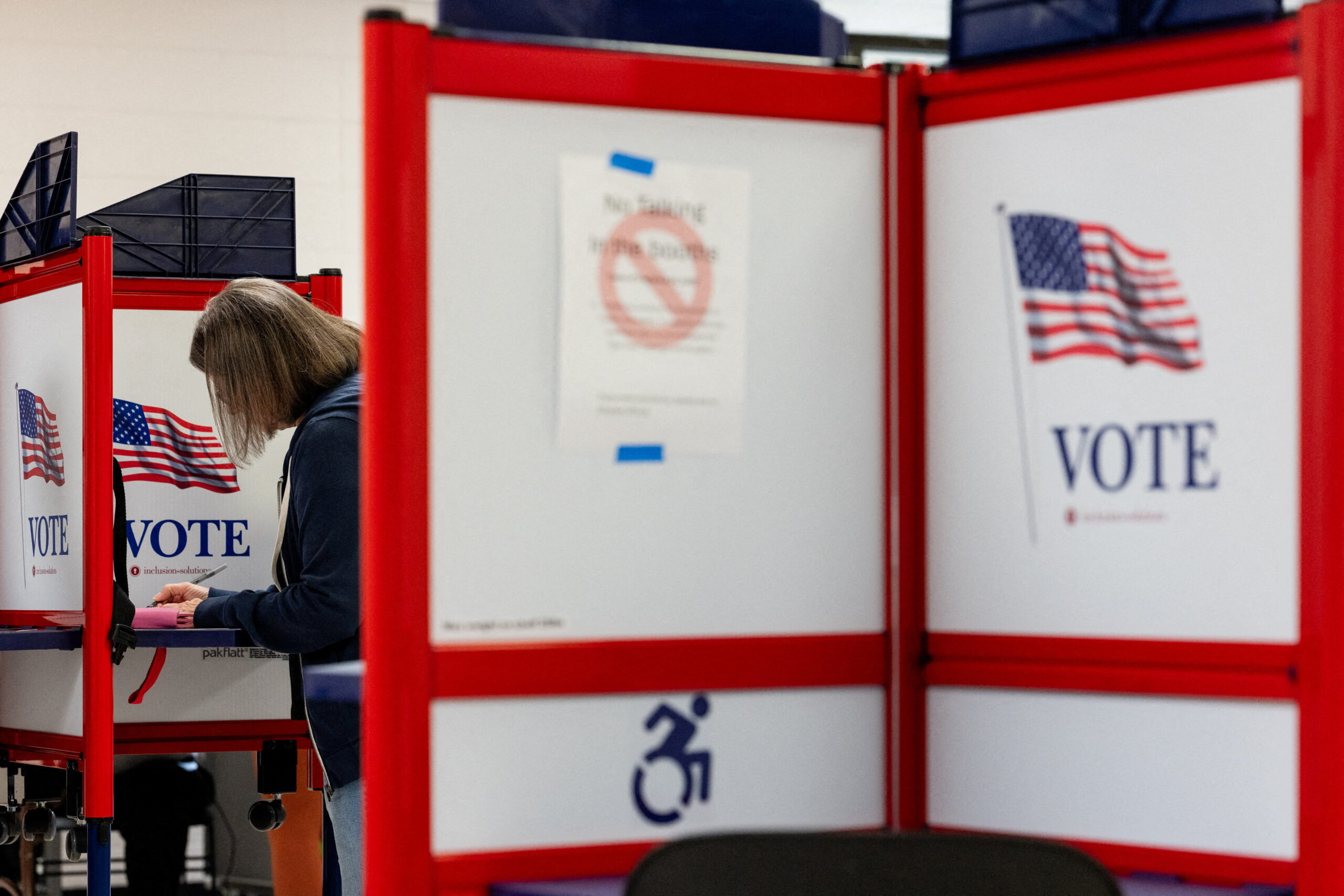
ABU DHABI—From the Gulf, the United States’ midterm elections look less like a domestic political contest than a referendum on President Donald Trump, the consequences of which will extend across nearly every border. A senior Emirati official said dryly to me that it is unfair that he and other US allies can’t vote, as the consequences will affect non-Americans almost everywhere. That’s particularly true here, where Gulf citizens are bracing for what they consider the possible resumption of attacks on Iran as the on-again, off-again war enters its ninth month. That would almost certainly result in renewed Iranian drone and missile attacks on Gulf targets. Americans may be voting on their rising cost of living, their president’s performance in office, and their country’s uncertain direction. Much of the rest of the world instead will be watching for clues as to how the world’s most powerful country will wield its power, support its allies, and counter its adversaries at a decisive and historic moment. Will the US sustain its international commitments—treaty and otherwise? How will Trump, who is focused on securing his legacy in his last two years in office, navigate wars in Europe and the Middle East, both of which are bleeding across borders? With artificial intelligence (AI) transforming economies and societies with unsettling speed, how will the Trump administration regulate the most powerful AI companies and work with partners to manage the technology’s global impact? And underlying each of those questions, what happens if growing US domestic divisions distract Washington as international dangers proliferate? The campaign’s global stakes Never in my lifetime have I encountered such intense international interest in non-presidential US elections. This past week, I found myself discussing with Emirati interlocutors the esoteric details of Senate races from Alaska to Michigan and from Maine to Texas. I was struck in these conversations by the intense focus on growing regional and global volatility, the genuine worries about the United States’ consistency of purpose, and the growing concerns regarding the impact of AI advances, many of which are emerging from the United States. What animates these discussions most is what my conversation partners consider the nature of Trump’s singular presidency, driven by his peripatetic and often unpredictable decision-making on matters from imposing tariffs to threatening noncompliant allies, and from removing Venezuela’s leader in a daring raid to launching a still-ongoing war on Iran that took out most of the country’s leadership and increased global energy prices. In a lively dinner this week with European energy business leaders, one said, to nods of agreement around the table: “It’s not surprising we take far more interest in these midterms than before because of the impact Trump has had on all of us, because we want to know how these elections will influence his behavior, and because we wonder most of all what comes next.” Allies and adversaries alike know these midterms are about far more than the balance of power in Washington. They will contribute to shaping the environment in which wars are fought, capital investments are made, alliances are tested, and the Intelligence Age takes form—with its generational consequences. The latest polls indicate that the Democrats are likely to capture the House and potentially the Senate. An electoral rebuke this week could check Trump in significant respects, particularly on domestic issues. But it also could drive him toward even more assertive actions through executive orders and regarding international affairs, where he enjoys more freedom of action. A Democratic House of Representatives would bring greater scrutiny of Trump’s actions, fiercer battles over spending, and sharper confrontations over the president’s use of executive authority. Add control of the Senate, and Democrats could more effectively block Trump’s judicial and administration appointments. Dangerously, Russian President Vladimir Putin and Chinese President Xi Jinping might wager that they have no better time than the next two years to seize regional opportunities with a president who has shown himself more willing to strike compromises with them than any recent predecessor or likely successor. Putin will further test Ukraine’s resilience through a difficult winter, and Xi may increase his military probes around Taiwan, responding to a president who has shown a willingness to provide compromises to both leaders. In Putin’s case, Trump has recently eased energy sanctions. With Xi, Trump has delayed weapons deliveries to Taiwan. Iran’s next moves Here in the Gulf, the consequences could be more immediate. Iran has responded cautiously but positively to US Vice President JD Vance’s letter proposing renewed negotiations, delivered through Qatari intermediaries to Mohsen Rezaei, the secretary of Iran’s Supreme National Security Council. Iranian officials have characterized the outreach as a constructive step, and diplomatic consultations have continued in Doha. But the prospect of an imminent agreement remains remote. Alex Plitsas, who spent much of his career in the Pentagon focused on the Middle East, has been following these developments. He tells me that US officials increasingly recognize divisions within Iran’s leadership, particularly between those pursuing a diplomatic settlement and hardliners within the security establishment who remain resistant to concessions. Those internal divisions, compounded by fundamental disagreements over sanctions relief, Iran’s nuclear program, and freedom of navigation through the Strait of Hormuz, make a near-term breakthrough difficult. Tehran may be willing to continue talking, but there is little evidence that its leadership has reached a consensus on the concessions necessary to secure a deal. The combination of Iranian internal divisions, stalled negotiations, escalating threats from both sides, and the restoration of robust US military capabilities in the region has produced a perilous environment. The period immediately following the US midterms may prove decisive. If the two sides can’t strike a deal, Iran will likely continue to execute a four-part asymmetric strategy designed to offset its overwhelming conventional military disadvantage against the United States, argues Plitsas, who is now with the Atlantic Council’s Scowcroft Middle East Security Initiative. First, it will try to increase US casualties to raise the domestic political costs of continued military operations. Second, it will renew strikes on its Gulf neighbors to compel them to pressure Trump to end the conflict. Third, Iran will continue its information operations in the United States, which Tehran increased in the runup to the midterm elections, in particular to divide Trump’s political base. Finally, Iran will try to increase economic pressure on the US and its partners through stepped-up attacks on shipping, with the intention of driving up the costs of energy and consumer products. The Iranian security establishment appears convinced that time is working in its favor, so it’s a fair bet that it will continue to use this playbook. Trump’s anticipated escalation Barring an unexpected Iranian decision to accept a negotiated settlement, the most likely scenario is that the US conducts a sustained series of strikes designed to substantially degrade Iran’s residual military capabilities and damage its energy infrastructure. At a campaign rally in Iowa on Sunday, Trump said that he has held back from striking Iran recently out of a desire to avoid causalities. “But at some point we’re going to have to give them the hammer,” he added. That characterization might suggest something beyond another limited punitive operation. US President Donald Trump looks on as he arrives to deliver remarks during a midterm campaign rally in Dubuque, Iowa, on November 1, 2026. (REUTERS/Vincent Alban) If Trump opts for a larger attack, he might aim to significantly degrade Iran’s remaining military capabilities, explains Plitsas. By destroying enough of Iran’s missile and drone infrastructure, he tells me, the administration could credibly argue that Tehran no longer poses an existential threat to Israel or an unacceptable threat to US forces in the region. Combined with the destruction or degradation of Iran’s remaining air force and navy, this could provide Trump with an opportunity to declare that the United States’ principal military objectives have been achieved. As for other targets in Iran, Plitsas says, the administration is likely looking to strike Pickaxe Mountain with the intention of sealing off the entrances to the underground nuclear facility there rather than attempting to destroy it completely. The United States could then continue to watch the site with satellites and, if Iran attempted to regain access, strike again. In this scenario, Trump could subsequently tell European, Gulf, and Asian governments, whose economies are heavily dependent on energy and commercial traffic through the Strait of Hormuz, that responsibility for securing the waterway now rests primarily with them. Gulf officials worry that would result in the de facto abandonment of the region as they aren’t sufficiently unified or capable to hold Iran in check. Depending on what the United States, Israel, or both target in any renewed military strikes, Iran may respond with significant attacks against US bases in the region and Gulf infrastructure including oil and gas facilities, which in turn could prompt a retaliatory cycle with Gulf states. “For the UAE, we are bracing for the worst, but we are counting on a breakthrough,” a senior Emirati official told me. “What we want is continued economic pressure to bring about a political outcome and not to go to war.” This official believes that six to eight more months of continued pressure will allow mediators to work and prompt reluctant Iranian interlocutors to provide necessary compromises over time, in particular regarding talks on the Iranian nuclear program. “That will require stamina,” the official said, which Trump might feel more ready for once he doesn’t have the midterms looming over him. But on that decision, of course, Trump gets the final vote.
Dispatch from Abu Dhabi: America votes—and the world holds its breath
Full Article
Original Source
Read the full article at Atlanticcouncil →KhanList aggregates and links to publicly available news content. We do not host full articles from third-party sources. Always verify important information with original sources.