
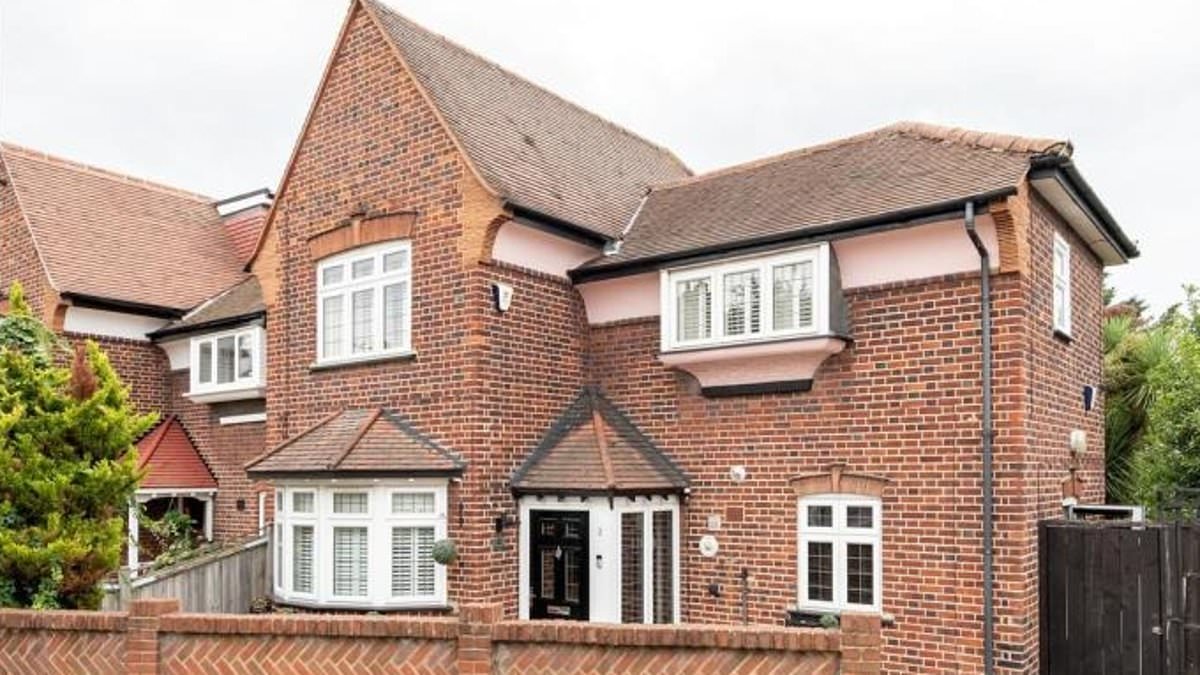
A 'dishonest' pensioner who claimed her house was 'unsaleable' after a series of sewage floods - despite selling it for £ 780,000 - has been ordered to pay back £225,000 she received in compensation.Karen Imber sued Thames Water after her home in Woodford Green, Essex, was struck with floods of sewage three times between 2006 and 2014.The 68-year-old said her £817,000 home was left worthless due to substantial damage from the flooding, and went on to settle her case for a £225,000 payout in 2023.Mrs Imber had already received £500,000 in an initial compensation claim after her home on Warley Road had been flooded with sewage water in 2006 and 2007. However, she has been hauled to court after Thames Water learned that her house was actually sold for £780,000 a month before she even agreed to the second payout.In a ruling at the High Court, a judge has now found that Mrs Imber has no prospect of defending a 'fraud' claim against her, ordering her to repay the £225,000 from her second claim.Deputy Master Alexandra Marzec also paved the way for Thames Water to pursue Mrs Imber for damages arising out of her 'fraudulent misrepresentation,' on top of the £225,000 bill.The judge said that 'ordinary decent people would plainly regard it as dishonest' for Mrs Imber to pocket a payout based on an allegedly 'unsaleable' house which had in fact been sold. Karen Imber sued Thames Water after her home in Woodford Green, Essex, (pictured) was struck with floods of sewage three times between 2006 and 2014 The 68-year-old said her £817,000 home was left worthless due to substantial damage from the flooding, and went on to settle her case for a £225,000 payout in 2023. Pictured: Inside the home which sold for £780,000 In a ruling at the High Court, a judge has now found that Mrs Imber has no prospect of defending a 'fraud' claim against her, ordering her to repay the £225,000 from her second claim. Pictured: Inside the home which sold for £780,000When her home was flooded again in 2014, she launched a second claim against Thames Water, with her experts saying that the property would have been worth £817,000 but for the flooding.However, the expert said he thought there would be 'no willing buyer' for the property given its chequered history, meaning its value had been wiped out.The case went to mediation in 2023, during which Mrs Imber stated she 'is trapped [in the property], as she cannot sell it in light of the repeat in 2014 of the serious flooding issues at the property.'She claimed the property was therefore 'unsaleable' and that her loss arising from the flooding was the total value of the house, plus other sums totalling £144,000 to mark increased insurance premiums and damages for distress and inconvenience.However, she went on to agree a settlement sum totalling £225,000 on September 6, 2023, which was paid to her a week later.'At the time the settlement agreement was concluded, Thames Water did not know that, before the mediation, the defendant had accepted an offer to buy the property for the sum of £780,000,' said the judge.The judge told the court that she had exchanged contracts on August 2 and completed the sale on August 3, 2023.'The sale price was about £37,000 below the market value given to the property by the defendant's expert on the hypothetical basis that no flooding had occurred,' the judge continued.'When Thames Water learned of these matters, it brought a claim against the defendant for fraudulent misrepresentation, seeking rescission of the settlement agreement, repayment of the settlement sum and/or damages.'In court, Thames Water lawyers argued that, although her claim that the property was 'unsaleable' was a statement of opinion, the statement implied that it had not been sold and there was no prospect of a sale.The statement was a 'continuing representation' in the course of negotiations and when it became untrue, Mrs Imber was under a duty to correct it and tell Thames Water about the offer, the company's barrister James Davies claimed.Urging the judge to grant a summary judgment against Mrs Imber, he said that, in the circumstances, she had 'no real prospect of defending a claim for fraudulent misrepresentation.'In her defence, Mrs Imber claimed that she had told the mediator of the offer, believed it had been communicated to Thames Water, and thought there was no further duty on her to say anything.Giving judgment, Deputy Master Marzec said: 'In my judgment, Thames Water will clearly succeed in establishing that, before the settlement agreement, the defendant made representations of fact...that became false and that the defendant had a duty to, but did not, correct.'Although the assertion that the house was 'unsaleable' was a matter of opinion, it implied that she had not sold it and there was no prospect of her doing so, she said.'The critical point is that, on her own case, she knew that by August 3, 2023, the property had been sold for £780,000 and that she was moving out of it,' she continued.'That was not some peripheral development in the background to the dispute. It represented a fundamental change in the factual basis upon which she had been advancing her claim, and indeed in her own life.'In the mediation statement she had asserted that she was 'trapped' in the property because it was 'unsaleable', and she sought damages for diminution in value on the footing that there was effectively no market for it.'By the time settlement negotiations continued in August 2023, she knew that she was no longer trapped in the property, that the property had in fact been sold, and that the central factual premise upon which her claim had been presented no longer reflected reality.'In my judgment, ordinary decent people would plainly regard it as dishonest to continue to pursue and to settle a legal claim based on the contention that a property was unsaleable after the property had in fact been sold, without informing the opposing party of that fact.'They would do so even if they knew that the defendant had previously disclosed an accepted offer, or that she did not appreciate that lawyers would regard her mediation statement as containing continuing representations.'Ordinary people would regard the completed sale as destroying the central basis on which the claim for diminution of value had been advanced.'She said there was 'no real prospect' of Thames Water failing to establish misrepresentation, the company's reliance on that in coming to the settlement, and dishonesty.'The defendant therefore has no real prospect of defending the claim. Summary judgment will be entered. 'The appropriate relief is rescission, and I will therefore rescind the settlement agreement and order that the defendant repay to the claimant the settlement amount.'She added that if Thames Water wants to pursue a damages payout against Mrs Imber, then the amount due would have to be assessed at a further hearing.
'Dishonest' homeowner who won £225,000 Thames Water payment claiming her house was 'unsellable' after floods must pay cash back because she'd sold it a month earlier for £780,000
Full Article
Original Source
Read the full article at Dailymail →KhanList aggregates and links to publicly available news content. We do not host full articles from third-party sources. Always verify important information with original sources.