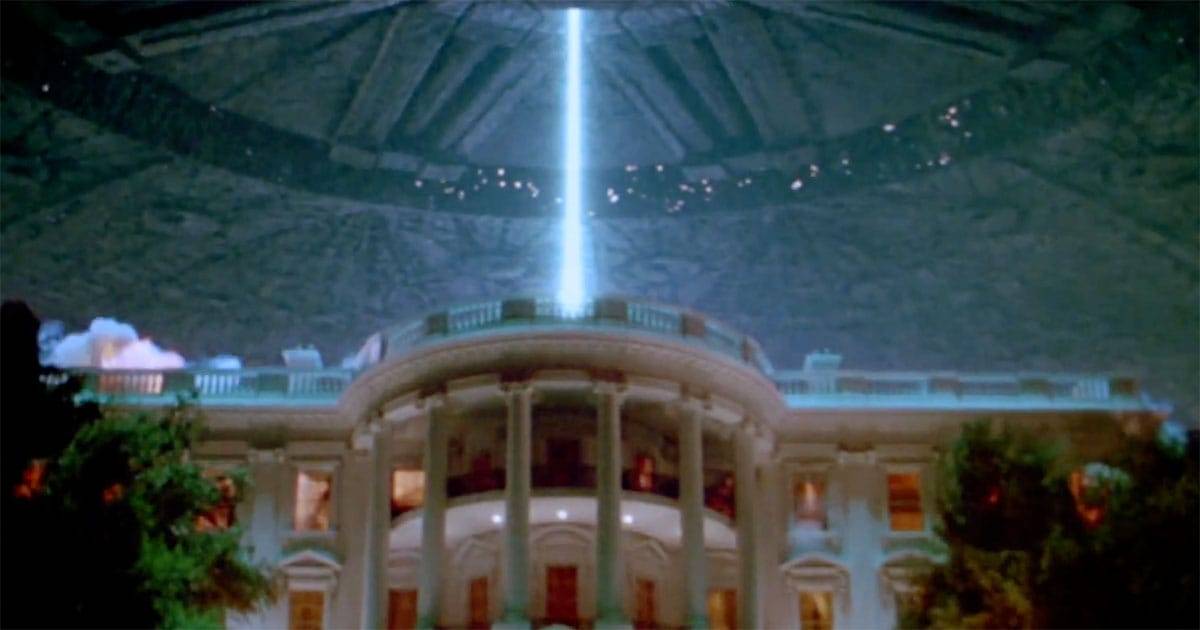
Published Jul 16, 2026, 11:03 PM EDT Bradley is an experienced and award winning journalist and all around entertainment fanatic. He is a passionate film and TV fan and long time attendee of San Diego Comic Con. One of the biggest blockbusters of 1996 and one of the most successful films of all time at the box office, Independence Day, directed by Roland Emmerich, told the story of an alien invasion of planet Earth, resulting in the mass destruction of several cities brought to life with realistic miniature effects, which won the film the Best Visual Effects Oscar. The now iconic image of a miles-wide flying saucer obliterating the White House was so powerful that it became the focal point for the film's marketing, intriguing many, which may have helped sell millions of tickets. However, in the decades since the film's release, many others have tried to copy that iconic film's formula, most notably, Emmerich himself, in films such as The Day After Tomorrow, 2012, and Moonfall, films which also showcased destruction on a global scale and a disparate cast of characters trying to survive. Unlike Independence Day, however, none of those films were well received critically. The main reason for this is that Emmerich and other disaster filmmakers seemed to miss what made Independence Day a success. 'Independence Day' has an out of this world cast. Image via 20th Century Studios Yes, the 1996 movie featured epic destruction sequences accomplished practically and on a massive scale for the time, but first and foremost, it focused on the people. A good film hangs its hat on whether or not the audience is invested in the cast of characters and Independence Day understands this. A good thirty minutes of the film's first act is dedicated to establishing multiple stories and characters, all of whom come together in the third act to fight back against the invading aliens. This makes the early scenes absolutely necessary to keep the viewers invested in what transpires later on and not just killing time for the next action sequence. The first act establishes numerous different storylines that, in any other film, would be enough to hold the audience's attention. There's David (Jeff Goldblum), a recently divorced environmentalist, Steve (Will Smith), a fighter pilot planning on proposing to his girlfriend (Vivica A. Fox), Russell (Randy Quaid), a drunken crackpot who claims to have been abducted by aliens long ago, not to mention the President of the United States (Bill Pullman), and his numerous chiefs of staff struggling to get ahead of the impending alien invasion. While at first seeming separate and distant, these storylines eventually all come crashing together, namely during the moment in which the alien ships all fire their powerful beams of destruction upon Washington DC, Los Angeles and New York City. This is what moviegoers responded to the most, and where Emmerich and company learned the wrong lesson- This moment, as impressive as it is, is not the core of the movie. It's not supposed to be a stand-up-and-cheer epic spectacle. It's a devastating blow that motivates our heroes to fight back. It's not all about the destruction. Image via 20th Century Studios The attacks on three major cities, wiping out the massive populations of each, is not something to celebrate, fictional or otherwise. The massive loss of life implied in this moment is sobering, even for the main characters in the film. Pullman's President Whitmore even reflects on this in one scene, saying, "A lot of people died today, most of them didn't have to." The aliens' mission on Earth is to exterminate mankind, plain and simple, as evidenced by an alien telling Whitmore what they want us to do in one word: "Die." While Emmerich understood that mass extermination of humans is no laughing matter in Independence Day, in his later films, that idea fell by the wayside. Emmerich's other disaster films were much more celebratory of showing major cities destroyed en masse. 2012 in particular seemed to revel in the global devastation presented, lingering on wide shots of the state of California sliding into the ocean. At no point do the characters, or even the filmmakers, stop to think that maybe this isn't epic, this is, well, a disaster that we shouldn't joke about. Although the odds of an alien invasion, a second Ice Age, or a Mayan apocalypse are low, anytime the mass deaths of millions, if not billions of innocent people is portrayed onscreen, that requires a sense of tact and respect. Take Steven Spielberg's War of the Worlds, for example. Regardless of public opinion on the film, it was effective in showing that aliens wiping out people in droves was a shocking tragedy and not an epic, pulse-pounding adventure. If there actually were aliens vaporizing people in the streets, nobody would be cheering. Emmerich fundamentally misunderstood why Independence Day mattered and simply took one element of his biggest hit and ran with it. As a result, his later work suffered and even came off as callous and cruel as he expected the world to cheer with delight as millions met their ends in droves. Disaster movies are expected to have massive casualties, but that doesn't mean filmmakers should bank on that as a selling point. Release Date July 3, 1996 Runtime 145 minutes Director Roland Emmerich Cast President Thomas J. Whitmore
Disaster Movies Learned the Wrong Lesson From 'Independence Day'
Full Article
Original Source
Read the full article at Collider →KhanList aggregates and links to publicly available news content. We do not host full articles from third-party sources. Always verify important information with original sources.