
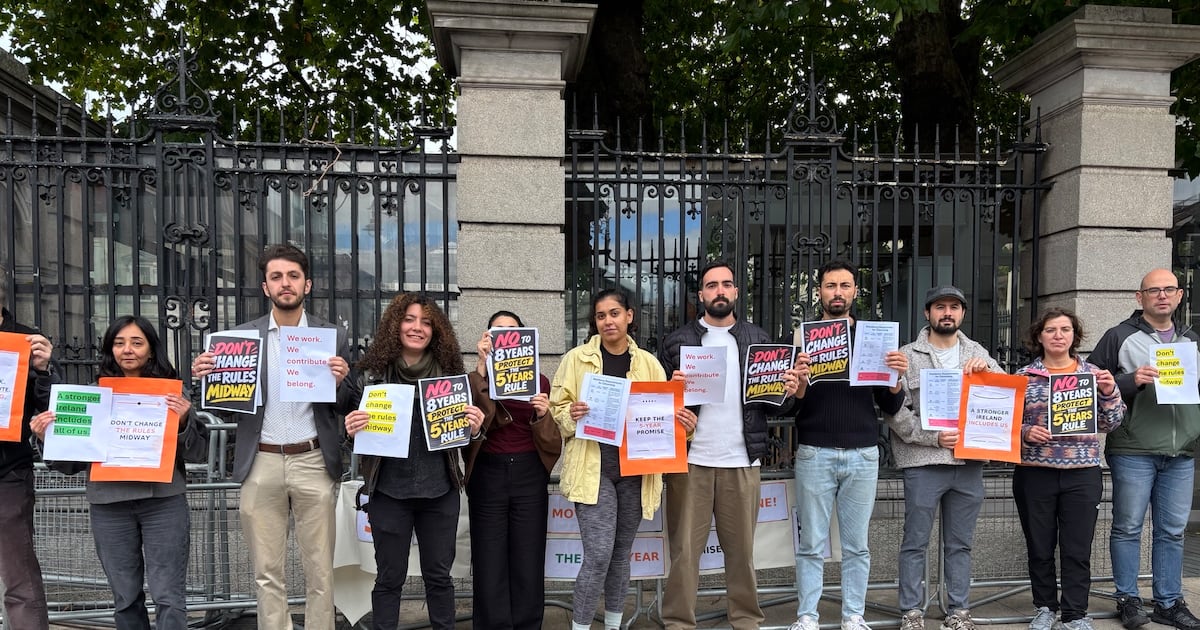
A protest took place outside Leinster House on Wednesday about proposed changes to the Irish citizenship process, which one protester said were “unfair”.The main proposed change is an increase to the time someone must be resident in Ireland before applying for citizenship. Currently, this stands at five years but will increase to eight years under the planned changes. Those seeking Irish citizenship through the naturalisation system will have to undertake language testing, be economically self-sufficient and demonstrate a knowledge and understanding of Irish civics, society and politics under the new proposal.On Wednesday, Minister for Justice Jim O’Callaghan and Minister of State for Migration Colm Brophy received Government approval for priority drafting of the legislation.READ MOREThe Department of Justice said the amendments “reflect the Government’s policy that Irish citizenship by naturalisation is an earned privilege and the culmination of sustained lawful residence, economic self-sufficiency, social integration, civic participation and compliance with immigration law, rather than merely the passage of time.”Bircan Guzel, originally from Turkey, came to Ireland four years ago to improve her English. Since then, the 30-year-old has worked full-time in Dublin.She will be eligible to apply for citizenship in 18 months’ time but under the proposed changes she may have to wait longer, which she said was “heartbreaking”.Guzel said those waiting to apply for citizenship were “disappointed” and “shocked”.She said the new proposal was “not necessary” and that the Government should be focused on issues such as accommodation and homelessness rather than citizenship.Guzel also said that if the time period is extended to eight years, it could take up to 10 years for applicants to receive citizenship as the “process is very slow”.Sana Diwan came to Ireland from India 12 years ago and was granted citizenship. Photograph: Katie Mellett Software engineer Sana Diwan obtained Irish citizenship a year or two ago, after coming to Ireland from India 12 years ago on a student visa.The 30-year-old said there were no “actual studies or anything for the changes that are being proposed ... I just want to know where is this coming from”.She said that “so many things have not been considered”, such as those with disabilities, caregivers or mothers.Furkan Dayi came to Ireland seven years ago to better his English. After getting through the Covid-19 pandemic, he said he would give staying in Ireland “a try” and found “good opportunities” in his area of work.The 32-year-old said he would be eligible to apply for citizenship next March and documents were ready for the application process.[ New rules for Irish citizenship: How will they work?Opens in new window ]The engineer said he felt “a little bit worried” by the proposed changes.In a statement, O’Callaghan said: “I want to be clear in saying that Ireland values the contribution migrants make to our economy, communities and public services. The proposed reforms are balanced, proportionate and necessary.”“The draft legislation will simultaneously strengthen the integrity of the naturalisation system and align Ireland more closely with processes in several other EU member states,” he said.
‘Disappointed and shocked’: Protesters criticise proposed new rules for Irish citizenship
Full Article
Original Source
Read the full article at Irishtimes →KhanList aggregates and links to publicly available news content. We do not host full articles from third-party sources. Always verify important information with original sources.