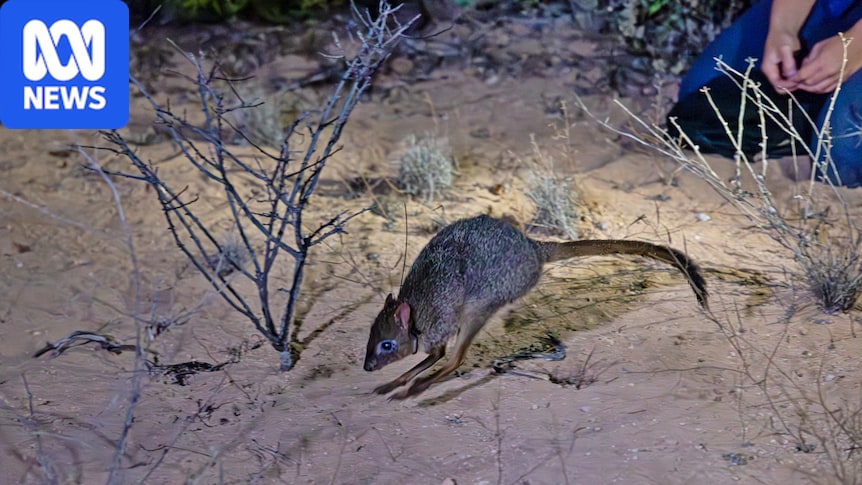
For the first time in more than a century, a pint-sized native marsupial is bouncing through the brush of a remote island off Australia's remote west coast.Dirk Hartog Island, or Wirrawunna, sits about 850 kilometres north of Perth in the renowned Shark Bay World Heritage Area.After years of damage by invasive species, the past decade has seen a slow but steady process of environmental repair.Bettongs, or "rat kangaroos", are the latest creature to benefit from that work.According to wildlife expert Rebecca Quah, they might not have without researchers getting their hands a little "dirty"."There's so much you can do with poop," she said."You just gotta get in there."The tiny marsupials are part of a series of reintroductions on the WA island. (Supplied: DBCA)A new study, published in the journal Ecology and Evolution, has shone a light on the complex and often unglamorous tasks faced by scientists when translocating species from one place to another.In the case of the mouse-like bettong, the job quite literally began from the ground up.Ms Quah analysed the fungal contents of bettong faeces to determine if the animal's former home was fit for habitation.While not for the squeamish, their findings have fed a tangible conservation outcome: guiding one of the final animal reintroductions in an ambitious effort to restore WA's largest island to pre-colonial times.Return of the 'rat kangaroo'Bettongs were once widespread in Australia before being hunted to the brink of extinction by invasive predators.The boodie, or burrowing bettong, gets its name from Noongar language. (Supplied: Rebecca Quah)Feral cats and European foxes preyed upon the nocturnal foragers and decimated their numbers across the country's desert landscapes."They are very sweet animals," said Ms Quah, a PhD student at Edith Cowan University."They're [like] a really small kangaroo; [a] hoppy macropod sort of animal."That's how they got their nickname, rat kangaroo."Today, bettongs live under the close eye of conservationists and mostly in fenced-off sanctuaries.In 2025, WA's Department of Biodiversity, Conservation and Attractions (DBCA) set about reintroducing one type of bettong, an endangered, brushtail variety called a woylie, to Dirk Hartog Island.Feral animals have largely been eliminated from the national park off Shark Bay as part of the Return to 1616 project.The Return to 1616 project seeks to restore Dirk Hartog Island's pre-colonial ecosystem. (Supplied: Samille Mitchell, DBCA)The DBCA initiative hopes to wind back the ecological clock at the erstwhile pastoral station to the moment Dutch explorer Dirk Hartog set foot on its shores.Bettongs round out a long list of native fauna in the program, but park managers first had to be sure there was enough food to support a new population.Mushrooms on the menuFeral goats ravaged much of Dirk Hartog Island's native vegetation, so meeting the bettongs' dietary requirements was far from guaranteed."Firstly, I had to decipher what sort of fungi the bettongs were eating … and specifically I was looking through their poop," Ms Quah said."Poop is so useful for understanding so much about animals, not just their diets. You can do so much with it, like studying hormones, stress levels, reproduction."Rebecca Quah in the field. (Supplied)By scrutinising the scat left behind by mainland bettongs, Ms Quah could paint a clear picture of what they ate.She crafted the menu down to the molecule and extracted fungal DNA from samples gathered in WA and the Northern Territory These produced a "meta-barcode", or a fingerprint-like impression of DNA sequences in the waste, for easy comparison with soil taken from Dirk Hartog Island."The results were really encouraging actually," Ms Quah said."Dirk Hartog Island is home to 75 different types of fungi that produce those larger, more visible fruiting bodies that animals are likely to go for."More importantly, approximately 50 per cent of those fungi that boodies and woylies eat are also present on the island."Island brought back to lifeEarly monitoring of the reintroduced woylies has been encouraging.DBCA plans for a group of boodies, woylies' burrowing bettong relatives, to join them in the springtime."[Ms Quah's] work has been really crucial in helping understand how the two bettong species coexist at other sites," Return to 1616 senior project officer Colleen Sims said."There's going to be a good food source and a good variety of foods … that both these bettongs will be able to turn to."Early signs suggest the woylies are eating and breeding well on Dirk Hartog Island. (Supplied: Ian Wheeler, DBCA)The boodies are the penultimate species slated for Dirk Hartog Island, a decade after the Return to 1616 project began.Dr Sims said a native mammal predator would be brought to the island in the next five years to cap off the restored ecosystem.But positive changes were already taking hold."You can see those animals around, you can see the digging and the changes that they shift in the soil and the effect they have on the vegetation," Dr Sims said."It's really bringing the island to life."For Ms Quah, even a small part in the project affirmed her many hours of research."To see these animals living and thriving in a place that they used to be, that's very special," she said,
'Dirty' work helps to bring tiny 'rat kangaroos' back to remote island
Full Article
Original Source
Read the full article at Abc →KhanList aggregates and links to publicly available news content. We do not host full articles from third-party sources. Always verify important information with original sources.