
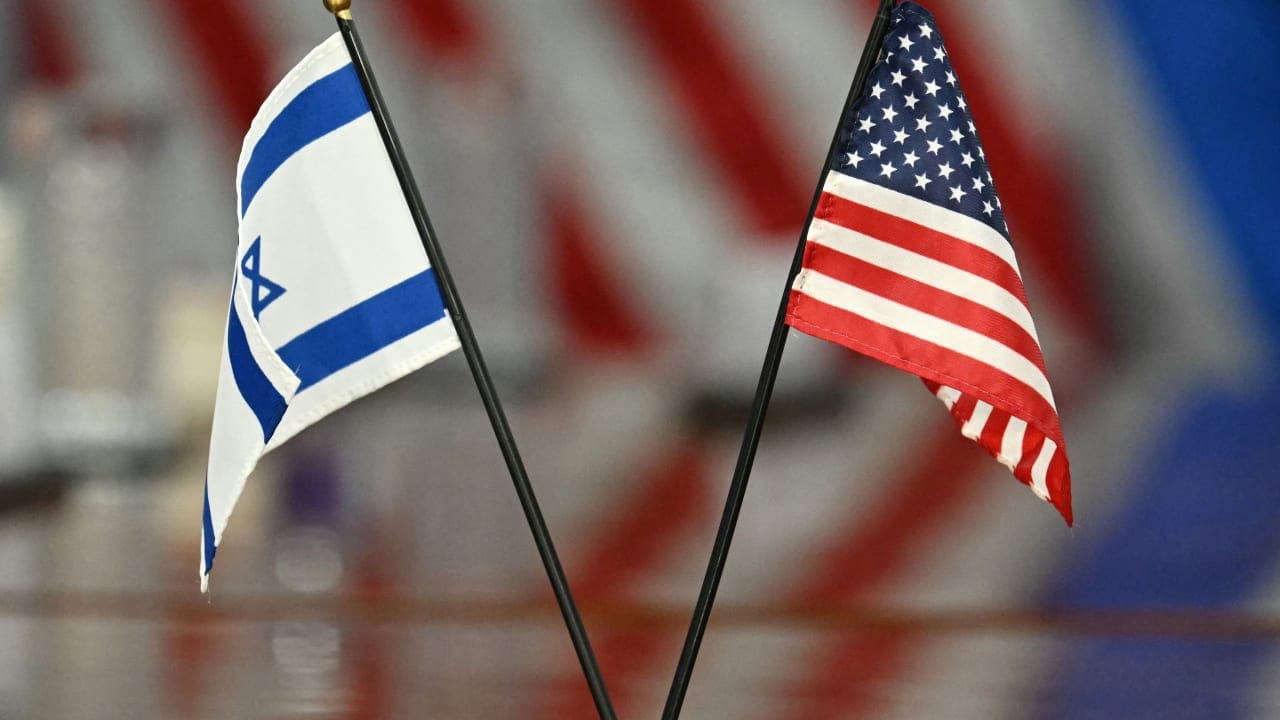
Israel's next prime minister will have little time to settle into office before confronting a series of interconnected foreign policy challenges, including relations with the United States, European pressure over West Bank settlements, Israel's international standing, and the need to formulate policy on Iran and the Palestinian arena.Above all, the next government will face a central political dilemma: how to conduct foreign policy under mounting international pressure when diplomatic compromises could trigger crises within the governing coalition.US-Israel relations face new challenges after midterm electionsThe most significant challenge will be in Washington. US President Donald Trump will remain in the White House, but the November 3, 2026, midterm elections, held one week ago, have reshaped the political landscape ahead of the new Congress taking office in January 2027.Democrats have secured control of both chambers of Congress, according to election projections, creating new constraints on the administration's ability to advance its agenda in the House of Representatives and Senate. At the same time, growing criticism of Israel among parts of the Democratic Party threatens to complicate Jerusalem's relationship with the American political establishment.For decades, Israel relied on broad bipartisan support in Washington, allowing it to maintain military assistance and strategic cooperation even during periods of diplomatic disagreement between the two countries. In recent years, that consensus has weakened, particularly over the war in Gaza, Israeli policy in the West Bank, and settlement activity.The US Capitol building, during the US midterm elections, in Washington, DC, US, November 3, 2026. (credit: REUTERS/UMIT BEKTAS)The shift has already been reflected in initiatives to restrict arms sales to Israel, demands for tighter oversight of American weapons and proposals to impose sanctions on individuals involved in settlement activity.Although some of these initiatives were introduced as legislative proposals and never became binding policy, their advancement in Congress reflects declining support for Israel among some Democratic lawmakers. Political criticism could eventually lead to conditions on military assistance, delays in arms transactions, or increased scrutiny of how American military equipment is used.Congress has considerable authority to influence the president's foreign policy through budget approvals, oversight of arms sales, congressional hearings and requests for testimony from senior administration officials.Relying exclusively on ties with Trump could therefore prove to be a mistake. The next prime minister and foreign minister will need to preserve their close relationship with the president while rebuilding communication channels with Democratic Party leaders.Aligning too closely with one party risks deepening alienation from the other. Policy decisions made in Jerusalem to improve relations with Democrats could also face opposition from the Republican administration or Israeli coalition partners, depending on the composition of the next government.Israel's $38 billion US military aid agreement expires in 2028Another strategic issue is the future of the multiyear US-Israel military assistance agreement, signed in 2016 and worth $38 billion over a decade, which expires at the end of fiscal year 2028.The next government will have to prepare for a successor agreement at a time when American assistance to Israel is becoming increasingly controversial in US politics.The current agreement provides $33 billion in military financing and $5 billion for missile defense programs over 10 years, subject to congressional appropriations. The arrangement is central to Israel's ability to secure its long-term defense requirements and avoid restrictive conditions being attached to future assistance.Negotiations over the next agreement will also address continued cooperation on missile defense development, Israel's ability to acquire advanced munitions and the preservation of its qualitative military edge in the region.Growing willingness among some American lawmakers to condition arms sales on Israeli policies could make it harder for Jerusalem to maintain defense arrangements that were once considered almost automatic.The next US presidential election is scheduled for November 2028, two years from now, and Democratic candidates may adopt increasingly critical positions toward Israel.Alongside managing relations with the Trump administration, the next Israeli government will need to prepare for the possibility of a significant shift in American policy when the next president takes office in January 2029.European pressure over West Bank settlements threatens economic tiesIn Europe, the next government is expected to face a different set of pressures, primarily concerning settlement activity in the West Bank.Construction in settlements, the legalization of outposts and settler violence have become central issues in Israel's relations with European countries. Beyond diplomatic condemnations, several governments have taken measures against individuals and organizations linked to violence in the West Bank.Britain has imposed sanctions on settlers and organizations involved in violence, while the European Union has also adopted measures targeting individuals implicated in attacks against Palestinians.The concern in Jerusalem is that such measures could expand beyond specific individuals and organizations, potentially affecting trade, research and institutional cooperation with Europe.EU member states remain divided over how to respond to Israeli policy. Some advocate a tougher approach toward settlement activity, while others oppose sweeping measures against Israel.The Foreign Ministry will need to engage European governments individually and make use of disagreements among member states to prevent the emergence of a unified position that could enable far-reaching action against Israel.Sanctions under the EU's Common Foreign and Security Policy generally require unanimous approval, although other measures follow different decision-making procedures.The European Union is one of Israel's most important trading partners, with relations extending to economic agreements, scientific cooperation and research and technology programs.A worsening diplomatic confrontation could also affect these areas. Since major European decisions are subject to institutional procedures and, in some cases, the approval of member states, Israel's diplomatic efforts will need to focus on both EU institutions in Brussels and national governments across Europe.EU association agreement and Horizon Europe face potential risksParticular sensitivity surrounds the EU-Israel Association Agreement, which provides a central framework for economic and political relations between the two sides.Damage to the agreement, or the suspension of certain benefits under it, could carry significant economic and diplomatic consequences.Research and innovation partnerships, particularly the Horizon Europe program, are also strategic assets that Israel will need to protect.Suspending benefits under the Association Agreement and restricting Israeli participation in European research programs involve different legal frameworks and decision-making procedures, and their economic consequences are not identical.If such measures advance, the government will need to work with EU institutions and member states to block their approval or limit their scope.The next prime minister will also have to decide how to approach settlement construction, the legalization of outposts and law enforcement against settler violence, while assessing the diplomatic costs of those decisions.The foreign minister will lead the diplomatic effort in Brussels and European capitals, seeking to prevent further measures against Israel and preserve existing cooperation.Coalition disputes could restrict Israeli diplomatic flexibilityThese decisions could place the prime minister in direct confrontation with coalition partners.Restricting settlement construction or refraining from unilateral measures in the West Bank could help reduce international pressure, but such moves may face opposition within the government.Conversely, agreeing to demands for settlement expansion could intensify disputes with Europe and undermine efforts to restore relations with the United States.Coalition partners opposing government decisions could exert pressure by objecting during cabinet meetings, delaying legislation, voting against proposals in the Knesset, or threatening a coalition crisis.Disagreements over settlement policy could also disrupt government activity in unrelated areas.The challenge would become particularly acute if international demands involved changing existing Israeli policy.Freezing construction projects, increasing enforcement against unauthorized outposts or taking steps to strengthen the Palestinian Authority could be viewed internationally as necessary diplomatic gestures but provoke fundamental disagreements within the coalition.Even after adopting such decisions, the prime minister would need to ensure that coalition partners allow their implementation.The more the coalition's parliamentary majority depends on parties opposing concessions in the Palestinian arena, the narrower the prime minister's room for maneuver will become in efforts to ease international pressure.Israel's international standing faces pressure from Gaza war, legal proceedingsCompounding these challenges is the continuing crisis surrounding Israel's international image.The war in Gaza, civilian casualties and international legal proceedings have intensified criticism of Israel among Western governments and international institutions.The Foreign Ministry will need to contend with critical governments and public opinion, boycott campaigns and initiatives to restrict cooperation with Israeli institutions.Proceedings at the International Criminal Court (ICC) in The Hague and cases before the International Court of Justice (ICJ) also shape the diplomatic environment in which Israel operates, although the two courts have different jurisdictions and legal consequences.The ICC deals with the criminal responsibility of individuals, while the ICJ adjudicates legal disputes between states and considers legal questions referred to it.The next government will need to coordinate efforts among the Prime Minister's Office (PMO), the Foreign Ministry, and the Justice Ministry to address the implications of these proceedings for Israel's international standing, visits by senior officials, and relations with countries committed to international judicial institutions.Public diplomacy efforts alone will not be sufficient to improve Israel's image. Much will depend on government decisions and developments on the ground.The foreign minister will need to strengthen Israel's diplomatic missions, restore damaged relationships and engage with political and public opinion leaders.Gaza's future, Palestinian policy will test Israel's relations with WestThe Palestinian issue will continue to weigh heavily on Israel's relations with Western countries.European governments will demand that Israel present a political horizon, while the next government will have to determine its policy toward the Palestinian Authority and its position on the future of the Gaza Strip.Questions concerning civilian governance in Gaza, security arrangements, reconstruction and the involvement of Arab states will require close coordination with Washington, alongside independent decisions in Jerusalem.A central dispute is likely to emerge over Israel's desire to preserve freedom of military action in Gaza while countries involved in discussions over the territory's future seek to establish a stable civilian administration.Any future arrangement will have to address Hamas's status, the responsibility of Palestinian institutions for governing Gaza, the involvement of Arab countries and mechanisms for monitoring reconstruction funds.Each alternative would carry security, diplomatic, or political costs for the prime minister, and potentially all three.Relations with Arab countries will also be heavily influenced by developments in the Palestinian arena.The possibility of expanding normalization agreements, particularly a future agreement with Saudi Arabia, could depend on Israel's willingness to present diplomatic measures that would allow regional governments to justify closer relations with Jerusalem.The prime minister and foreign minister will need to consider how to preserve the achievements of normalization and advance regional cooperation without accepting commitments that conflict with government policy.Iran nuclear program, intelligence coordination present strategic challengesAt the same time, the next prime minister will need to confront the Iranian threat and oversee the intelligence agencies operating under the government's authority.The Mossad will continue to play a central role in monitoring Iran's nuclear program, countering threats beyond Israel's borders and maintaining covert relationships with foreign intelligence services.The Shin Bet (Israel Security Agency) will address terrorism threats and security challenges in Israel and the Palestinian arena.The prime minister will need to build trust with the heads of these organizations, ensure the independence of their professional assessments, and strengthen coordination through the National Security Council.The Iranian nuclear issue will also require direct diplomatic decisions involving Washington.If the American administration chooses to pursue a diplomatic agreement over Iran's nuclear program, Israel will need to determine which restrictions and verification mechanisms it demands, how to address Iran's missile program and what freedom of action it seeks to preserve in the event of violations.Disagreements between Jerusalem and Washington on these issues could affect intelligence cooperation, security coordination and Israel's ability to mobilize international support for measures against Iran.Iran's activities through armed groups across the region will also require the government to combine security responses, coordinate with the United States, and engage diplomatically with regional countries.Beyond establishing the priorities of Israel's intelligence agencies, the prime minister will need to ensure that intelligence and professional assessments reach decision-makers without political interference.Effective coordination among the Mossad, Shin Bet, IDF, and National Security Council will be essential.The prime minister will also have to define the boundaries of responsibility and oversight governing these organizations.Managing this complex security establishment will require preserving its professional independence and preventing institutional disputes from disrupting decision-making.Foreign Ministry must secure role in Israeli policy decisionsThe next foreign minister will also face questions concerning the Foreign Ministry's standing within the government.In a system where many major diplomatic decisions are made through the PMO, National Security Council and security channels, the foreign minister will need to ensure that the ministry participates in shaping policy rather than merely presenting decisions after they have been made.Doing so will require a coordinated diplomatic network capable of identifying initiatives against Israel before they develop into formal decisions.The ministry will also need to maintain regular contact with lawmakers and opinion leaders while presenting clear diplomatic positions.Without full participation in the decision-making process, even an extensive diplomatic effort could be reduced to limiting the consequences of policies formulated without the ministry's involvement.Coalition stability could determine Israel's foreign policy directionUltimately, Israel's next prime minister will have to choose between interests that cannot always be reconciled.Israel will need American support, cooperation with Europe and freedom of military action against regional threats.Decisions that benefit Israel in one arena could create difficulties in another.The most difficult political test will come when a measure intended to secure continued American military assistance, prevent damage to relations with Europe or advance an arrangement in the Palestinian arena faces opposition from within the government.At that point, the prime minister will have to decide how far to risk the stability of the coalition to advance policies considered necessary for Israel's security and international standing.
Diplomatic challenges from US, Europe, Iran, await Israel's next prime minister - analysis
Full Article
Original Source
Read the full article at Jpost →KhanList aggregates and links to publicly available news content. We do not host full articles from third-party sources. Always verify important information with original sources.