
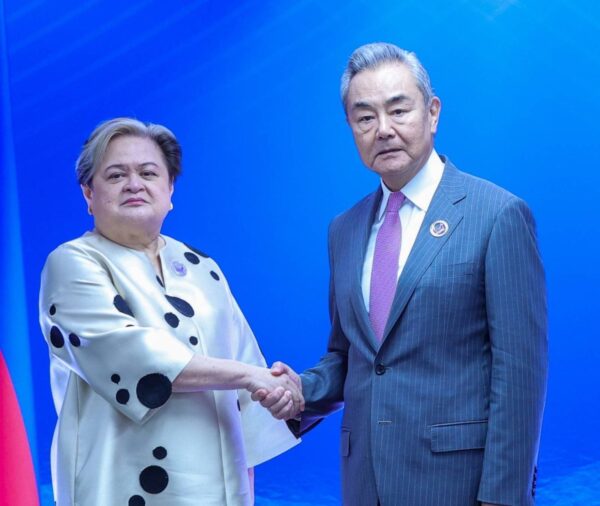
Philippine Foreign Affairs Secretary Ma. Theresa Lazaro announced on the last day of the 49th Summit of the Association of Southeast Asian Nations (ASEAN) that provisional agreements have been reached with China on more than 80 percent of the text of the region’s draft Code of Conduct in the South China Sea, or COC. This means the Philippines ended its ASEAN chairmanship without finalizing the COC, which was designed to peacefully handle maritime differences. But Lazaro was not just presiding over the COC negotiations and assisting President Ferdinand Marcos Jr. in overseeing the ASEAN summit preparations. She also had to contend with serious criticisms about her work. No less than the country’s ombudsman accused the Department of Foreign Affairs (DFA) of turning visa issuance in China into a business. The DFA denied this and called out the ombudsman for undermining its institutional integrity and maligning the reputation of foreign service personnel. Meanwhile, human rights groups strongly denounced Lazaro’s recent high-profile visit to Myanmar to distribute aid in cooperation with junta-appointed agencies, and called it a legitimization of war criminals under the guise of humanitarian diplomacy. But it was the escalatory war of words between some Philippine defense officials and the Chinese embassy in Manila over maritime disputes that grabbed headlines for weeks and forced Lazaro to intervene several times and remind Chinese diplomats not to erode mutual trust and confidence between the two countries. The tension worsened to the point that it alarmed business and sectoral groups which released a public statement calling for de-escalation and the avoidance of “inflammatory rhetoric” that could further strain bilateral relations, including the promotion and protection of livelihoods and stable economic exchanges. The DFA publicly endorsed the call and issued a separate statement about the “essence of statecraft,” and the supremacy of diplomacy in dealing with matters involving other countries. It did not mention names or offices, but the statement was clearly referring to defense officials who have been actively denouncing China’s narratives and actions related to the West Philippine Sea. It asserted that civilian authorities should direct the country’s international relations and the importance of having a united stand. “In high-stakes diplomacy, a disciplined and coherent national voice remains essential to advancing our national interests,” it stated. It highlighted that transparency is a tool but one that cannot substitute for strategy or statecraft. And it made sure that this point was clearly directed at the Philippine Coast Guard and other defense officials who have been regularly providing the public and the world with video evidence of China’s illegal activities in the country’s maritime territories. “Releasing footage or shaping an online narrative does not, by itself, act as a physical deterrent at sea or a legal strategy,” the DFA said. It added that the 2016 South China Sea Arbitral Award “was secured through rigorous legal proceedings under international law, not through public messaging or social media.” It is mainly through diplomacy that the country negotiates disputes and formal protests. The DFA clarified that diplomatic engagement is not appeasement. “There are moments when public disclosure serves strategic purposes, and moments when discretion, restraint, and quiet engagement produce better results,” the DFA emphasized. No defense official contradicted the DFA statement. But some political parties questioned why the DFA is reprimanding officials who have been exposing China’s illegal actions and harassment of fisherfolk. They expressed concern that aside from directing everyone to censor their views on the issue, the DFA’s stance appears to serve the interests of Beijing. President Marcos’ spokesperson supported the DFA statement and called for unity ahead of the ASEAN Summit. At the same time, the official acknowledged that the statements and actions of defense officials are in line with their official duties. What the DFA statement revealed was the internal differences in the Cabinet on adopting the best approach in addressing the rising tension with China. The country’s hosting duties for the ASEAN summit provided the DFA with the opportunity to aggressively put forward its views on the matter and receive the president’s backing. Now that the summit has ended and the facilitation of the COC negotiations has been handed over to another ASEAN member state (Singapore), will the DFA retain the lead in promoting government discourse on issues involving China and the West Philippine Sea? Or will defense officials resume their active media engagement on China’s provocative maritime buildup and the necessity of strengthening military alliances, mainly with the United States and its allies, to serve as a deterrent? If it finds itself sidelined by competing factions, the DFA should enjoin stakeholders to build a broader consensus on the value of making diplomacy work at all costs. More importantly, a citizen-led movement should amplify the call about what it really means to pursue an independent foreign policy.
Diplomacy or Transparency? Philippine Officials Consider Approach Amid Rising China Tension
Full Article
Original Source
Read the full article at Thediplomat →KhanList aggregates and links to publicly available news content. We do not host full articles from third-party sources. Always verify important information with original sources.