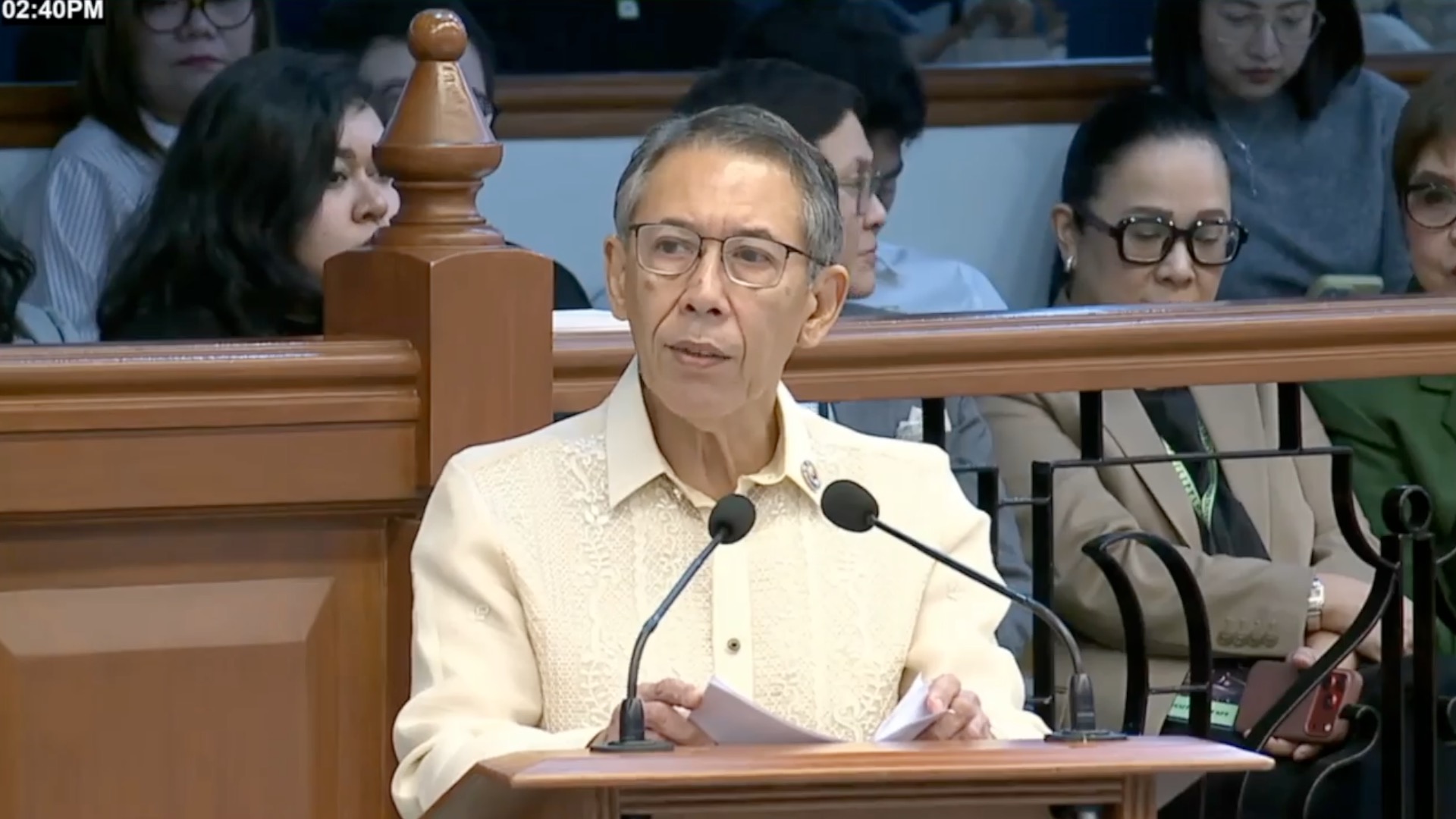
Rep. Chel Diokno, a member of the House prosecution. FILE PHOTO MANILA, Philippines — The Senate Impeachment Court’s decision to grant the prosecution’s request for a subpoena on some of Vice President Sara Duterte’s financial documents is a victory for the Filipino people, Akbayan party-list Rep. Chel Diokno said on Monday. In an exclusive interview with INQUIRER after the seventh day of Duterte’s trial, Diokno — a House of Representatives prosecutor who represented the panel during the oral arguments on the subpoena bid — said that the court’s decision is a “well-reasoned ruling.” READ: Impeachment court grants subpoena for Duterte’s financial records Article continues after this advertisement “Well first of all, I believe it is a very well-reasoned ruling by the impeachment court, and this is a victory for the Filipino people,” Diokno said in Filipino. “What we just want is for us to know the whole truth, and this is the reason why we requested for a subpoena,” he added. Diokno’s fellow public prosecutor, Mamamayang Liberal party-list Rep. Leila de Lima, said that the victory is not about whether the ruling favors the prosecution or the defense panel, but a win for the people who will get a chance to see Duterte’s financial documents which may be used in pursuit of accountability. Likewise, de Lima said the Impeachment Court was victorious because it did not allow itself to be restricted by the provisions raised by the defense panel. “So this is a victory for the truth, victory for accountability, and this is not only about […] these discussions are not about a victory of the prosecution or the defense, this is also a victory for the Impeachment Court because we are seeing here that the Impeachment Court is upholding its constitutional authority,” de Lima said in Filipino in a press briefing after the trial adjourned our Tuesday. Article continues after this advertisement “They did not allow themselves to be constricted, it was not weakened by supposed confidentiality provisions of certain laws, a few laws like the National Internal Revenue Code and the AMLA (Anti-Money Laundering Act), especially Section 8-A,” she added. Diokno clarified however that while he views the subpoena as a win, the battle is not yet over as the prosecution has to ensure that they will be able to push for the subpoenaed documents’ admission as evidence, so that they can present it before the court. Article continues after this advertisement “What was approved today is the issuance of a subpoena. And a subpoena is a directive from the Impeachment Court to bring the documents stored within an office. But we are not yet at the point of deciding whether the evidence is admissible,” Diokno said. “Once those documents are with the impeachment court, and if we will field that for the trial proper, that is the only time that we will know if this will be admitted as evidence or not. So, first of all, we take this one step at a time […] and our job, the challenge for us is to figure out how this can best be presented to the court to ensure its admissibility,” he added. During the latter part of the trial on Monday, the Senate Impeachment Court granted the House prosecution panel’s request to subpoena Duterte’s financial records, along with that of her husband, lawyer Manases Carpio. Presiding Officer and Senator-judge Francis Escudero read the ruling, where the Senate Impeachment Court allowed the subpoena, save for a few companies where no immediate links to the Vice President were seen. The prosecution sought the records in connection with Article II of the Articles of Impeachment, which deals with allegations that Duterte amassed unexplained wealth not mentioned in her Statement of Assets, Liabilities, and Net Worth. “The request for subpoenas directed to the concerned banking institutions, covering the accounts of the Respondent, Atty. Manases Carpio, separately or jointly, the partnership of Carpio Lawyers, and the nineteen listed corporate entities, is granted,” Escudero said. “The banks are ordered to submit to the Clerk of Court the documents on July 30, 2026 at 9:00 AM with the attendance of the parties’ counsels,” he added. The court said the records are prima facie relevant and material to Article II (unexplained wealth) and are not a “fishing expedition” because they are intended to establish a factual baseline for assessing whether Duterte’s assets and financial transactions during her term are disproportionate to her lawful income. Furthermore, the court decided that the defense’s argument — that the Anti-Money Laundering Council (AMLC) is not protected from a court’s compulsory processes — is misplaced. According to the ruling read by Escudero, the Supreme Court (SC) has already allowed the Sandiganbayan and Congress to subpoena AMLC reports — for hearings and for legislative inquiries. If the Sandiganbayan and Congress can subpoena files, the Presiding officer said then all the more could the Senate Impeachment Court do it. “Further, as said by the Supreme Court in Sabio v. Gordon (G.R. No. 174340, October 17, 2006) by parity explained that statutory provisions on confidentiality cannot be invoked to deny access to information by Congress in aid of legislation,” Escudero said. Your subscription could not be saved. Please try again. Your subscription has been successful. “It is the position of this Court, that if the Sandiganbayan pursuant to its subpoena powers cannot be denied of AMLC records, as well as the legislature in aid of legislation, it most certainly cannot be denied to the Senate sitting as an impeachment court,” he added. /jpv
Diokno: Senate subpoena on Duterte finance docs a ‘victory’ for people
Full Article
Original Source
Read the full article at Newsinfo →KhanList aggregates and links to publicly available news content. We do not host full articles from third-party sources. Always verify important information with original sources.