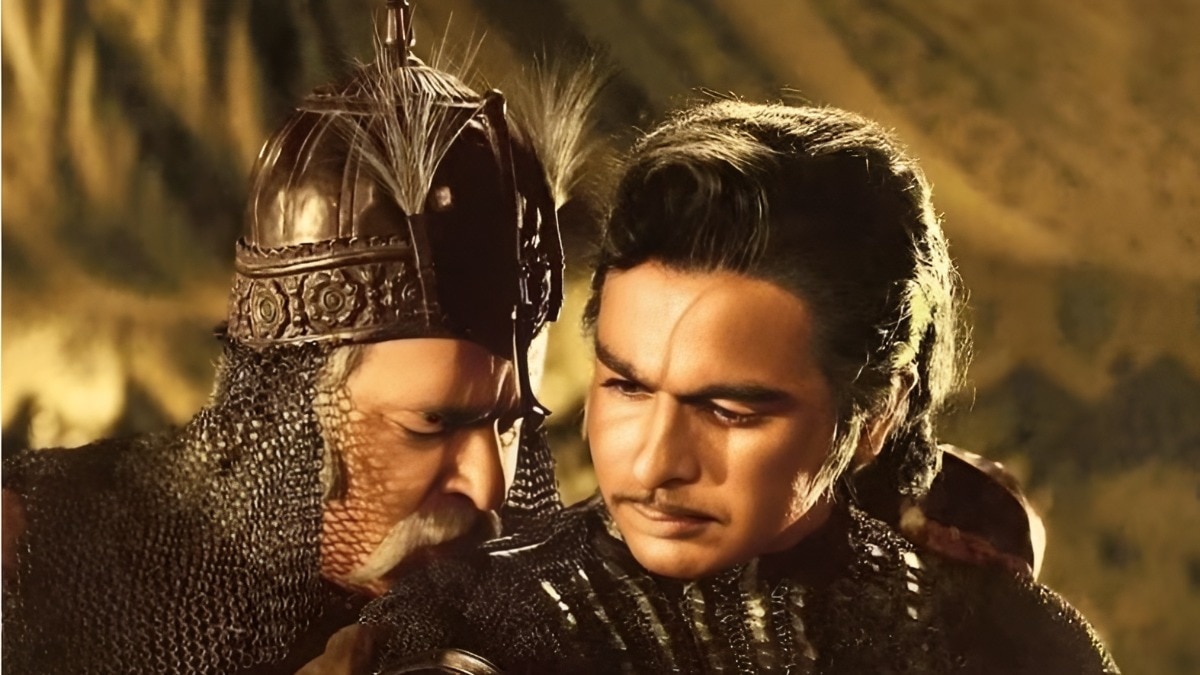
When director K Asif first envisioned his magnum opus Mughal-E-Azam in 1946, he turned down a young Dilip Kumar for the role of Prince Salim. The filmmaker felt that the actor lacked royal gravitas at the time and simply did not look the part of a Mughal prince. Instead, he chose a seasoned character actor to lead his grand canvas, setting in motion an early version of the epic that took a very different shape from the landmark classic we know today.That initial version featured actor DK Sapru alongside actor Nargis as Anarkali and actor Chandra Mohan as Emperor Akbar. Nearly 25 per cent of the film had already been shot when the turmoil of Partition in 1947 threw the production off course, forever altering the trajectory of the film and its original cast.Born Dayakishan Sapru in 1916 into an influential Kashmiri Pandit family, Sapru had already built a reputation for his commanding voice and striking screen presence. On the advice of his cousin, veteran film villain Jeevan, he walked away from a secure government contract job to pursue acting, debuting in director V Shantaram’s Ram Shastri (1944). DK Sapru made his acting debut in director V Shantaram’s Ram Shastri (1944). By 1946, when K Asif rejected Dilip Kumar for lacking a princely look, Sapru's regal bearing made him the director's definitive choice for Salim. Filming progressed smoothly with Sapru, Nargis, and Chandra Mohan until the political turmoil of Partition brought the shoot to a sudden halt.The widespread upheaval forced the film’s financiers to relocate to Pakistan, leaving the project in limbo. The final blow came with Chandra Mohan’s untimely death in 1949, which permanently shelved the original production.When K Asif finally revived the project in 1952 with new backing, he opted for a complete overhaul, eventually casting Prithviraj Kapoor, Dilip Kumar, Madhubala, Durga Khote, Nigar Sultana, Ajit, and Murad.Sapru, however, went on to build a long career as a character actor, appearing in more than 350 films. He became known for playing stern judges, ruthless zamindars and layered antagonists, with notable roles in Sahib Bibi Aur Ghulam (1962), Pakeezah (1972), Jewel Thief (1967) and Deewaar (1975), apart from appearances in films such as Kala Pani, Heer Raanjha, Zanjeer and Dharam Veer.Off screen, Sapru built an artistic family life after marrying IPTA theatre icon Hemavati in 1948. Their children stayed connected to the creative world, with Tej Sapru becoming known in 1980s action cinema, Priti Sapru emerging as a Punjabi actor and director, and Reema Rakesh Nath establishing herself as a writer-director. Her son, Karan Nath, later entered Bollywood. Sapru died on October 20, 1979, at the age of 63. Some of his films, including Kudrat and Krodhi, were released posthumously.Mughal-E-Azam remains an iconic classic in the history of Indian cinema. On the 60th anniversary of the film, director K Asif’s son Akbar Asif presented the screenplay of the film to the Oscars library in Hollywood. Three versions of the legendary screenplay – in Hindi, Roman text and English translation, are now available at the Margaret Herrick Library, a world-renowned reference and research collection of the Academy devoted to the history and development of the motion picture as an art form and an industry.Apart from the grand theme, the film's soundtrack, composed by Naushad with lyrics by Shakeel Badayuni, is also celebrated, especially the qawwaali song, Jab Pyaar Kiya To Darna Kya.- EndsPublished By: Anurag BohraPublished On: Aug 8, 2026 13:44 IST
Dilip Kumar was rejected for Mughal-E-Azam. Guess who K Asif cast as Salim?
Full Article
Original Source
Read the full article at Indiatoday →KhanList aggregates and links to publicly available news content. We do not host full articles from third-party sources. Always verify important information with original sources.