
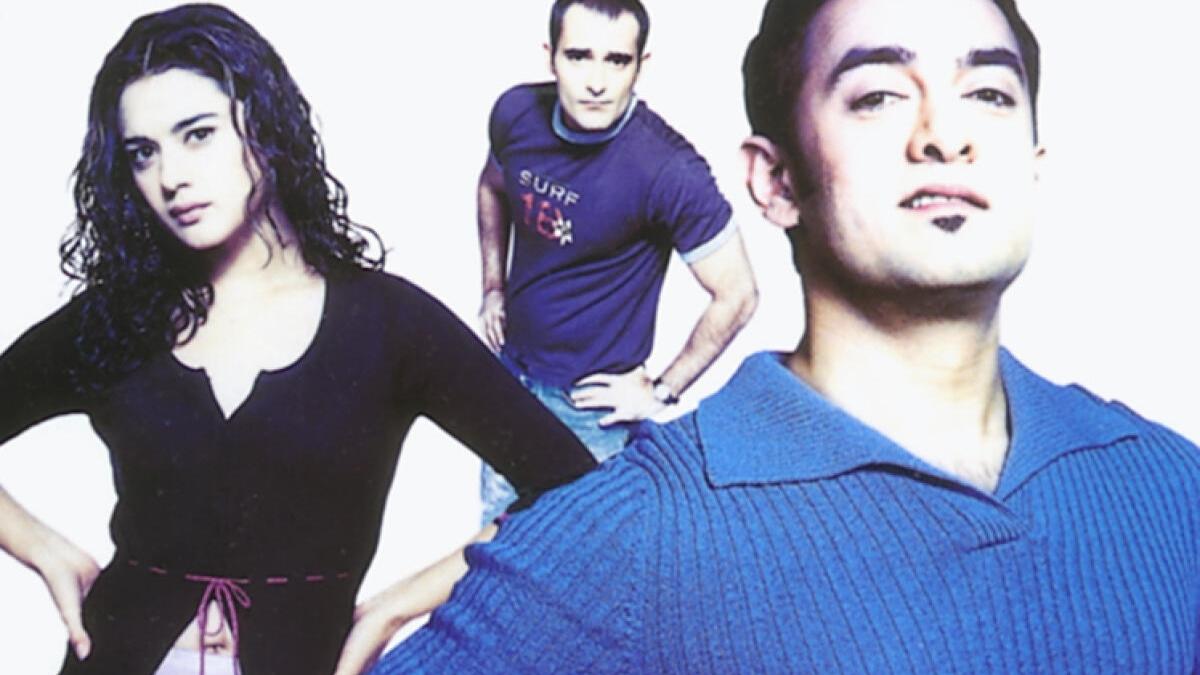
In 2001, three friends forged a new on-screen connection. Juggling across glittery nightlife, bantering through leisurely afternoons, and casually road-tripping to Goa on a whim, Akash, Siddharth, and Sameer liberated Bollywood friendships from the sacrificial, brotherly depictions of the preceding generation, making way for a breezy coolth that splintered harmoniously into its design. The filmmaking relied less on aesthetic excess and more on nurturing likeability towards the three by placing them in mindfully created spaces and giving them clothes that reflected their inner lives without making a fashion statement. The effect was disarmingly gleeful. It represented the urban aspirations of being young at the turn of the century by creating a style that was as easygoing as it was vibrant.Part of that youthful appeal came from the instincts of debutant writer-director Farhan Akhtar, who assembled a team of young technicians to realise his refreshing vision of love and friendship. His minimalistic approach was evident in how the characters appeared real, without the cinematic facade prevalent at the time. The hair styling was done by Avan Contractor, who was working on a movie for the first time. Avan read the script to understand the characters and the world they operate in. Farhan’s brief to her was clear.“He wanted the characters to look contemporary, modern, and to give them an urban feel, different from the conventional Hindi film hero. Maybe that’s what people found relatable,” Avan says. She points out that the process was similar to the work they did on their clients in the salon. “We would consult the clients, know their likes, dislikes and preferences, and the possibilities that their hair offered. The same principle was used to work with the actors, to make them look more like their characters.” Aamir Khan in ‘Dil Chahta Hai’ | Photo Credit: Special Arrangement Perhaps the look that stirred the most conversation was that of Aamir Khan, who played Akash with a playful reckoning, and his earlier sweet-boy on-screen memory of starring in romantic dramas was quickly overshadowed with sharper eyebrows, a longer hairline extending to the cheeks and a goatee on the chin that sealed the deal with its added quirk.Aamir proposed the idea of a goatee when he came for the haircut, reveals Avan. “He had a beard from his earlier film, and after his haircut, he went to shave the beard and kept coming out to show us different kinds of facial hair. He finally came out with just the goatee, and we felt that it looked super cool.”The same intricate thought prevailed in the production design by Suzanne Caplan Merwanji, who created the indoor spaces related to the characters with an aim to extend their personalities. Like Avan, it was Suzanne’s first big Hindi commercial film after working as a set decorator on international movies and as a set designer for commercials. That’s what prompted her to bring a new perspective to design the environment for Dil Chahta Hai. “I had come to understand that set design is meant to enhance the script and the characters and not distract from them,” Suzanne says. A still from ‘Dil Chahta Hai’ | Photo Credit: Special Arrangement That methodology is seen quite easily in Dil Chahta Hai as the rooms of Akash, Siddharth and Sameer hold a distinctive character, placed with minimal objects that make the spaces look more lived-in than overstuffed with ideas to beautify the frame with a generic effect. Akash’s casual demeanor, transactional outlook, and disbelief in love are reflected in the sleek, mechanical styling of his room. “Being the wealthiest character, he had the most modern, spacious, clean-lined and rather cold set design, to help describe his relationship with his family, friends and girlfriends,” Suzanne says. On the other hand, Siddharth’s thoughtful, empathetic worldview and his artistic inclinations came through with how his house was shown.“I modelled Sid’s house upon a bohemian Colaba house that belonged to a friend, who was an avid collector of Indian arts and crafts. I think that reflected the unconventional complexities of his character. Designing his attic studio allowed us to unleash our creativity and we really had fun with it,” Suzanne explains. A still from ‘Dil Chahta Hai’ | Photo Credit: Special Arrangement Similarly, Sameer’s innocence came through with the simplistic design of his room. “Sameer’s house had a rather nouveau-rich feel, although his own actual room was fairly uncomplicated, to reflect his good-natured temperament,” she says.The combined effect of these decisions gave Dil Chahta Hai an entirely different visual aesthetic, rooted more in the truth of characters than grandiosity. It was a clear diversion from how sets were designed in popular films. “I think DCH came at a particular moment in time, when the urban middle and upper classes started to veer much more towards Bollywood, creating a substantial new niche in the market. This is probably why the film resonated so much for the privileged youth of 2001,” says Suzanne.The meticulous reasoning behind every visual element helps the film retain its timeless appeal. The visuals were employed to bring out the nuances of the characters’ emotions which continue to resonate with newer audiences who find fresh meanings and interpretations behind some of these choices. Dil Chahta Hai continues to fascinate film lovers and technicians working in the industry even today. Sabina Halder, the costume designer on Tu Meri Main Tera Main Tera Tu Meri, Call Me Bae, Madgaon Express and Merry Christmas, watched the film for the first time as a child and enjoyed it for being a “fun, youth movie”. A still from ‘Dil Chahta Hai’ | Photo Credit: Special Arrangement “I didn’t understand the nuances of the film then, but the style of Preity Zinta’s clothes was on my wish list,” says Sabina. Now that she works as a costume designer herself, she has revisited the film multiple times to study costume designer Arjun Bhasin’s work. “I have observed every small detail in the styling. Every emotion is visually communicated beautifully. It wouldn’t be wrong to say that the clothes and styling in the movie keep the happiness quotient high throughout,” she opines.She describes Arjun’s approach as a form of “storytelling via clothes”. “When the boys travel to Goa, they look modern and are not caricatured to look like hippies. They sport easy linen drawstring trousers, loose tunic shirts and colour bottoms. This is exactly when trends were set on what modern young men could wear on vacation,” Sabina says.She feels the film was a beginning of what “clean and fashionable” costume styling looks like. “Before Dil Chahta Hai,movies portrayed fashion as something non-relatable, over the top and garish. Arjun set an example of how styling could be used as an intelligent tool in modern-day costume designing. That’s why it feels fresh even today,” she says.Now, over 25 years after its release, Akash, Siddharth and Sameer evoke the same warmth that made them stand out then. The songs underline its newness, with the ‘chamkile din’ in the title track creating a charming reverberance. Coming right after the turn of the century, Farhan marked the advent of a new kind of cinematic experience, shifting from soapy drama to a lively coming-of-age rigor. As Javed Akhtar put it in ‘Koi Kahe Kehta Rahe’, Ham hai naye, andaz kyun ho purana; clearly, the heart still desires and the style has still not aged.
‘Dil Chahta Hai’ at 25: How Farhan Akhtar’s breezy style created a new Bollywood coolth
Full Article
Original Source
Read the full article at Thehindu →KhanList aggregates and links to publicly available news content. We do not host full articles from third-party sources. Always verify important information with original sources.