
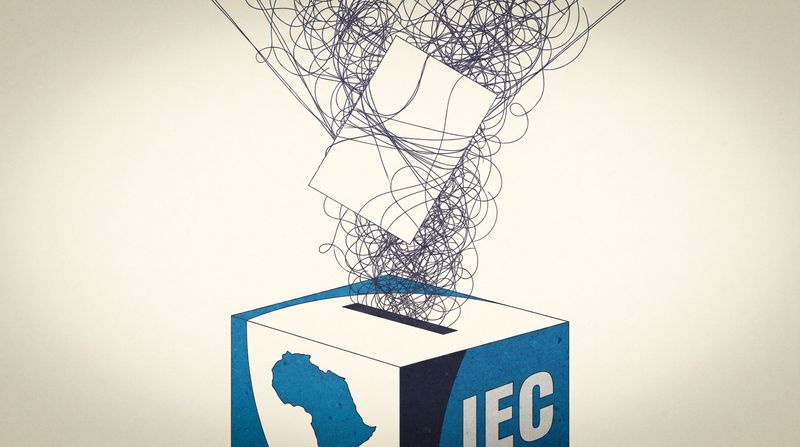
Misinformation and disinformation can threaten human rights and place institutions such as the Electoral Commission of South Africa (IEC) at the centre of a digital information crisis. This is particularly concerning during an election season, when access to accurate information and confidence in electoral institutions are essential to meaningful democratic participation.The nature of harmful online content around elections appears to be changing. Previously, online spaces were often flooded with misleading information about election dates, polling arrangements and claims that elections had been postponed. While these concerns remain, platforms such as Real411 are also seeing content that seeks to undermine confidence in the legitimacy, independence and credibility of the electoral process itself.This includes allegations of collusion between the IEC and political parties, claims that elections have been rigged, accusations of political interference in candidate registration, and fraudulent recruitment advertisements purporting to originate from the commission. Some claims are presented as established facts without credible supporting evidence, while others involve fabricated or manipulated content designed to appear authentic and mislead the public.The distinction between misinformation and disinformation matters. Misinformation generally refers to false or inaccurate information, while disinformation involves the deliberate dissemination of false information to deceive and cause public harm. Although both can cause harm, establishing that a claim is false does not, by itself, prove intent to deceive. From misleading election information to attacks on electoral legitimacyThe IEC is constitutionally mandated to safeguard electoral processes and run fair and credible elections, and posts reviewed through Real411 show a growing number of attacks on the organisation – seemingly to undermine confidence in the electoral process. Recent examples include:“Electoral Commission of South Africa (IEC) is the ANC.” This is a recurring narrative that portrays the IEC as an extension of a political party, presenting an allegation of institutional capture as fact without supporting evidence;“The ANC thugs doing all the tricks so the corrupt @IECSouthAfrica will allow them to resubmit their candidates.” Content alleging collusion between the ANC and the IEC in candidate submissions and calling the commission corrupt;Things are “even worse in rural areas, IEC officials are well known ANC stooges”. Content that generalises allegations of political allegiance among IEC officials, casting doubt on the impartial administration of elections; andClaims that the ANC and IEC have worked together since 1994, accompanied by calls to replace the IEC and the ANC-led government. These claims treat an alleged longstanding relationship as evidence of institutional collusion.The IEC is an independent constitutional institution required to act impartially and perform its functions without fear, favour or prejudice. Allegations that it is controlled by a political party or has rigged elections should be tested against credible evidence, not accepted as fact simply because they circulate widely.These examples illustrate the importance of distinguishing between political opinion and factual allegations that can be tested against evidence. The relevant questions are whether a post makes a demonstrably false or misleading factual claim, whether harm can be established, and whether the applicable standards for an online content violation are met.Not all criticism is disinformationFreedom of expression is fundamental to democratic accountability. Section 16 of the Constitution protects freedom of expression, including the freedom to receive or impart information and ideas. This protection extends to robust political debate and views that are unpopular, provocative or critical of public institutions.Real411 therefore starts from the position that a reported post is not an online harm unless clear evidence shows that it meets the criteria. This default in favour of speech helps ensure Real411 avoids censorship under the guise of combating harmful online content. Real411’s role is not to shield public institutions from criticism, determine which political opinions are acceptable or suppress dissent, but to assess complaints against clearly defined criteria and an appropriate evidentiary threshold. A post should not be deemed a violation simply because it challenges the IEC, questions its independence or expresses opposition to the electoral process.The challenge is to address demonstrably false and harmful content without unduly restricting constitutionally protected expression. Protecting electoral integrity must not come at the expense of the democratic freedoms that elections are intended to uphold.Why this matters for human rightsThe implications extend beyond the reputation of the IEC. The right to participate in free and fair elections depends on an environment in which people can access reliable information and make informed choices. False claims about voter registration, candidate eligibility, polling dates or electoral procedures can interfere with that ability. Unsupported allegations that electoral institutions are irredeemably corrupt may also weaken confidence in the mechanisms through which citizens exercise their political rights and discourage electoral participation.These risks are particularly concerning for people who rely heavily on social media or messaging platforms for election updates, including first-time voters and individuals with limited digital literacy who may face greater difficulty distinguishing authentic announcements from fabricated notices.Election-related narratives can also be combined with hostility towards particular groups. In South Africa, where political tensions and anti-immigration mobilisation intersect with online discourse, such content may contribute to an environment in which intimidation, discrimination or violence become more likely. The risks must be assessed in context, with due regard to the content, its reach, its factual basis and its potential consequences.A well-resourced public broadcaster is vital for verifying information and scrutinising political claims while the legitimacy of electoral institutions is being questioned online. But uncertainty over funding for the South African Broadcasting Corporation’s (SABC) coverage of the 2026 local government elections compounds the problem. The SABC has sought R120-million in additional funding to support comprehensive election coverage, but this funding had not been secured as of early October 2026. The broadcaster says it will cover the elections regardless, although available resources will affect the scale, depth and technical capacity of that coverage. Protecting electoral integrity: A shared responsibilityProtecting electoral integrity requires more than removing posts or correcting misleading narratives after they have spread. It demands accountability, timely access to reliable information and a collective commitment to evidence-based public debate. The responsibility extends beyond the IEC and digital platforms to political actors, media houses, journalists, civil society organisations and members of the public.The IEC must provide timely, accessible and verifiable information about election dates, voter registration, candidate nominations and voting procedures. Transparent communication and prompt responses to legitimate questions give the public reliable information against which claims can be assessed. The commission must also remain accountable for its conduct and open to scrutiny. Efforts to counter disinformation should never be used to shield it, or any other public institution, from legitimate criticism.Media houses and journalists have a particular responsibility to verify claims before publishing or amplifying them, especially allegations of electoral fraud, political interference or institutional collusion. Unverified claims can reach wide audiences even when repeated in an attempt to expose or debunk them. Responsible reporting requires distinguishing established facts from allegations and opinion, providing relevant context, and correcting inaccuracies transparently. This must go hand in hand with journalism’s watchdog role: investigating credible allegations and holding electoral institutions and political actors accountable.Digital platforms must apply their content policies fairly and transparently, while civil society organisations can help communities access reliable information, challenge misleading narratives and understand their rights. These efforts should complement, rather than replace, independent journalism and public accountability.Before sharing election-related content, members of the public can check its source, compare it with official communications and credible reporting, and question claims presented as fact without supporting evidence. Where content appears to contain harmful misinformation or disinformation, they can report it through Real411, which assesses potentially harmful content against established criteria. A report is not, by itself, proof of a violation; each complaint must be assessed on its merits and in context.The objective is not to eliminate political disagreement, but to ensure that fabricated claims do not distort public debate or undermine people’s ability to participate meaningfully in the electoral process.Democracy requires more than an election dayAs the local government elections approach, the growing prominence of online content alleging electoral manipulation or portraying the IEC as an extension of a political party is a serious challenge. The answer, however, is not to silence dissent or demand public confidence in the commission regardless of its conduct. It is to ensure that claims can be tested against evidence, that credible allegations are investigated, and that falsehoods can be challenged without suppressing legitimate criticism.A democracy cannot thrive when citizens are misled about how it works. Nor can it thrive when the institutions responsible for safeguarding it are beyond scrutiny. Protecting electoral integrity requires all of us to defend both the right to question power and the public’s right to reliable information. It also requires us to take responsibility for the information we produce, publish, share and challenge. DMGudani Tshikota is the campaigns and projects coordinator of the SOS Support Public Broadcasting Coalition. William Bird is the director of Moxii Africa, Ashoka and a Linc Fellow.
DIGITAL MENACE OP-ED: Misinformation, disinformation and the threat to electoral integrity
Full Article
Original Source
Read the full article at Dailymaverick →KhanList aggregates and links to publicly available news content. We do not host full articles from third-party sources. Always verify important information with original sources.