
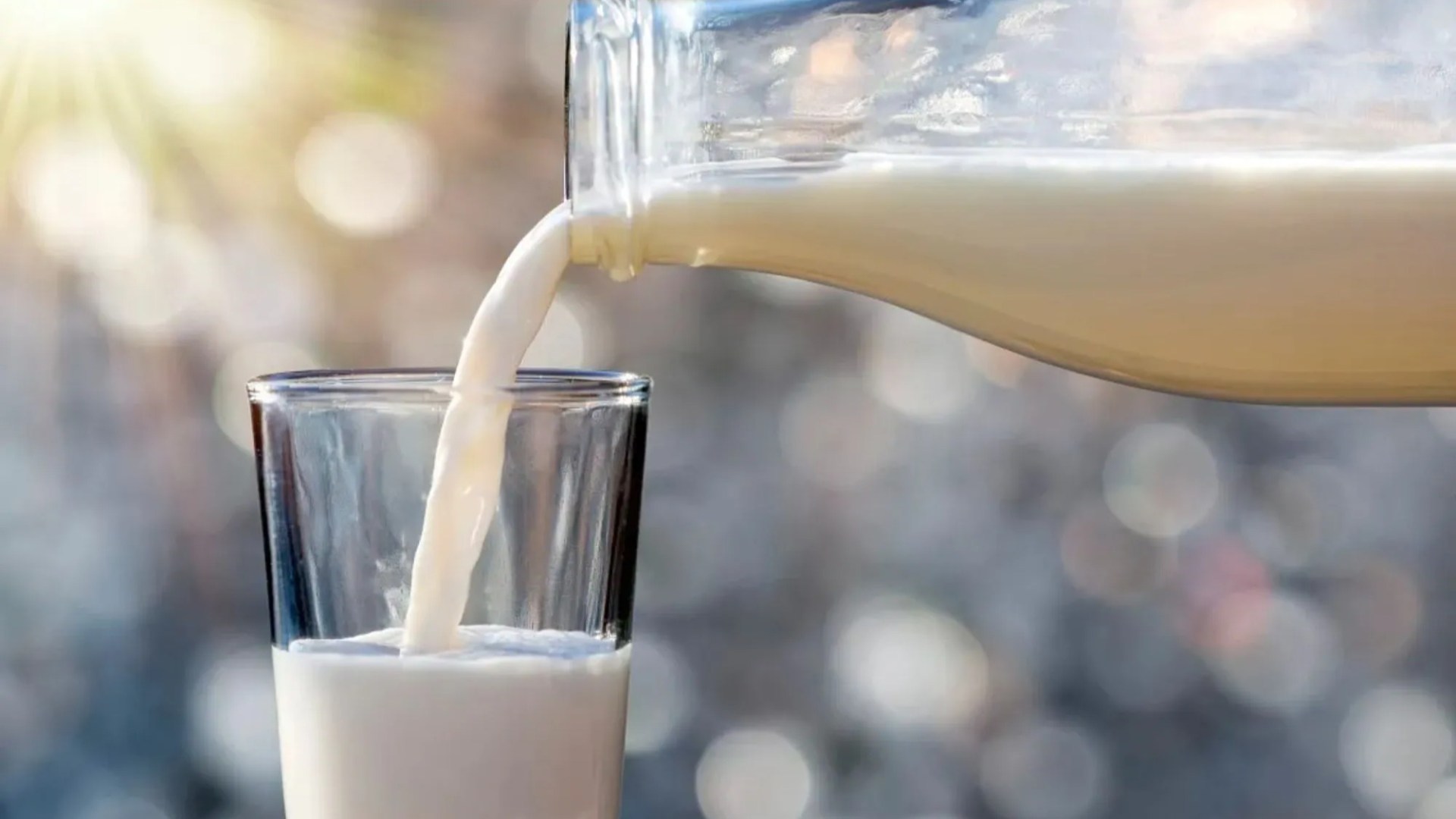
ONE of the country’s top diet gurus has today come under fire after suggesting cows milk has little health benefit and could even raise risk of cancer. In a post published on his blog, Professor Tim Spector, founder of the popular nutrition app ZOE, argued that milk does little to help the bones or heart and has been linked to prostate cancer. The NHS has long suggested that even just single glass contains high–quality protein Credit: Getty Images Professor Tim Spector is the founder of the popular nutrition app ZOE Credit: Rex Britons used to be powered by milk, sinking five pints a week back in 1974 – more than double the current average intake of around two pints. But currently in Britain nearly one in every ten glasses of milk drunk is a plant based alternative – just a decade ago, the figure was one in a hundred. Sign up for the Health newsletter Thank you! The NHS has long suggested that even just single glass contains high–quality protein to support muscles and calcium to keep bones and teeth strong. Milk has also been considered a key source of vitamin B12, which helps keep the nervous system healthy and supports red blood cell production — vital for energy levels and concentration. While Professor Spector acknowledged that milk has been linked to a lower risk of colon cancer “which is a genuine plus”, he added that higher intakes, particularly of full fat milk has “consistently” been linked to a higher risk of prostate cancer. Research published in the American Journal of Clinical Nutrition in 2015, found that “high intakes of dairy products, milk, low-fat milk and cheese may increase total prostate cancer risk”. But, the scientists at the Norwegian University of Science and Technology in Trondheim, who analysed 32 studies, acknowledged that “dairy food and calcium intakes may be associated with other risk factors such as physical activity, smoking and alcohol“. Professor Spector, who is genetic epidemiology expert at King’s College London, also claimed that “drinking more milk has little or no effect on fracture risk, with perhaps a modest reduction in spinal fractures at best, but none in the common wrist and hip fractures”. Most read in Health He added: “I am particularly wary of promoting it to men, given the prostate cancer signal. “If you enjoy it, there is little reason to avoid it, and no reason at all to give up the splash in your tea or coffee, which will make no real difference either way. “But if I had to choose, I would spend my daily food budget on yogurt, kefir and other fermented foods, whether made from dairy or from plants, rather than on another glass of milk.” Dieticians and food scientists today, however, argued that Professor Spector’s comments were not grounded in science and “most milk products contain additional health benefits. “dairy should not be avoided”. Dr Carrie Ruxton, a Scotland-based dietician, told Sun Health: “I was very disappointed with Tim’s intervention since it’s just based on his opinion, rather than scientific evidence suggesting issues with milk. “I would also note that he is a medical doctor and epidemiologist not a trained nutritionist. Milk is also considered a key source of vitamin B12, which helps keep the nervous system healthy Credit: Getty Images – Getty “Not every food has to have proven health benefits to be included in the diet. “In fact, there are no authorised health claims for kefir – made from milk – which Tim was recommending instead. “Milk is a source of high quality protein, calcium, B vitamins and magnesium – which some groups often lack in their diets, particularly teenage girls. “If people enjoy drinking milk or want to add it to tea, coffee and breakfast cereals, they should go ahead.” She added: “Another aspect is that milk is an inexpensive food and people often don’t have the money to spend on kefir. “Yogurt is another excellent food and there are lots of health benefits proven for this including bone health and reduced risk of cardiovascular disease and type 2 diabetes. “Many children’s yogurts and fromage frais are fortified with vitamin D – a nutrient which is at such low levels in the UK diet that up to 4 in 10 people are clinically deficient.” Professor Gunter Kuhnle, an expert in food science and nutrition at the University of Reading, meanwhile, agreed with Professor Spector that milk “is probably not essential for adults”. “But I don’t think there is any harm in consuming milk as part of a healthy diet,” he added. “There is some concern regarding prostate cancer with high milk and general dairy intake, but this does not mean dairy should be avoided. It’s about moderation.” Instead, he noted that the “main question” is what dairy is replaced with or what it replaces. “Having a glass of milk instead of a sugar-sweetened soft-drink is almost always better, but it’s more difficult when it replaces water as there are benefits like protein and calcium,” Professor Kuhnle said. How ultra processed is YOUR kitchen? Ultra processed foods (UPFs) were defined by Brazilian researchers who made the NOVA classification system. It breaks foods into groups depending on how processed they are. The most natural foods are in group 1, while the most processed are in group 4. The groups do not entirely indicate how healthy a food is. However, it does indicate how processed it is – and studies have linked UPFs to a number of diseases. How does your kitchen compare to the following groups? Unprocessed or minimally processed foods (group 1) vegetables and fruits (fresh or frozen) dried fruits with no added sugar, honey, or oil grains and legumes (chickpeas, lentils) meat, poultry, fish, seafood, eggs milk without added sugar plain yogurt with no added sugar nuts and seeds spices and herbs tea, coffee, water Processed culinary ingredients (group 2) iodized salt salted butter sugar and molasses from cane or beet honey extracted from combs syrup from maple trees vegetable oils crushed from olives or seeds butter and lard from milk and pork starches extracted from corn and other plants vegetable oils with added anti-oxidants vinegar with added preservatives Processed foods (group 3) canned vegetables, fruits, and legumes fruits in syrup salted or sugared nuts and seeds salted cured or smoked meats canned fish artisanal breads and cheese Ultra-processed foods (group 4) pop and fruit drinks sweetened yogurt sweet or savoury packaged snacks (e.g., cookies) candies and cake mixes mass-produced packaged breads and buns margarines and spreads breakfast cereals cereal and energy bars energy drinks instant soups, sauces, and noodles poultry and fish nuggets, hot dogs many ready-to-heat products: pre-prepared pies, pasta, and pizza dishes “But also disadvantages such as fat and total amount of energy.” Health advice in the UK suggests dairy foods should be a regular part of a balanced diet, but moderation is key. Two to three portions of dairy a day – one portion of milk is roughly a 200ml glass – is generally considered enough for most adults, whether that comes from milk, yoghurt or cheese. Dr Suzanne Wylie, GP and medical adviser for IQdoctor, told Sun Health that milk consumption alone “is unlikely to prevent fractures in otherwise healthy adults”. “However, that does not mean milk is ineffective or harmful, but rather that it is one of many dietary sources of nutrients that support bone health, and for many people it remains an easy and affordable option,” she added. “There is ongoing research into possible associations between higher dairy intake and prostate cancer. “But the evidence is not strong enough for UK clinicians to recommend that men avoid milk solely for this reason, particularly when balanced against the nutritional benefits that dairy can provide.” “Equally, there is some evidence suggesting dairy products may reduce the risk of bowel cancer, so the overall picture is far from clear-cut.” Comment now
Diet guru under fire for claim milk is ‘unhealthy’ and drives up cancer risk – so what’s the truth?
Full Article
Original Source
Read the full article at Thesun →KhanList aggregates and links to publicly available news content. We do not host full articles from third-party sources. Always verify important information with original sources.