
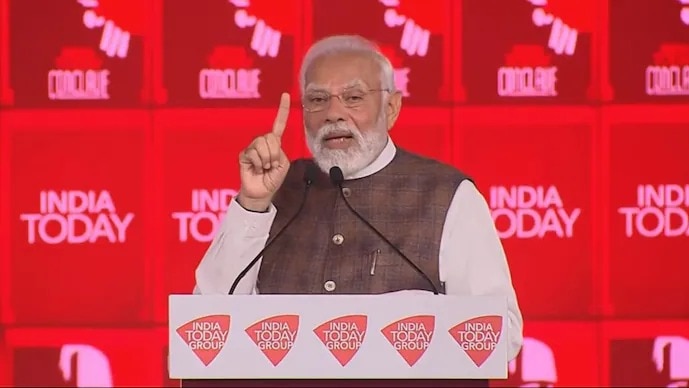
Prime Minister Narendra Modi questioned corporate India over hiring and salary increases after tax concessions.New Delhi,Nov 19, 2026 18:26 ISTPrime Minister Narendra Modi on Thursday questioned India's corporate sector over its role in employment generation, asking whether businesses had increased salaries or hired more employees despite receiving tax concessions and policy support from the government.While addressing the centenary convention of the Federation of Indian Chambers of Commerce and Industry (FICCI) at Bharat Mandapam, PM Modi raised the question of how the industry has made contributions while government is going beyond.He also highlighted how the appetite of corporate giants never ends and more for them means more.Referring to the government's efforts to improve the ease of doing business, Modi said the basic corporate tax rate had been reduced from 30 per cent in 2014 to 22 per cent. PM also highlighted the income tax exemption of up to Rs 12 lakh, saying the measures were intended to increase people's purchasing power and support economic activity.However, he questioned whether industry had passed on the benefits to its employees. "I have exempted income up to Rs 12 lakh from tax. Did you increase the salaries of your employees? Did you increase the number of employees? No. The attitude remains: 'Modi ji, you do it, we will see,'" he said.FLAGS TAX REFORMS, FASTER REFUNDS AND RESPECT FOR TAXPAYERSThe Prime Minister's questions put the spotlight on the role of private businesses at a time when layoffs have affected employee confidence and raised concerns about hiring. Slower industrial expansion has also brought attention to investment, production and demand.Modi said the government had taken steps to simplify income tax returns and refunds, reducing the time taxpayers had to wait for their money."Earlier, refunds would take eight months. Today, refunds arrive within a week," he said.He also pointed to GST reforms, saying taxes on several products had come down, increasing demand and directly benefiting industries and business houses.The Prime Minister began his remarks by stressing the importance of respecting taxpayers and wealth creators. Recalling a gathering of senior Income Tax Department officials in Gujarat around 2001-02, when he was chief minister, he said he had questioned the practice of treating taxpayers with suspicion."When will you stop treating everyone like a thief? What kind of approach is that?" he recalled asking officials."No country progresses without respecting its farmers, its small entrepreneurs, its industries, its wealth creators and its taxpayers," he said.PM MODI URGES INDUSTRY TO SEIZE TRADE OPPORTUNITIES, PUT INDIA FIRSTModi also urged industry leaders to make use of India's trade agreements with other countries, saying they had opened new markets for Indian businesses."Have you made any plans to seize these opportunities, or will I have to come to you to discuss that as well?" he asked.He said Indian companies needed to look beyond the domestic market and prepare to compete internationally.The country's large consumer base, he suggested, should provide businesses with the confidence to expand rather than become a reason to remain focused only on domestic sales.Calling on business leaders to make national interest central to their investment plans, Modi said: "In every long-term investment decision of yours for the next 20 years, make India First your foundation."He added that this would help make the country self-reliant while creating opportunities for business growth.The Prime Minister's address placed responsibility on industry to complement government reforms with investment, employment and expansion."India's growth story is creating new opportunities. Our industries must be ready to seize them," Modi said.- Ends
Did you raise salaries or hire more? PM Modi questions corporates, points at tax cuts
Full Article
Original Source
Read the full article at Indiatoday →KhanList aggregates and links to publicly available news content. We do not host full articles from third-party sources. Always verify important information with original sources.