
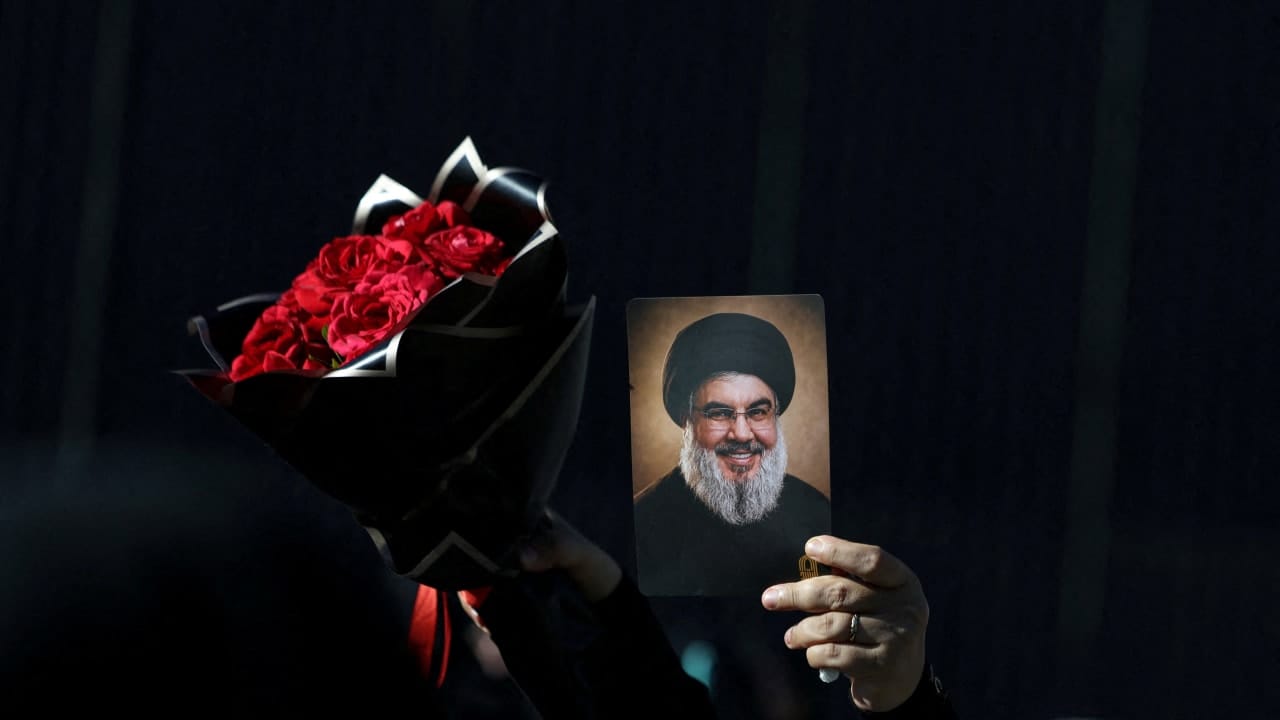
OCTOBER 4, 2026 08:34The unequivocal answer is yes. But the story is far more complex than a one-word answer.The operation had two main achievements. The first was psychological. It restored Israel’s standing as a security power capable of carrying out operations that had seemed unimaginable or impossible. After October 7, it demonstrated to the region in which we live that Israel had recovered and was capable of penetrating even its enemies’ most sensitive systems. This was enormously important for Israel’s deterrence. Hezbollah, the strongest and most important militia in the Shi’ite axis, suddenly found itself in deep distress and embarrassment.The psychological dimension was also reflected in the message conveyed to Israelis themselves. Following the October 7 massacre in the south, and the disappointment of northern residents who had been under fire for 11 months, there was a need to rebuild Israelis’ trust in their security establishment. The pager operation made a significant contribution to this effort: it restored Israelis’ sense of capability and, to some extent, opened the door to further daring operations, from the elimination of Hezbollah’s leadership to operations in Iran.Hezbollah supporters hold images of late former Hezbollah leader Hassan Nasrallah and current leader Naim Qassem at a ceremony held by Hezbollah to commemorate the first anniversary of Hassan Nasrallah's killing by Israel, on the outskirts of Beirut, Lebanon, September 27, 2025. (credit: REUTERS/MOHAMED AZAKIR)The second achievement was operational. Thousands of Hezbollah operatives were injured by the pagers and communications devices, and the Radwan Force’s chain of command was subsequently hit as well, when Ibrahim Aqil was eliminated along with 14 commanders from Radwan Force brigades three days after the pager operation.This blow helped neutralize capabilities and skilled personnel that had been developed over many years to carry out Hezbollah’s firepower and invasion plans. It damaged the organization’s morale and operational functioning and later made it easier for the IDF to operate in southern Lebanon against infrastructure prepared for an invasion of Israel.The pager operation, together with the elimination of Hezbollah’s leadership and the blow to the Radwan Force, formed part of a chain of events that changed the Middle East, from the revolution in Syria to the Israeli strikes against Iran. One of the main lessons was that terrorism can and must be fought without fearing its imagined power. The Shi’ite axis was exposed in its weakness, and it became clear that it could be confronted in different arenas and through a variety of means. In Syria, this created the timing for Ahmed al-Sharaa’s revolution. He had been waiting in Idlib for an opportune moment and seized it once he understood that Hezbollah, Basher Assad’s principal ally in the region, had been weakened.But Hezbollah has not disappeared. The large-scale military model it built before October 7 has been severely damaged: its broad plan to invade the Galilee has been neutralized, its ground forces in southern Lebanon have collapsed, and its firepower array no longer exists on the scale originally planned. Nevertheless, according to Alma Center assessments, it still possesses as many as approximately 15,000 rockets and missiles and continues to invest in expanding its drone capabilities.In general, Hezbollah is devoting considerable efforts to its military reconstruction. It is recruiting and training new operatives, updating operational plans, gathering intelligence, and restoring weapons systems. Weapons smuggling from Syria continues, including rockets, advanced anti-tank missiles, UAVs, and additional components. At the same time, efforts are also underway to manufacture and repair weapons inside Lebanon.Meanwhile, the failure of the Lebanese government and the Lebanese Armed Forces to fulfill their commitment to disarm Hezbollah continues to be exposed time and again. Even in 2026, the organization was able to sustain several months of rocket and drone launches into Israeli territory, albeit on a smaller scale than in 2024.Weapons and paraphernalia belonging to Hezbollah located by the IDF in southern Lebanon. Photos released on September 1, 2026. (credit: IDF SPOKESPERSON'S UNIT)Therefore, the question today is not only whether the pager operation changed the Middle East, but whether that change can be preserved and steered in the right direction.There are two challenges: how to prevent the reconstruction of the Shi’ite axis while also preventing it from being replaced by a radical Sunni axis comprising Syria, Qatar, and Turkey. Perhaps it would be more accurate to frame the question this way: How can actors interested in reaching arrangements with Israel be strengthened, while those seeking to destroy it continue to be weakenedת and even defeated?The international system has a significant role to play. As long as it does not adopt an uncompromising approach toward murderous ideologies, terrorism, and hatred of the West, Israel will continue to face pressure preventing it from “finishing the job” and allowing terrorist organizations to survive, rebuild, and grow stronger.This may be the final lesson of the pager operation: even when we are stronger, and the terrorist organizations are weaker, we must not count on pulling another “rabbit out of the hat.” The pager operation was a one-time event planned over many years. Its achievement must be preserved through a consistent and sustained policy of uprooting terrorist organizations. This should be the policy in Gaza, in Lebanon, and toward Iran. The Israeli government should lead this effort together with local actors such as the Lebanese government and international actors such as the United States.Follow us on Google
Did the pager operation change the Middle East? - opinion
Full Article
Original Source
Read the full article at Jpost →KhanList aggregates and links to publicly available news content. We do not host full articles from third-party sources. Always verify important information with original sources.