
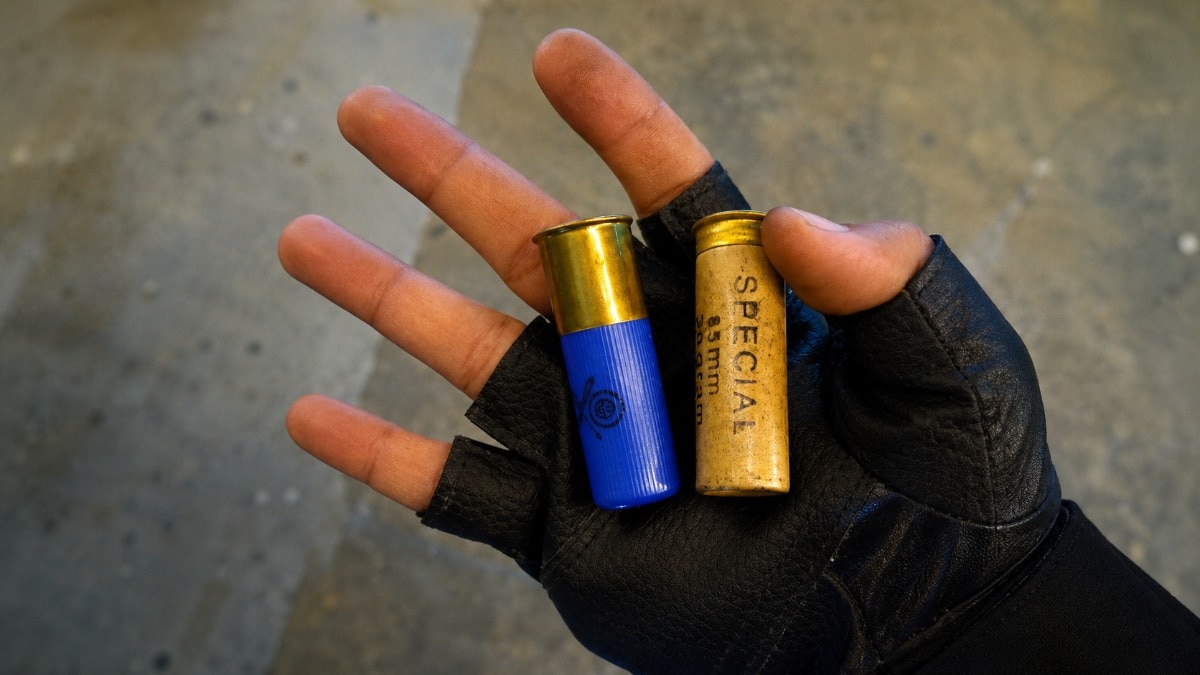
Sometimes, no answer is an answer. At least in the case of the plastic pellets fired at protesters during the July 20 Parliament march in Delhi, the silence is becoming a story in itself. A month into the pellet-gun firing and us looking for answers around plastic pellets, that is the takeaway.The official record says two rounds of ballistic cartridges containing "plastic pellets" were fired from an anti-riot gun during the Cockroach Janta Party (CJP) protest march to Parliament on July 20.The Rapid Action Force (RAF) general diary entry, registered at Parliament Street police station at 1.24 am on July 22, records that, on the orders of a Zone-1 DCP, an RAF Deputy Commandant fired 55 rounds of non-electrical shells, 15 electrical shells, five tear-smoke grenades and "two rounds using ballistic cartridges with plastic pellets" from an anti-riot gun, according to The Hindu.The entry is significant because the use of pellet guns had initially been denied by the Delhi Police, and even the Press Information Bureau (PIB). The incident left at least 10 people with pellet injuries, revealed an RTI application filed by TMC leader and former Rajya Sabha member Saket Gokhale. The issue has also drawn widespread scrutiny, with the International Service for Human Rights (ISHR) urging UN human rights experts to address the use of metallic pellet guns during the July 20 protest and calling on India to investigate their deployment.India Today Digital had reported exclusively on a man in his twenties shot in the back and arm. And then there was the fifth pellet victim, who spoke of a sixth man treated at the same hospital with him, shortly before the RTI revealed the number of people treated for pellet injuries. But the diary entry raises a question that is yet to receive a clear answer. What exactly were these "plastic pellets", and where did they come from?The shell (casing) of the ammunition could have been plastic, but whether the pellets themselves were plastic cannot be determined without confirmation from the stakeholders involved.That question sounds simple. It isn't.Plastic pellets, which do not pierce the flesh, are way less dangerous than metal pellets.ARE PLASTIC PELLETS USED BY SECURITY FORCES IN INDIA?India Today Digital tried to find out whether plastic pellets are manufactured in India or even used by security forces.The question arose because several people familiar with firearms and crowd-control ammunition told India Today Digital they had neither seen such pellets nor come across anyone injured by them. To be clear, this is not about plastic or rubber bullets. The question is specifically about "plastic pellets" fired from a shotgun in India, where it is generally a 12-bore-calibre weapon.First, we reached out to the CEO of a major private weapons manufacturer that makes firearms for the Indian armed forces, including the Indian Army. Requesting anonymity, he explained that 12-bore ammunition broadly falls into two categories: regular lethal cartridges and less-lethal cartridges. The latter are designed for crowd-control situations and are intended to cause injury without causing death or lifelong injuries.The material of the projectile is central to that distinction.Globally, less-lethal shotgun ammunition exists in several forms, and its usage has primarily been seen in Western countries, like the UK and Germany. But it is important not to conflate different types of rounds.Police and military forces have used 12-gauge cartridges containing multiple rubber balls, as well as "bean-bag" or "sock" rounds in which a fabric pouch carries multiple projectiles. It does not penetrate the flesh, and only inflicts an excruciating pain.US government documents, for instance, describe 12-gauge rounds containing 18 rubber balls, while other less-lethal shotgun cartridges use a fabric bag filled with plastic or rubber shots.The distinction matters in the context of the Delhi incident, where the RAF's general diary specifically records two rounds containing "plastic pellets". It raises the separate question of what those pellets were, who manufactured them and whether such ammunition is part of the Indian security forces' inventory.According to the CEO of the arms manufacturer India Today Digital spoke to, conventional 12-bore ammunition uses hard materials such as lead. "Rubber pellets may cause blunt-force injuries but would not ordinarily penetrate flesh," he said.That distinction matters because the injuries reported after the July 20 march included penetration injuries. The two plastic pellets fired surprisingly missed everyone in a crowd of thousands.The expert said there are only two reliable ways of determining what ammunition was actually used: recovering and examining the fired cartridge or examining the nature of the injuries caused by the projectile.Neither, however, provides an answer to the question confronting the public now.GOVERNMENT AMMUNITIONS MANUFACTURER, CRPF DECLINED TO COMMENTThe question was then put to Munitions India Limited, a public sector undertaking (PSU) that manufactures a wide range of ammunition, from civilian rounds to artillery ammunition.After India Today Digital's repeated attempts for over a week, during which officials were "away for lunch" even during non-lunch hours, an official, Mayur Ved Pathak, finally responded. Pathak said he could not answer whether plastic pellets are produced in India. Asked whether he could identify other materials used to manufacture pellets, his response was, "Your question doesn't fit into our protocol".Another e-mail query to Munitions India Ltd also went unanswered.Then, the Central Reserve Police Force (CRPF), whose RAF is its specialised anti-riot unit, was also approached. The answer was effectively the same.Two senior CRPF officials declined to comment on whether plastic pellets exist, whether they are manufactured in India or whether they are used by security forces in the country. Officials at the Directorate General of the CRPF also declined to comment on pellets or the equipment used during the July 20 deployment.THE EVENTS OF JULY 20 ARE RIDDLED WITH CONTRADICTIONSThe no response situation from all possible stakeholders leaves us with contradictions.The official record identifies plastic pellets, but the security establishment will not explain what those pellets were.The manufacturer approached for clarity did not confirm whether such pellets are made in India.Even a Supreme Court advocate, who has worked with pellet injury victims in Kashmir and is currently involved in the legal challenge against pellets following the Delhi incident, has not personally seen plastic pellets.Plastic or polymer projectiles are not a new concept in India's crowd-control arsenal. Plastic bullets were developed by the Defence Research and Development Organisation's (DRDO) Terminal Ballistics Research Laboratory and supplied to security forces in Kashmir after the widespread controversy over pellet-gun injuries in 2016.Though plastic bullets were manufactured in India, there is no report of plastic pellets being made, acquired or used in India.Yet the existence of a broader category of plastic or polymer crowd-control ammunition does not, by itself, establish what was fired in Delhi on July 20.The RAF diary specifically records two rounds using ballistic cartridges with "plastic pellets". The Indian Express's subsequent reporting, meanwhile, found that one RAF personnel fired seven rounds from a pellet gun in the Connaught Place area, with five hitting protesters and two striking the ground.That makes the ammunition question even more important.If the official record says "plastic pellets" were fired, there should be a paper trail. What was the ammunition called, who supplied it, who manufactured it, how many rounds were available, how many were issued and how many were fired?PROTESTERS HAVE SUSTAINED METAL PELLET INJURIESThe questions have acquired another layer given the injuries sustained by the protesters.Medical records obtained through a Right to Information (RTI) application show that at least 10 people received medical treatment on July 20 for injuries recorded as pellet, shot or projectile injuries.The response from Lady Hardinge Medical College and Hospital (LHMC) shows that nine patients were treated that day for injuries recorded as "pellet/projectile" injuries. Safdarjung Hospital reported treating another patient for a pellet injury on the same day.Reports suggest that at least five protesters have sustained injuries from metal pellets.So, what caused the pellet and projectile injuries documented by hospitals, and what exactly were the two "plastic pellet" rounds recorded in the RAF diary?If the plastic rounds were manufactured in India, who made them? If they were imported, who procured them? If "plastic pellets" is merely a broad description for another form of less-lethal ammunition, why is there no clarity on their exact composition?These questions go to the heart of what happened during a civilian protest in the national capital.- EndsPublished By: Anand SinghPublished On: Aug 20, 2026 14:05 IST
Did RAF fire non-existent plastic pellets at CJP protesters?
Full Article
Original Source
Read the full article at Indiatoday →KhanList aggregates and links to publicly available news content. We do not host full articles from third-party sources. Always verify important information with original sources.