
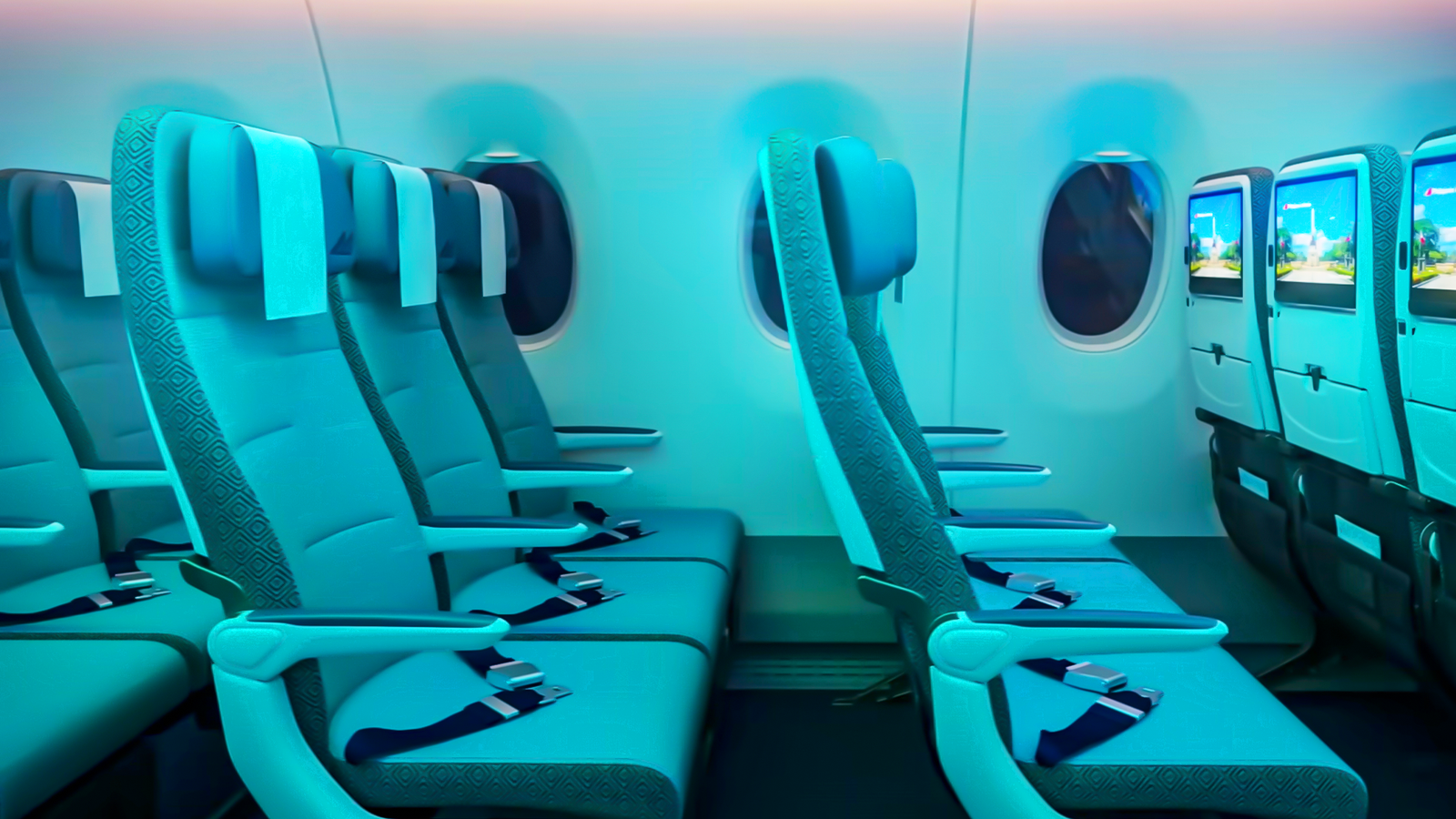
Published Oct 23, 2026, 8:00 PM EDT Daniel comes to Simple Flying with a business focused approach to the aviation world. Daniel enjoys analyzing strategy and how companies move against each other to gain a step ahead in the skies. Besides strategy, Daniel also has a passion for aircraft design and the history of aviation. Based in New York The Airbus A350 is an excellent aircraft that is both wonderfully capable and extremely fuel-efficient. The type was designed to render the Boeing 777, a major thorn in Airbus' side during the 2000s, obsolete. The A350-900 has become Airbus' most successful widebody aircraft ever, while the A350-1000 completely outclasses the 777-300ER in every measurable way. The only problem is that, while the aircraft is almost the same size as the 777-300ER, it seats only nine passengers per row in economy. As a result, the A350-1000 typically seats fewer passengers than a 777-300ER, which most major carriers configure with 10 economy seats per row, making the A350-1000 a tougher sell for 777 operators looking to grow. In addition, the competing 777-9 features a 10-abreast layout and is longer, making it appealing to A380 and former 747 operators. Therefore, Airbus is looking to overcome this slight size disadvantage for the A350-1000. The A350 NPS (New Production Standard) Credit: AlfonsoSM I Shutterstock On September 29, 2022, Airbus delivered the first A350 NPS (an A350-900) to Iberia. The A350 NPS improvements were substantial: Airbus increased the aircraft's gross weight, reduced empty weight, improved field performance, and moved the plane's bulkheads to create more usable floor space on both models. In addition, the manufacturer also redesigned the plane's sidewalls to add four inches (10.2 centimeters) of interior width, which Airbus advertises allows a 10-abreast layout with a seat width of 17 inches (43.2 centimeters). Previously, low-cost carriers Air Caraïbes and French bee were the only airlines to install a 10-abreast layout on A350s, as the seat width of 16.5 inches (41.9 centimeters) was considered too narrow for full-service carriers. However, the NPS specification allows a 10-abreast layout with seats comparable in width to those on a Boeing 777 or 787. This could, therefore, make a 10-abreast layout much more appealing to full-service carriers, improving the A350's operating economics. This ultimately isn't all that consequential for the A350-900, as this aircraft has already proven hugely effective for its role and has been rewarded with massive sales success. This, however, could prove quite impactful for the A350-1000, since the type could now be configured to seat as many, or even more, passengers than a 777-300ER. However, just because Airbus advertises a seat width of 17 inches (43.2 centimeters) doesn't mean that it would be a comfortable experience. The Reality Of A 10-Abreast A350 Credit: MJX Studio I Shutterstock Philippine Airlines took its first A350-1000 in December 2025, and it became the third airline to install a 10-abreast layout on the A350. These aircraft feature 42 business class seats, 24 premium economy seats, and 316 economy seats, for a total capacity of 382 passengers. This is a large number for the A350-1000, yet the aircraft still offers fairly substantial premium capacity, and combined with its excellent freight capabilities, it has huge revenue potential. However, although the seat width is about the same as a 777 or 787, Philippine Airlines had to trim the armrests, push the seats closer to the sidewall, and cut the aisle width. Simple Flying reported in July that the aircraft feels noticeably tighter in economy than the Boeing widebodies. Whether this will deter future full-service carriers from committing to a 10-abreast layout on the A350 remains to be seen, but no other airline has chosen this layout for the A350 since. Boeing also thinned the 777X sidewalls, allowing airlines to fit wider armrests or aisles than on older 777s. The 777X will be a more comfortable aircraft in a 10-abreast layout than the A350, but not as comfortable as a nine-abreast A350. Ultimately, an A350-1000 with the standard economy layout is still an incredibly compelling aircraft, and the added width may help carriers seeking more density, but it hasn't moved the needle so far. The A350-1000 Vs. The 777-9 Credit: VanderWolf Images I Shutterstock The 777-9 has outsold the A350-1000, with over 500 orders compared with the A350's 373. However, looking at the order book reveals more nuance. First, of the 12 customers that have ordered the 777-9, nine are also A350 customers, whiletwo (Emirates and Singapore Airlines) have ordered the A350-900 but not the A350-1000. All Nippon Airways is the only 777-9 customer that hasn't ordered either A350 variant, suggesting the market increasingly views the two as complementary. The A350-1000 has a lower trip cost and remains fairly large, but airlines looking to install large premium cabins with first class may find overall capacity falling uncomfortably low compared to the 777-300ER. In comparison, the 777-9's advantage is its floor space, especially as premium demand rises. The 777-9 has been selected by most airlines to be a premium flagship with a first class cabin, while the A350-1000s in service with these airlines generally have fewer business class seats and no first class cabin. A350-1000 Customers Air Canada Cathay Pacific Japan Airlines Riyadh Air Air Caraïbes China Airlines Korean Air STARLUX Airlines Air France Delta Air Lines Lufthansa Turkish Airlines Air India Etihad Airways Philippine Airlines Virgin Atlantic Air Lease Corporation Ethiopian Airlines Qantas British Airways EVA Air Qatar Airways Another nuance is that Emirates holds 235 orders for the 777-9, while Qatar Airways ordered 90. This isn't a demerit to the aircraft's sales success; 325 orders are 325 orders, whether it comes from two airlines or 10. However, it shows the two are more competitive than the sales figures suggest, while carriers have largely ordered the 777-9 to serve alongside the A350-1000 rather than choosing one over the other. The Market Position Of The A350-1000 Credit: GingChen I Shutterstock Despite the A350's overall market success, the A350-1000 has sold in surprisingly low numbers despite its economics and capabilities. In large part, this is because the aircraft arrived at an awkward time: many 777-300ERs remain fairly young, while many airlines have already replaced their 747s with 777-300ERs. As such, the replacement market that would have driven demand for the 777-300ER simply hasn't started yet, resulting in fewer orders than one might expect. The 777-9 was developed with Emirates and Qatar Airways in mind, and both of these airlines have also been growing substantially. Otherwise, however, sales of the 777-9 have also been fairly modest. Still, sales of the A350-1000 have picked up in recent years as some of the earliest 777-300ERs start to age, and while the type has less floor space, many airlines have seen it as a suitable replacement for large widebodies: Japan Airlines for its 777-300ER, Virgin Atlantic for its 747-400s, as well as Qantas for its A380s. The 10-abreast layout is still relatively new for the A350, but it hasn't significantly influenced airline decision-making. Even in its original layout, the A350-1000 is a strong replacement for large widebodies like the 777-300ER, and it's also proving to be an excellent people-mover and an extremely capable ultra-long-haul machine. Still, it's smaller than the 777-9, and Airbus continues to study ways to address this. A Potential Stretch Of The A350-1000 Credit: guilhem gaubert I Shutterstock Airbus is reportedly exploring a potential stretch of the A350-1000 with capacity similar to the 777-9, and it has recently said the program decision will come before 2030 (the same is also true for a stretch of the A220). Several questions remain about what this aircraft would look like, and the final design could have major implications for cost and overall demand. However, the most important question for Airbus is whether its customers want it, and reportedly, they do. Airbus leadership has previously said it sees demand for a larger A350, so whether it launches depends on how many customers want the plane and on development costs. The biggest design question is whether to re-engine the aircraft to preserve range, since the A350-1000's engines are generally considered maxed out, or to keep the aircraft's engines and gross rating as is while accepting a range penalty. Some have suggested that if Airbus launches a stretched A350, Boeing would respond with a stretched '777-10', further fragmenting the large widebody market. This could be true, especially since Boeing is actively studying a 777-10 with Emirates. Crucially, however, both studies appear to be driven by customer requests rather than a bet on a market void. As such, the main question for Airbus (as well as Boeing) is whether it'll make more money by developing a stretch or by just selling the current lineup.
Did Airbus Really Trim Sidewall Panels To Squeeze 10-Abreast Economy Into The A350-1000?
Full Article
Original Source
Read the full article at Simpleflying →KhanList aggregates and links to publicly available news content. We do not host full articles from third-party sources. Always verify important information with original sources.