
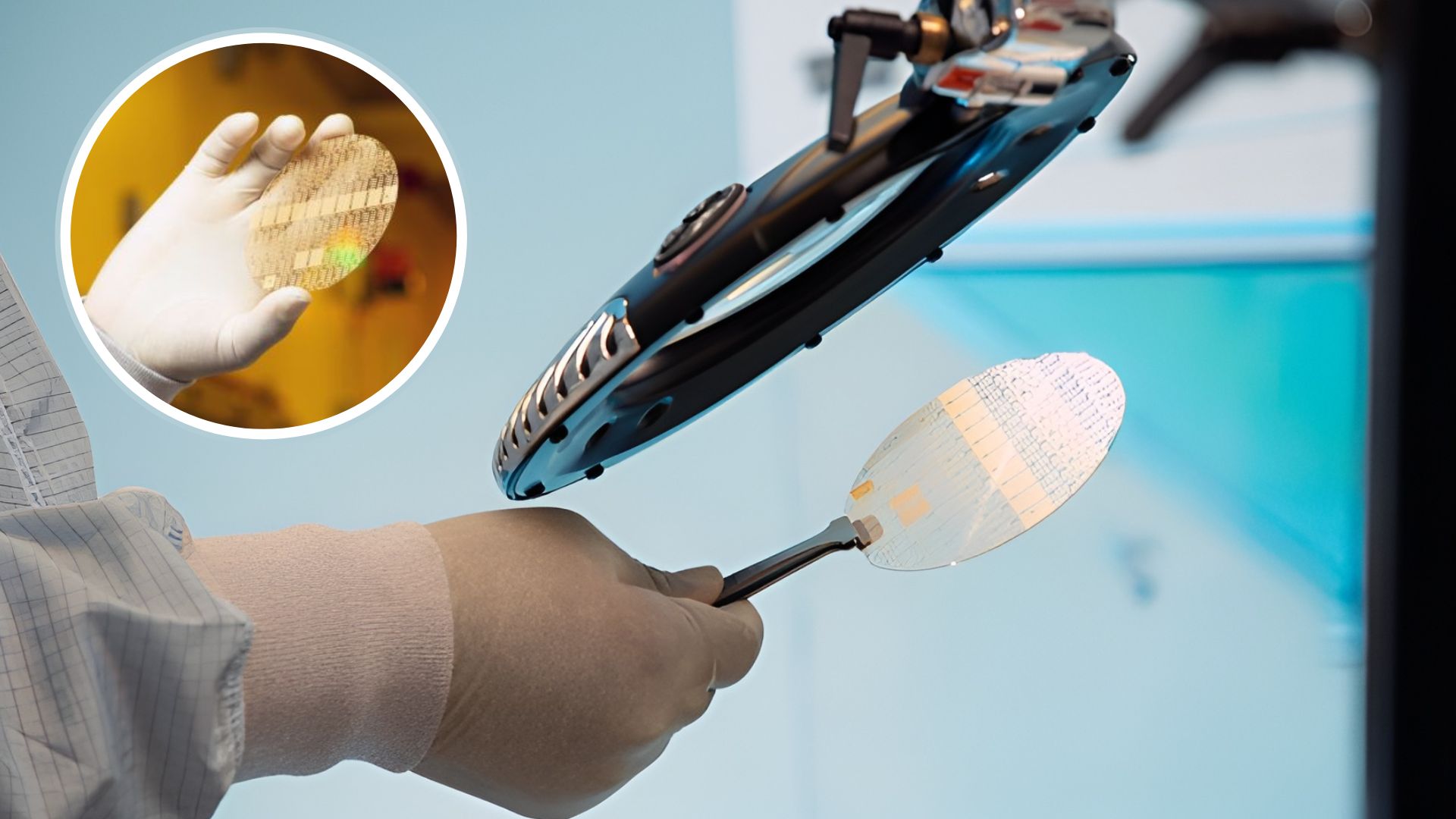
Northrop Grumman has secured a $7 million DARPA contract to develop diamond-enhanced microchips that could handle far more power without overheating. The work forms Phase 2 of DARPA’s Technologies for Heat Removal in Electronics at the Device Scale program, known as THREADS. Researchers want to solve a growing problem inside advanced military electronics: heat. Modern radio-frequency chips generate enormous amounts of heat in increasingly compact spaces. Engineers often limit their performance to prevent damage or premature failure. Northrop Grumman believes diamond could change that equation. Heat limits chip performance The aerospace and defense firm plans to integrate diamond directly into advanced semiconductor devices. The material would pull heat away from microscopic hotspots inside high-power RF circuits. Diamond offers exceptionally high thermal conductivity. According to Northrop Grumman, it can conduct heat about five times faster than copper. That capability could allow chips to operate at higher power levels without reaching damaging temperatures. The technology targets systems where power and size remain critical constraints. Potential applications include military communications, radar and satellite links. Ben Heying, director of microelectronics at Northrop Grumman’s Space Park Foundry, said temperature has long restricted semiconductor performance. “Embedding diamond directly into chips works like a turbocharged cooling system,” Heying said. “It keeps the chips cool so we can crank up the power without risk of burnout.” Northrop Grumman will now try to push the technology significantly further under DARPA’s second THREADS phase. Diamond channels carry heat Engineers at the company’s Microelectronics Center have developed methods for placing microscopic diamond structures within semiconductor devices. Northrop Grumman partnered with Stanford University on the approach. Their process grows diamond on the backside of a device and within microscopic channels. Those channels provide a direct path for heat to escape areas where temperatures can rapidly rise. The company has already conducted high-power tests involving diamond-based semiconductor technology. It says those tests supported the material’s potential for advanced electronics. Gallium nitride remains a major material for high-power and RF applications today. Yet even GaN devices face thermal limits as engineers demand greater output from smaller hardware. Better cooling could help change that tradeoff. During THREADS Phase 1, Northrop Grumman increased power density by 3.3 times. Power density measures how much electrical power engineers can pack into a given area. Power density faces another jump Phase 2 now aims to increase power density by more than three times again. If successful, the effort could produce substantially more powerful RF transmitters without requiring proportionally larger electronics. That matters for defense systems where every additional watt creates cooling and packaging challenges. Smaller, more capable microchips could also support future military satellites and communications systems. High-power electronics must often operate for long periods under demanding conditions. Northrop Grumman has researched diamond-based thermal technology since 2019. The THREADS program now gives the work a larger pathway toward practical semiconductor manufacturing. The company also says its open-access foundry model could make the technology available across the broader U.S. microelectronics industry. That could prove important beyond a single defense program.Northrop Grumman‘s diamond approach places that cooling solution directly inside the semiconductor. The next phase will determine how far that idea can push military electronics beyond today’s thermal limits.Get the latest in engineering, tech, space & science - delivered daily to your inbox.Aamir is a seasoned tech journalist with experience at Exhibit Magazine, Republic World, and PR Newswire. With a deep love for all things tech and science, he has spent years decoding the latest innovations and exploring how they shape industries, lifestyles, and the future of humanity.
Diamond-cooled microchips boost power density 3.3x for military radar signals
Full Article
Original Source
Read the full article at Interestingengineering →KhanList aggregates and links to publicly available news content. We do not host full articles from third-party sources. Always verify important information with original sources.