
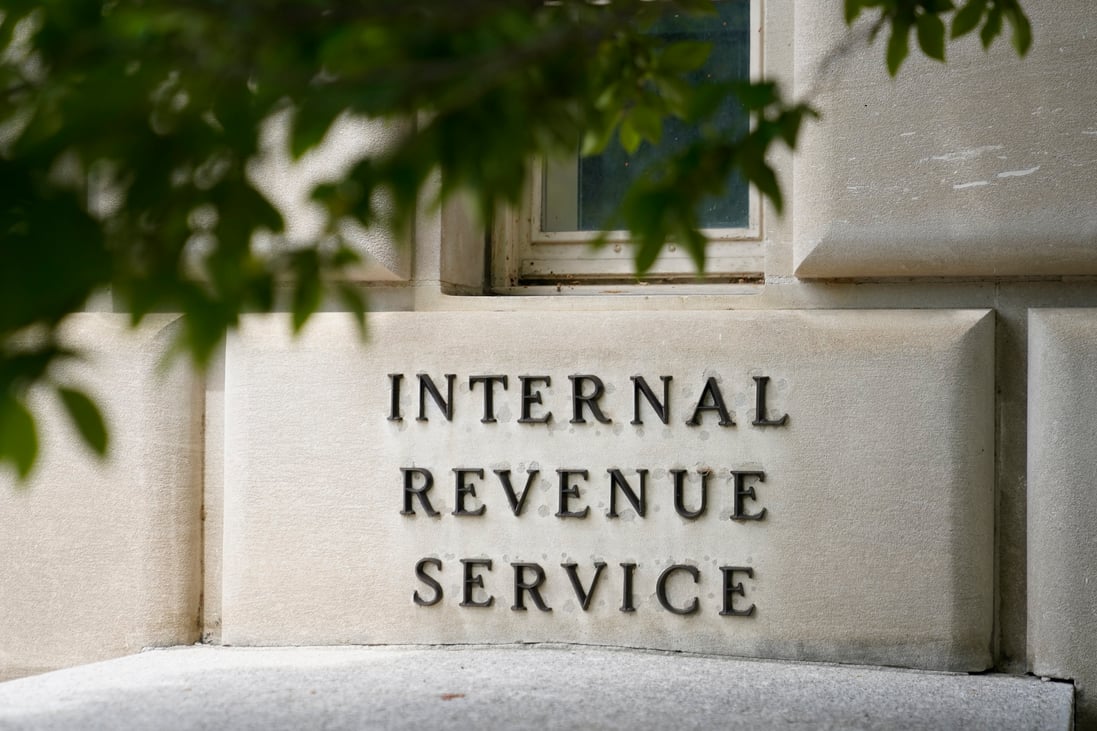
Federal law protects taxpayer data collected by the IRS, with some exceptions — including when a taxpayer is under criminal investigation.(CN) — The Trump administration told a First Circuit panel Wednesday that ICE should be able to demand the Internal Revenue Service hand over the addresses of noncitizen taxpayers for the purpose of mass deportations.Following a lawsuit led by a community organization for economic development, a federal judge in February blocked the data-sharing agreement between the IRS and the Department of Homeland Security, finding it likely violates taxpayers’ privacy rights and could create a chilling effect on immigrants filing their taxes and attending community events.DHS argues the judge abused her discretion by enjoining a memorandum of understanding in which the Trump administration said it planned “to take immediate steps to identify, exclude, or remove aliens illegally present in the United States.”Federal law protects taxpayer data collected by the IRS, including immigrants’ information with some exceptions, including when a taxpayer is under criminal investigation.First Circuit judges pressed Justice Department attorney Jacob Christensen on Wednesday on how that exception was defined when ICE used it to get the addresses of 47,000 noncitizen taxpayers from the IRS last year.Christensen said each of the people in question were subject to a final order of removal.“The basis for the criminal investigation is just that they have a final order of removal?” U.S. Circuit Judge Seth Aframe asked, then applied the logic to driver’s licenses.“Everyone in a state needs auto insurance,” the Joe Biden appointee said. “Everyone with a driver’s license … could be under criminal investigation for not having insurance?”U.S. Circuit Judge David Barron, a Barack Obama appointee, said the concern would be whether just labeling people as “under investigation” was enough to comply with the law.And U.S. Circuit Judge Julie Rikelman pointed out ICE first tried to get the addresses of 1.28 million people — including those who hadn’t passed the 90-day grace period to leave the country after receiving a removal order.“You need some other fact that indicates that actually there’s been crime,” said Rikelman, a Biden appointee.“If you can only commit a crime when you have A plus B, and all the agency alleges is A, what we’re asking you is: How could there be a good faith belief that a crime has been committed?”Christensen kicked off his rebuttal by telling the judges that each of the 47,000 people whose addresses ultimately were shared had passed the 90-day mark. However, when the judges asked, he couldn’t say whether that decision had to do with any criminal statute.“I don’t know what led IRS to do that,” Christensen said.The panel raised the criminal investigation exception with an attorney for lead plaintiff Community Economic Development Center of Southeastern Massachusetts, an organization that works with residents and businesses.Attorney Joshua Rosenthal of Asian Law Caucus said it was important to note the controlling statute applies to the entire government, not just the IRS, and has to refer to a “meaningful” investigation.“It has to be far fewer than 1.2 million to actually be a real investigation under the statute,” he said.According to Community Economic Development Center, the IRS policy prompted a decrease in membership and attendance, as noncitizens feared exposing themselves to the risk of having their personal data shared with immigration enforcement.Judges asked Rosenthal why noncitizens beyond the plaintiff groups should get relief.“The first is in order to provide complete relief without requiring an unjustified disclosure of the membership lists of those organizations in a context in which — this entire case is about keeping their identities private,” Rosenthal said.He said the lower court determined “the most appropriate relief, at this interim stage of the case, is to just keep that information in a laptop in a drawer where the government maintains it is.”The panel did not indicate when it would rule.It’s not the only challenge to the IRS-ICE data-sharing agreement making its way through the courts. Last month the D.C. Circuit upheld another federal judge’s finding that the agreement violated the law thousands of times.U.S. Circuit Judge Cornelia Pillard, an Obama appointee, noted under the IRS statute, in order to release personal information, the requester needs certain information about a taxpayer, including their address — yet the data-sharing agreement doesn’t have such a standard.When ICE requested information on nearly 1.3 million taxpayers last year, Pillard noted, it used the same point of contact for every request. “The district court found it facially implausible ‘that a single individual could be ‘personally and directly engaged’ in approximately 47,000 criminal matters’ against all the taxpayers whose information ICE sought.”Subscribe to our free newslettersOur weekly newsletter Closing Arguments offers the latest about ongoing trials, major litigation and rulings in courthouses around the U.S. and the world, while the monthly Under the Lights dishes the legal dirt from Hollywood, sports, Big Tech and the arts.Additional Reads
DHS pushes for IRS data to carry out mass deportations
Full Article
Original Source
Read the full article at Courthousenews →KhanList aggregates and links to publicly available news content. We do not host full articles from third-party sources. Always verify important information with original sources.