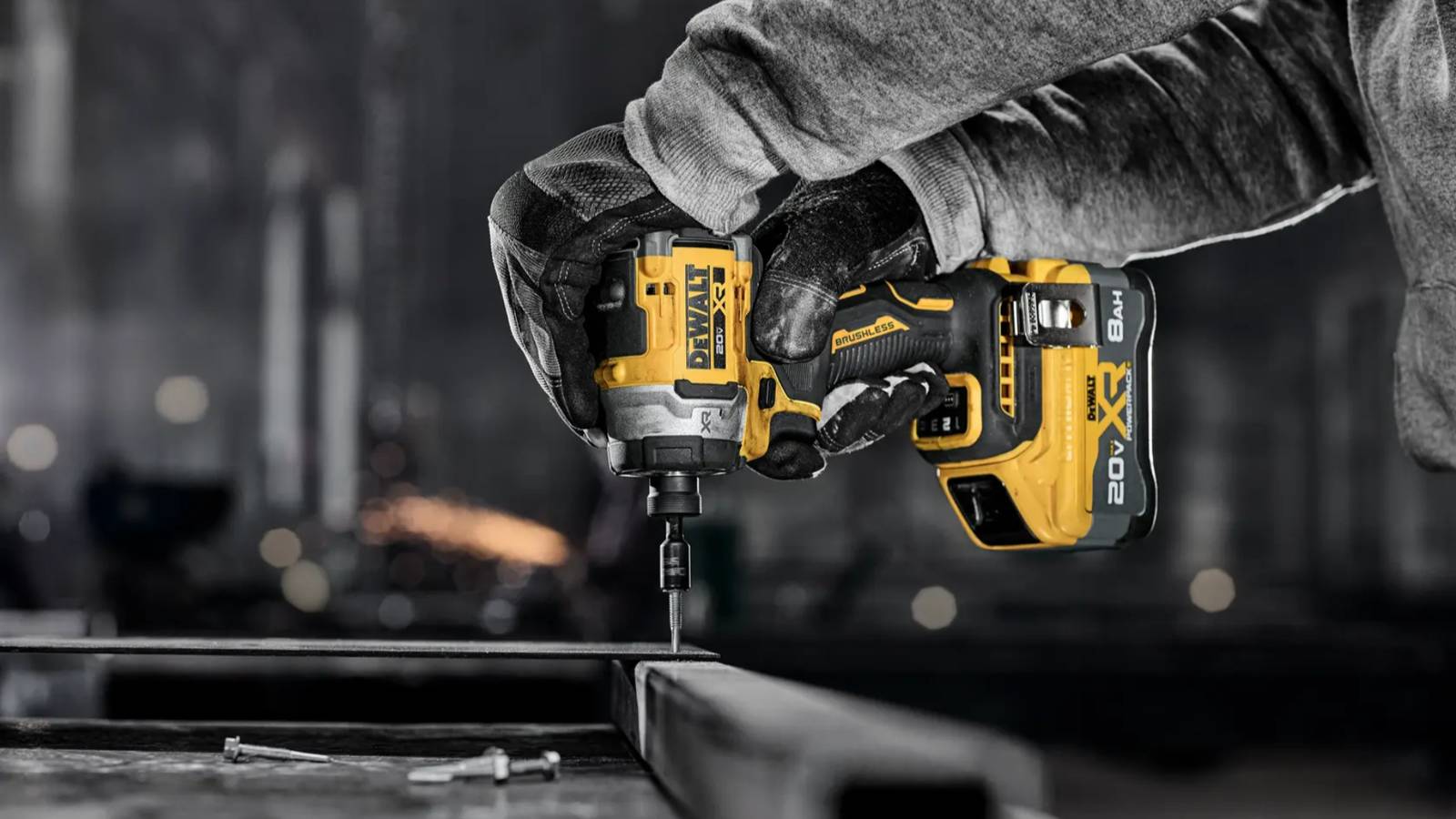
Published Jul 21, 2026, 7:00 AM EDT Aggy is a veteran writer and editor in the technology and gaming space. Having served as a Managing Editor for high-traffic digital publications, alongside being an editor and consultant for over a dozen sites. Aggy's published work spans a wide and respected array of tech and gaming outlets, including WePC, Screen Rant, How-To Geek, Android Police, PC Invasion, and Try Hard Guides. Beyond editorial work, Aggy's direct experience in the tech sphere extends to app development. Aggy has published two games under Tales and is always eager to learn and do more. He also likes working on computers and researching in his spare time. He knows about Windows, Linux, Audio, Video, and much more. Buying into a tool ecosystem is supposed to mean your gear works together. That's the whole point of sticking with one brand. DeWalt has leaned hard on that idea with FlexVolt. Unfortunately, it does come with a lot of stipulations, and it can feel like a trap if you don't know any better. While I like DeWalt, and they can be budget friendly, I think it could be clearer in its marketing for its batteries. DeWalt doesn't make it clear that your batteries don't work together The compatibility only goes one way The FlexVolt battery platform from DeWalt was made to cut the cord on heavy-duty job site tools, and it worked well with the 20V MAX tools people already owned. That backward compatibility was the whole pitch. The idea was that you wouldn't have to throw out your existing investment to step up to a more powerful system. One battery ecosystem, and that sounds awesome for buyers. That promise did its job. It made people comfortable buying in because they believed their 20V MAX batteries weren't going anywhere. Unfortunately, the compatibility only runs in one direction. A FlexVolt 60V battery will drop right into a 20V MAX tool without issue, but not the other way around. DeWalt physically molds plastic tabs into the battery slots of its 60V tools that stop a 20V MAX pack from even sliding in. It's not a software limitation or a firmware lock; there's literally a piece of plastic in there specifically designed to block it. This becomes a real problem when you buy bare tools. Bare tools are sold without a battery or charger, and they make sense when you already have compatible batteries sitting on the shelf. If you buy a 60V FlexVolt chainsaw or circular saw and assume your 20V MAX packs will run it, you won't find out otherwise until you're standing there with the box open. At that point, you're looking at spending another $150 to $250 per battery. That's before you think about a compatible charger like the DCB118, just to use the tool you already bought. The whole setup where one 60V bare tool quietly forces you into buying an entirely new battery system is exactly how ecosystem lock-in works in practice. The original marketing never lied outright, but it could be interpreted as leaving people with the impression of a shared platform that doesn't really exist the moment you try to run a 60V tool on a 20V battery. Regular batteries do not have the parts to run bigger tools Credit: DeWalt A standard 20V MAX pack uses five lithium-ion cells wired in series. A FlexVolt pack is a much bigger animal because it contains 15 cells, split into three groups of five. What makes the FlexVolt clever is a spring-loaded mechanical slider built into the battery itself. When you drop a FlexVolt pack into a regular 20V tool, actuators inside the tool’s slot mechanically press the switch. This forces the three cell groups to wire in parallel. The battery outputs 20V, the same as any standard pack, but with three times the capacity. This is why you can throw a big FlexVolt battery onto a regular drill and run it all day. When that same battery goes into a 60V FlexVolt tool, things work differently. The 60V tool leaves that switch alone, so the battery can stay in its default state where the cell groups can be wired in series, which stacks the voltages and delivers 60V to the motor. The tool also has copper bridging terminals that connect the cell groups to complete the circuit. A standard 20V pack just can't do any of this. It doesn't have 15 cells, so it can't give you 60V no matter how it's wired. It has no internal switching mechanism. And it doesn't have the terminal layout that a 60V tool needs to function. That's why the plastic tab is there. You end up stuck buying expensive batteries or managing two systems Credit: DeWALT The engineering side of the argument is hard to dispute. Running an 1800-watt tool on a standard 18- or 20-volt battery would mean pulling around 100 amps of continuous current, and that's just not practical. You'd need wiring so thick it would barely fit inside the tool; the heat generated would be enormous, and your battery cells would burn out fast. Bumping up to the 60V MAX platform drops that draw, so it is more manageable. Less current means less heat, less wear, and motors that can actually run the way they're supposed to. The physical key that stops a 20V battery from going into a 60V tool isn't difficult. It's there because plugging the wrong battery in could cause a serious failure. If you're thinking about going deeper into this ecosystem, it's worth knowing what you're actually signing up for. The batteries can be pricey, but the weight adds up with the design, too. You can technically throw one of these into a compact drill or impact driver, but it throws off the balance badly, and your arm will feel it after an hour, especially when working overhead. The bottom line is you're choosing between two less-than-ideal options. You either get to spend the money to standardize everything on FlexVolt batteries or live with two separate battery systems that don't talk to each other. Don't fall for the Dewalt Trap None of this makes DeWalt a bad choice. The FlexVolt platform is genuinely well-engineered. It was not invented to push you toward a more expensive battery. If you're buying into 60V tools, go in knowing you're committing to a separate battery system with expensive batteries. If you're okay with that, go all in on it. DeWALT 20V Max battery starter kit Get two DeWALT 20V MAX battery packs and a charger for one low price. And for a limited time, Home Depot will give you free tools when you buy this kit.
DeWalt's battery lineup has a compatibility trap most buyers miss
Full Article
Original Source
Read the full article at Howtogeek →KhanList aggregates and links to publicly available news content. We do not host full articles from third-party sources. Always verify important information with original sources.