
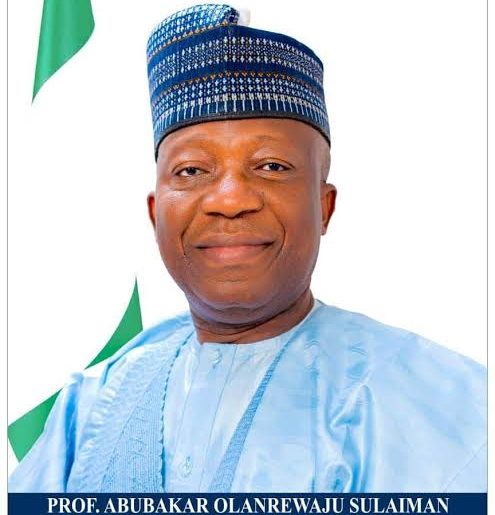
Sunday Aborisade in Abuja The Director-General of the National Institute for Legislative and Democratic Studies (NILDS), Prof. Abubakar Sulaiman, has called for a fundamental shift in Nigeria’s approach to youth development, insisting that young Nigerians must move from being mere beneficiaries and electoral tools to active co-creators and monitors of public policy and finance. Sulaiman made the call yesterday in Abuja at the 2026 State of the Nigerian Youth Dialogue, organised around the theme, “A Youth-Centred Nigeria: From Policy Commitments to Meaningful Investment and Action.” The DG was represented at the occasion by Mrs. Joke Akinsanmi, the Institute’s Director Training and International Cooperation. The programme was jointly organised by the Federal Ministry of Youth Development, NILDS, Democracy Convening Alliance, ActionAid and Plan International Nigeria. The Director of Programme and Influencing, Plan International Nigeria, Dr. Helen Idiong, also participated in the dialogue. Sulaiman said the integrated approach adopted for the programme, combining the experience of youth organisation experts with practical public policy knowledge and institutional placements, was consistent with global best practices. He expressed confidence that the dialogue would become a catalyst for actionable policies, sustainable development and meaningful change for Nigerian youths. He reaffirmed NILDS’ commitment to the initiative and called on stakeholders to work collectively towards building a generation of young Nigerians capable of strengthening and safeguarding the country’s democracy. He said the need for urgent action had become imperative given that roughly 60 per cent of Nigeria’s population is under the age of 30, describing the youthful population as a huge reservoir of creativity and economic transformation. However, the NILDS Director-General lamented that young Nigerians continued to confront severe socio-economic challenges arising from unimplemented policies, unfulfilled political promises and systemic exclusion from governance. According to him, Nigeria must urgently move beyond dialogue and political rhetoric to strategic interventions anchored on evidence-based budgetary advocacy, policy accountability and firm institutional commitments. He said, “Nigeria sits at a crucial development crossroad, with roughly 60% of its population under 30. This youthful majority holds immense potential for creativity and economic transformation. “Yet, young Nigerians continue to face steep socio-economic hurdles, hindered by unimplemented policies, empty political promises, and systemic exclusion. “We must therefore shift from mere dialogues and political rhetoric to strategic interventions into evidence-based budgetary advocacy, policy accountability, and institutional commitments.” Sulaiman disclosed that NILDS had deliberately expanded its mandate beyond its traditional role as a legislative research institute. He said the institution is positioning itself as a national centre of excellence for democratic capacity development, legislative strengthening, policy innovation, leadership development, gender inclusion, youth engagement and institutional reforms. He said the institute had, over the years, strengthened collaboration with the National Assembly, development partners, universities, government institutions, civil society organisations and international democratic institutions to deepen legislative research and evidence-based policymaking. According to him, such collaborations had also enhanced institutional capacity, advanced gender-responsive governance, supported democratic reforms and expanded opportunities for young people to participate meaningfully in governance. The NILDS boss stressed that democracy could not thrive without deliberate investment in people, urging stakeholders to translate policy commitments on youth development into concrete budgetary allocations and measurable programmes. He expressed concern that Nigeria’s political processes remained largely dominated by older generations, while young people were frequently reduced to instruments of electoral manipulation and violence. “Our political processes remain the exclusive domain of the older generation, while young people are too often relegated to tools for electoral manipulation and violence,” he said. Sulaiman also criticised the gap between policy formulation and implementation, noting that government documents and policy commitments often failed to translate into tangible outcomes for young Nigerians. “At the same time, well-crafted government documents and policy commitments fail to translate into action, leaving youth programs scattered across sectors without real budgetary backing or a steady financial plan,” he added. He said the dialogue was therefore designed to produce immediate and actionable strategies capable of aligning government’s youth policies with robust budgetary provisions and effective implementation. The NILDS chief urged participants to use the platform to interrogate the processes of budgeting, implementation and oversight, stressing that young Nigerians must acquire the capacity to track public investments and demand accountability from institutions. He said, “To our youth, you have been given the platform to learn, build capacity, and shape a better future. “We believe this initiative will elevate young people from being consulted stakeholders to active co-creators and monitors of public policy and finance.” Sulaiman further urged the youths to maximise the opportunity provided by the dialogue by seeking clarification on budgetary allocations, implementation mechanisms and oversight responsibilities. He said doing so would equip them to monitor government investments and strengthen public accountability.
Devt Goals: NILDS DG Decries Youth Exclusion, Unimplemented Policies, Electoral Manipulation
Full Article
Original Source
Read the full article at Thisdaylive →KhanList aggregates and links to publicly available news content. We do not host full articles from third-party sources. Always verify important information with original sources.