
During his first year of psychiatry residency, Carl Zhou, MD, of the University of Ottawa in Ottawa was studying national guidelines for treating depression and noticed that exercise was recommended as a first-line adjunctive treatment. Yet there was little guidance on how clinicians should prescribe exercise for patients.“This felt to me like a gap between the evidence and clinical practice,” Zhou told Medscape News Canada. Bridging that gap meant “highlighting the benefits of exercise for brain health and encouraging clinicians to approach [exercise] as a structured intervention, with specific, individualized recommendations,” as outlined in a recent Viewpoint published online on November 3 in Brain Health.“There’s a perception that exercise is somehow less ‘medical’ than pharmacotherapy or psychotherapy, despite a growing body of randomized trial evidence supporting its therapeutic benefits,” he said. “We need to move beyond treating physical activity as an optional lifestyle suggestion or afterthought.”Even when clinicians recognize the benefits, however, “they may lack the training, time, or resources to translate that knowledge into an actionable plan for patients,” Zhou acknowledged. “But simply telling patients to exercise more can be unhelpful and potentially discouraging.”How Exercise HelpsThe evidence of exercise’s benefits for brain health “is arguably stronger than many clinicians realize,” Zhou said. “Exercise affects the brain through several interconnected pathways. It improves cardiovascular and metabolic health, reduces inflammation, and supports neuroplasticity, or the brain’s ability to adapt and form new connections.”Carl Zhou, MDZhou is particularly interested in research on the muscle-brain axis. “When we exercise, our skeletal muscles release signaling molecules called myokines that can influence processes involved in mood and cognition,” he explained. “We also have substantial clinical evidence demonstrating that exercise can improve depressive and anxiety symptoms,” as shown in a large network meta-analysis published in The BMJ. Analyses found that exercise is an effective treatment for depression, with walking or jogging, yoga, and strength training among the beneficial approaches.Some evidence also shows benefits for cognition, including among patients with schizophrenia, he added.‘Make Exercise Prescribing Feasible’Clinician buy-in is part of what’s needed to help promote exercise prescribing, Zhou said. “However, I don’t think convincing individual clinicians is enough. We also need healthcare systems that make exercise prescribing feasible,” using strategies such as integrating physical activity assessments into routine care, developing direct referral pathways to physical therapists or community exercise programs, and providing practical training for clinicians.The World Health Organization’s physical activity guidelines recommend 150-300 minutes of moderate-intensity aerobic activity per week, or 75-150 minutes of vigorous activity, alongside muscle-strengthening activities at least twice weekly. “But these are population-level targets,” he said, “and patients do not necessarily need to meet them immediately to experience benefits. Research suggests that meaningful mental health benefits may be had at substantially lower activity levels.”Zhou encourages clinicians to use the frequency, intensity, time, and type principle to structure exercise prescriptions, much as they would specify the dose and frequency of a medication. Intensity can be assessed using the “talk test.” At low intensity, you can comfortably talk and sing; at moderate intensity, you can talk but not sing; and at vigorous intensity, you can only manage a few words before needing to catch your breath. “This is a simple way for patients to gauge their exercise intensity,” said Zhou.Rather than telling a sedentary patient with depression to exercise more, a clinician can specify the type, frequency, intensity, and duration of the exercise. “We might prescribe brisk walking three times per week at a moderate intensity that allows conversation for 10 minutes per session,” Zhou suggested. “We can then assess how manageable that feels and gradually increase the duration or frequency.”The European Psychiatric Association has published guidance on physical activity specifically for patients with severe mental illness, he added.Other Considerations“Exercise is generally safe and beneficial, but there are a few important caveats,” Zhou said. “Exercise prescriptions need to account for medical comorbidities and physical limitations. For example, frail older adults, patients with unstable cardiovascular symptoms, or those at high risk for falls may need medical assessment or supervised exercise programs before increasing their activity.“There’s also a risk of inadvertently placing responsibility on patients without adequately addressing the barriers they face,” he noted. “Someone with severe depression may struggle to get out of bed, let alone attend a gym. Similarly, individuals with disabilities, limited incomes, or inadequate access to safe exercise spaces may have difficulty following even a well-intentioned prescription.”Overall, “exercise should be considered one component of comprehensive mental healthcare,” said Zhou. “We should avoid overstating the evidence or suggesting that exercise can replace established treatments when those treatments are indicated.”The greatest concern, in Zhou’s opinion, is providing patients with the practical support they need to achieve the benefits of exercise. “Ultimately, the best exercise prescription is one that the patient can realistically follow and sustain,” he said.‘What Gets Measured Gets Managed’Jane Thornton, MD, PhD, sport and exercise medicine physician and associate professor of family medicine, epidemiology, and biostatistics at Western University in London, Ontario, also favors exercise prescriptions. “Physical activity is one of the most powerful tools we have for brain health, and one of the most underused,” she told Medscape News Canada. Thornton is also health, medicine, and science department director at the International Olympic Committee.Jane Thornton, MD, PhD“One of the misconceptions is that people need to be young, fit, or free of health conditions to benefit,” she said. “In fact, age, frailty, chronic disease, functional limitations, or mental health challenges are often reasons to prescribe physical activity, not reasons to avoid it.”Clinicians may not feel they have enough time to counsel patients, enough training to prescribe physical activity, or confidence that patients will be able to follow through, Thornton acknowledged. “Yet we don’t withhold other therapies simply because behavior change is difficult. The reality is that physical activity has a dose, indications, benefits, and potential risks, just like any other intervention we prescribe.”Clinicians must recognize that physical activity is treatment, and not an alternative to treatment, she said. “For many conditions, including depression and anxiety, the question is no longer whether physical activity works. The question is how we assess it, prescribe it, and support it in ways that are meaningful and achievable for patients.”In effect, physical activity deserves the same place in the clinical conversation as medications, smoking, and alcohol use, she continued. “What gets measured gets managed.”The main pitfall of prescribing exercise is doing so incorrectly, she noted. Like Zhou, Thornton said that a generic recommendation to exercise more is rarely effective. “Like any intervention, physical activity should be individualized to a person’s health status, preferences, goals, lived experience, and environment.”In addition, access to safe spaces, time, resources, transportation, childcare, cultural relevance, and supportive environments all influence whether people can be physically active.“We need to avoid creating the impression that health outcomes are solely the responsibility of the individual,” Thornton said. “Physical activity is important, but people’s opportunities to move are shaped by broader social and environmental factors. When prescribed thoughtfully and supported appropriately, the risks are generally low. The greater risk is continuing to leave one of our most effective tools for physical and brain health largely on the sidelines.”Zhou and Thornton reported no relevant financial relationships.Marilynn Larkin, MA, is an award-winning medical writer and editor based in New York City whose work has appeared in numerous publications, including Medscape Medical News and its sister publication MDedge, The Lancet (where she was a contributing editor), and Reuters Health.
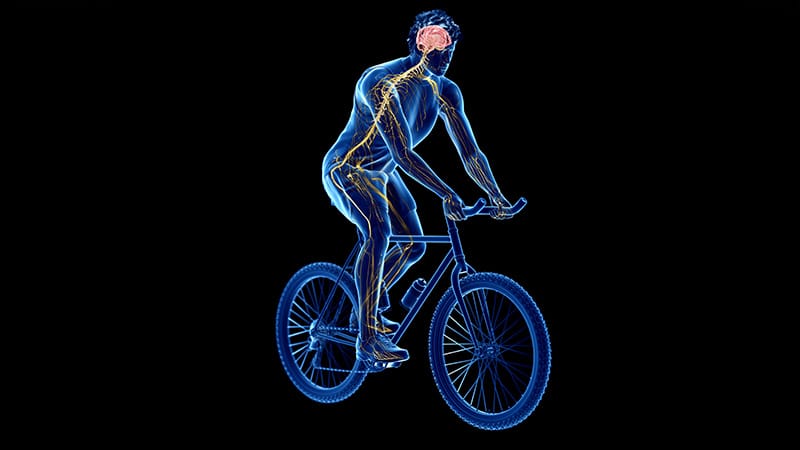
Detailed Exercise Prescriptions Can Support Brain Health
Full Article
Original Source
Read the full article at Medscape →KhanList aggregates and links to publicly available news content. We do not host full articles from third-party sources. Always verify important information with original sources.