
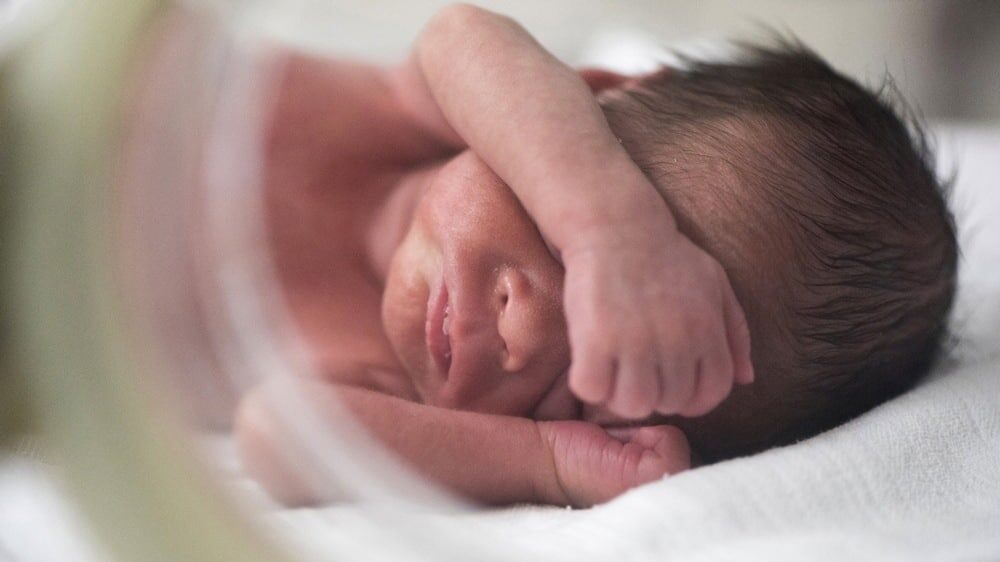
In a further effort to dismantle the previous government’s illiberal legacy, Hungarian PM Peter Magyar announced plans to ease the country’s strict adoption rules, potentially opening the way for single parents and same-sex couples to adopt children. Under restrictions introduced by Viktor Orban’s nationalist-populist government, gay couples and single parents could only adopt if they received ministerial approval, which meant a de facto ban. Magyar said that “it should not be politicians but experts who decide under which circumstances a child can have a balanced and happy life.” Under the guise of protecting the “Christian way of life”, Orban’s government banned books and media content it accused of promoting homosexuality. It also forced bookshops to sell such books wrapped in plastic and banned transgender people from changing their legal names. The law was found to breach EU principles of non-discrimination by the Court of Justice of the EU in April, shortly before the Hungarian general election that Orban’s party lost. The parliament is currently debating a draft law that would fundamentally change Hungary’s child-protection system. It is expected that, as part of the new legal package, the Magyar government will abolish the contested legislation, but also restrict the use of billboards and advertising which could cause anxiety or psychological harm to children, such as Orban’s notorious campaigns to paint the opposition as warmongers before the 2026 and 2022 elections.The government also launched a program to improve conditions at children’s homes. A new 220-page document revealed that conditions seriously deteriorated during the previous government’s 16 years in office, with some children literally starving in some state-funded children’s homes, where physical and sexual violence were widespread. Currently some 26,000 children (1.4 per cent of the total) live in some kind of state institution or with foster families in Hungary. Hundreds of babies without health issues are stuck in hospitals as the parents have been deemed unfit. Some 800 children are on the run with no trace of them. The government announced 10 billion forints (28 million euros) will go towards addressing the most pressing needs, though experts warn that creating significantly better conditions for children in foster and children’s homes will take time and substantial more financial resources. Staff are largely burnt out and underpaid, while foster families often do not meet the required standards. Improving conditions for children was one of the key promises of Magyar’s Tisza party. During the election campaign, Magyar personally addressed the issue when visiting several children’s homes. After being elected, he also invited 160 children in foster care to watch Hungary’s August 20 iconic fireworks show with him from Orban’s former office, the Carmelite Monastery. Many say that the neglect of the most vulnerable members of society (children from impoverished families) was proof of how hypocritical the Orban government’s claim to be concerned with family values and children really was.A military drone, partially visible on the beach in Rusinowo, in the West Pomeranian Voivodeship, Poland, 14 September 2026. Preliminary inspection indicates that it is a military drone from Russia. EPA/Adam Warzawa Poland and Russia trade threats after drone strike; far-right MEP in headlines again As Moscow steps up its hybrid war campaign in Europe, a Russian drone struck the locomotive of a Ukrainian passenger train travelling from Kyiv to Warsaw on Sunday afternoon, just 2 kilometres from the Polish border. The 206 passengers had already been evacuated after the crew received advance warning of the drone threat and no one was injured. The strike came shortly after a train carrying former British PM Boris Johnson, former Swedish PM Carl Bildt and other European security officials had passed through the same border station. Ukrainian Railways said it was possible that their train had been the intended target. Kaja Kallas, the EU’s High Representative for Foreign Affairs and Security Policy, said Monday the train attack was “clearly meant to scare Western countries from supporting Ukraine, from going to Ukraine to show support”. In response to the incident, Polish PM Donald Tusk convened an emergency meeting on Sunday with cabinet ministers and the security services. “What we should expect is that the coming weeks and months will be a period of greatly intensified Russian activity, and unfortunately we cannot rule out that this escalation will also affect our territory,” he said. Meanwhile, Polish Foreign Minister Radoslaw Sikorski told the BBC on Monday that he was “outraged, but not shocked” by the attack. “The Russians do liquidate people that criticise them, so I wouldn’t put it past them that they tried to hit the train with foreign officials,” he said. Asked about a recent assessment by the US-based Institute for the Study of War arguing that NATO should reconsider its policy of intercepting Russian aerial targets only after they enter allied airspace, rather than over Ukraine, Sikorski said the issue was being discussed both in Poland and within NATO and that he personally supported the idea. Earlier in the week, Sikorski travelled to the Yalta European Strategy conference in Kyiv, where he said he was confident NATO would “defeat Russia quite quickly”, even without US help, if Moscow attacked the alliance. “We have overwhelming superiority over Russia in air power,” he said, adding that if the Ukrainians had managed to destroy half of Russia’s refining capacity in six months, NATO “could do it in six weeks and take out the other half.” The remarks fit Sikorski’s longstanding argument that NATO enjoys a substantial economic and military advantage over Russia, and that, as he put it in a 2024 statement to parliament, “Putin’s only hope is our lack of determination”. His Kyiv comments drew a sharp response from Moscow. “If Poland enters into hostilities against Russia, our country will employ its entire arsenal of available forces and assets, and the Polish state will cease to exist within two to three days,” Nikolai Patrushev, an aide to President Vladimir Putin, told the Russian newspaper Argumenty i Fakty. It’s been a busy week for professional provocateur Grzegorz Braun, the far-right Polish MEP. On Tuesday, the European Parliament lifted Braun’s immunity over allegations of Holocaust denial, clearing the way for Polish prosecutors to pursue a case against him. It was the sixth time the parliament has waived his immunity. Braun leads the far-right Confederation of the Polish Crown party and has become notorious for confrontational incidents, including an assault on a pro-choice gynaecologist and using a fire extinguisher to put out a menorah during a Hanukkah celebration in parliament. Braun also posted a video last week showing him vandalising a memorial to soldiers of the Ukrainian Insurgent Army, UPA, in eastern Poland. “The UPA monument in the Dolhobyczow municipality, Hrubieszow county, must be removed,” Braun wrote alongside the footage. Police have been searching for those responsible since September 7. The memorial stands on the burial site of UPA soldiers killed fighting the Soviet NKVD in 1946 and has been damaged before. Earlier this summer, it was sprayed with paint and part of its decorative arch was cut away. The UPA is celebrated by many Ukrainians for fighting for Ukrainian independence during WWII, but its members were also responsible for the massacre of tens of thousands of Polish civilians in Volhynia and Eastern Galicia. “Representatives of Poland’s political fringe could find nothing better to do than wage war on graves,” Ukraine’s Foreign Ministry said, calling the act “shameful and immoral”. It added that Ukrainian memorials in Poland and Polish ones in Ukraine should both be protected. Polish Foreign Minister Sikorski condemned the incident on September 12 in Kyiv. “This is a great shame for our country,” he said, and, referring to Braun, added that “a man like this, who should already be behind bars, should not be seen anywhere in the world as the voice of Poland.” The footage of the vandalism has been submitted to prosecutors. Slovak Minister of Defence Robert Kaliňák during a press conference following the 156th session of the Slovak government on Wednesday, September 16, 2026, in Bratislava. Photo: TASR – Martin Baumann Kalinak defends paid work for arms tycoon; Slovak president scolds opposition, slams govt Slovak Defence Minister Robert Kalinak is under pressure to explain his dealings with Czech arms tycoon Michal Strnad, after it emerged that he worked for Strnad’s CSG defence group before returning to government. Czech investigative outlet Seznam Zpravy found that Kalinak’s Kallan Consulting was paid to help CSG sell its products in the United Arab Emirates, including Tatra military trucks. Kalinak confirmed the work and said his company received less than 1 million euros, partly in success fees. The problem for Kalinak is what happened next. After returning as defence minister in Robert Fico’s government in October 2023, he awarded Strnad-linked companies a string of large contracts. Among them were framework agreements worth 1.7 billion euros for Tatra trucks. There was no open competition for rival manufacturers to offer the Slovak military a better deal. Kalinak says there was no conflict of interest and insists the purchases represented good value for Slovakia. The Stop Corruption Foundation sees grounds for concern, saying the ministry failed to ensure sufficient impartiality given his previous financial relationship with Strnad’s companies. Another part of Kalinak’s defence is that he was out of politics when he worked for CSG. He was out of government and parliament, but not politics: Kalinak remained a deputy chairman of Fico’s Smer party and was publicly active in the party before its return to power in 2023. On Wednesday, Slovak President Peter Pellegrini went to parliament with a plea for politicians to look beyond their daily battles. Judging by the reaction in the chamber, he had little success bridging the divide. Government MPs applauded three times as Pellegrini criticised opposition parties for shunning talks on issues that should survive changes of government. The opposition benches did not applaud once, not even at the end of his almost hour-long state-of-the-republic address. Pellegrini, who founded the governing Hlas party after breaking with Fico’s Smer party in 2020, accused opposition parties of skipping discussions on Slovakia’s long-term development strategy and some of the roundtables he has convened at the presidential palace. Yet there was plenty for Fico to dislike too. Pellegrini questioned how the government has gone about repairing the public finances, saying people cannot be asked to tighten their belts while ministers increase their own incomes. He also suggested it was time to scrap the government’s controversial financial transaction tax. His most pointed criticism concerned parliament. Pellegrini called it “unacceptable” that sessions end with unfinished business and said the governing majority should stop postponing opposition attempts to dismiss ministers. The coalition provided an almost immediate illustration. Barely an hour later, its MPs blocked special sessions seeking the dismissal of Economy Minister Denisa Sakova and Interior Minister Matus Sutaj Estok – both members of Pellegrini’s former party, Hlas. The president also reaffirmed Slovakia’s place in the EU and NATO, while arguing that Europe should put more effort into finding a diplomatic end to the war in neighbouring Ukraine. (L-R) Slovak PM Robert Fico and Czech PM Andrej Babis attend a press conference after a Visegrad Group (V4) and Ireland leaders’ summit in Bratislava, Slovakia, 10 September 2026. EPA/JAKUB GAVLAK Czech PM proposes joint European missile defence system; coalition reaches budget deal In his keynote speech opening a defence summit in Prague this week, Czech PM Andrej Babis put forward the idea of creating a joint European missile defence program, dubbed Euro Patriot. “We must learn from the war in Ukraine and look for solutions, especially in the area of ballistic missile defence,” Babis said. “Maybe I’m naïve, but I would like to try to convince our partners to focus on such a project,” he continued, adding that the Czech domestic defence industry would also benefit from such an initiative. In presenting his plan, Babis looked to the past as he recalled the formation of the European aircraft manufacturer Airbus and to the future as he framed the project as essential to so-called “NATO 3.0” – a stance pushed by NATO Secretary General Mark Rutte where European countries take greater responsibility for the continent’s defence and security. Some have questioned how genuine Babis’s proposal and commitment truly are, considering the country continues to be one of the few NATO member states to spend less than 2 per cent of GDP on defence. It also comes months after close to a dozen EU countries launched a so-called European anti-ballistic program – spearheaded by France, the UK, Germany and Ukraine – to which Czechia is not formally participating. Warning in stark words that the current geopolitical state of the world “is leading us to World War III”, Babis insisted that the Czech “perspective brings a more realistic voice to the current debate”. The three-party ruling coalition of ANO, the Motorists and the far-right SPD have reportedly reached a compromise to push through the government’s draft budget for 2027. Presented earlier this month by Finance Minister Alena Schillerova of the ruling ANO party, the budget for next year originally planned for a deficit of close to 400 billion crowns (16.4 billion euros) – one of the highest in modern Czech history – sparking criticism from both the fiscally conservative Motorists and the populist SPD. Talking to reporters after coalition talks, Motorist chairman and Foreign Minister Petr Macinka said the 2027 deficit should be reduced by several billions, although details remain scarce. SPD leader and House Speaker Tomio Okamura also confirmed that an agreement was found while lamenting the fact that defence spending will not be reduced compared to the original plans and welcoming plans to cut benefits for Ukrainian refugees starting next year. A deficit of 389 billion crowns – based on the original proposal – would be the second highest after the record Covid-breaking year of 2021 and was immediately criticised by President Petr Pavel (whose signature is needed to approve the budget), opposition parties and coalition partners. The government should present its final draft before the end of September.
Democracy Digest: Hungary Opens Way for Adoption by Gay Couples
Full Article
Original Source
Read the full article at Balkaninsight →KhanList aggregates and links to publicly available news content. We do not host full articles from third-party sources. Always verify important information with original sources.