
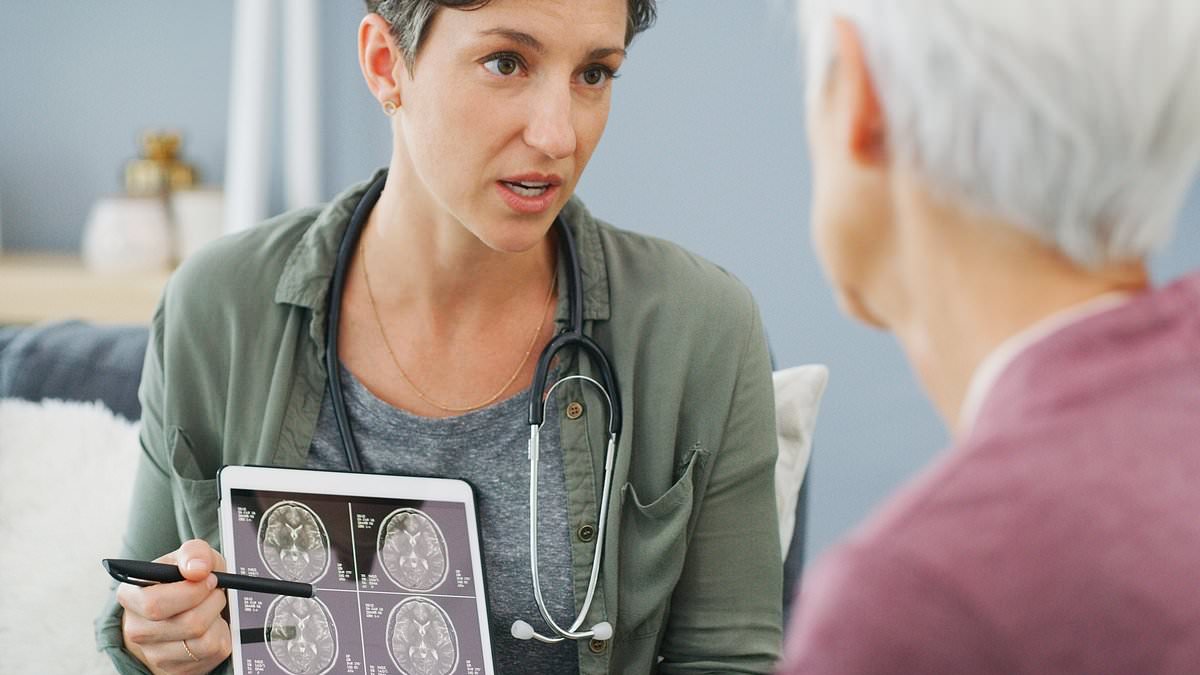
Dementia patients risk missing out on a timely diagnosis and breakthrough drugs because of a critical shortage of brain scanners.The machines are used to diagnose the disease and to check eligibility for cutting–edge treatments that can slow its progression for years.But new analysis by Alzheimer's Society reveals the UK has the lowest rate of MRI, CT and PET scanners among 16 comparable developed economies and those it does have are unevenly distributed across the country.The UK is lagging so far behind that it would need an additional 1,800 scanners to simply match France, which comes second bottom, the charity says.The latest NHS figures show England has 1,472 MRI and CT scanners, which equates to 23 for every one million people.But the rate varies almost three–fold between NHS areas, creating a postcode lottery of care.Staffordshire and Stoke–On–Trent has the fewest scanners, with just 13 per one million people, while North Central London has the most at 35 per one million people.Brain scans are a crucial part of a dementia diagnosis as they help clinicians investigate changes in the brain and rule out other causes of symptoms.They are also used to determine suitability for the latest drugs, such as lecanemab and donanemab, which work best in the early stages of disease and require regular brain scans to check ongoing suitability. These latest treatments are a game–changer as they target a known cause of the disease rather than just treating the symptoms and they have been shown to delay disease progression from mild cognitive impairment to moderate Alzheimer's disease by up to 8.3 years.These therapies are currently only available privately in England as the drugs watchdog NICE has ruled they would cost the NHS too much for the benefits they provide.But Alzheimer's Society warns the shortage of scanners means the NHS would be ill–equipped to cope should the decision be overturned when the outcome of an appeal is published next month.As a result, many patients who could benefit from the drugs would still risk missing out, denying them extended independence and precious extra time with loved ones.The charity says only two in three people living with dementia in England have a formal diagnosis and many are waiting too long to get one – potentially missing the crucial window in which to start treatment.It wants a new target that would see patients wait no more than 18–weeks for a diagnosis, following a referral by a GP to a specialist memory clinic.However, it warns that additional machines, which are shared in the diagnosis and treatment of other health conditions, will not be enough to overcome the crisis on their own.It highlights a recent Royal College of Radiologists report that revealed a 32 per cent shortfall in the consultant radiology workforce – the senior doctors who interpret the images. Without investment in staff, the additional equipment will not translate to additional diagnostic capacity, it adds.The findings come as the Daily Mail's Dementia Carers Together Appeal is raising money for new six–week courses for friends and relatives of people living with the disease.Delivered in partnership with Alzheimer's Society and the Mail Force charity, the sessions will give carers vital support and information about their rights and the services available to them.They will allow attendees to meet others in a similar situation and help to address the loneliness, exhaustion and overwhelming responsibilities many face following a loved one's diagnosis.The government has committed to doubling the number of CT and MRI scanners in England and Alzheimer's Society says ministers should ensure these new machines are distributed to help close the gaps in dementia diagnosis rates across the country.The number of CT and MRI scanners in England increased from 1,347 to 1,472 over the two years to March 2026, a rise of 125 machines or 9 per cent.Michelle Dyson, chief executive of Alzheimer's Society, said: 'It's encouraging to see the number of CT and MRI scanners increasing across every region of England, but we are starting from a desperately low base and we are lagging far behind our international peers.'An early and accurate diagnosis can help people understand what is happening, access the right support and plan for the future. Brain scans are a crucial part of a dementia diagnosis as they help clinicians investigate changes in the brain and rule out other causes of symptoms'As new treatments emerge, getting the right diagnosis is vital, as an accurate diagnosis is key to confirming eligibility.'But buying machines alone isn't enough.'We need more radiologists employed to use them and we need to make sure people living with dementia benefit from access wherever they live.'We cannot allow the next era of dementia diagnosis and treatment to be determined by your postcode – people with dementia deserve better than that.'Cognitive assessments, medical history and cerebrospinal fluid (CSF) tests, may also form part of the diagnostic process for dementia alongside scans. A Department of Health and Social Care spokesperson said: 'MRI and CT scanners are crucial for diagnosing dementia.'That’s why we’ve added an extra 125 and equipped them with cutting-edge AI technology, enabling doctors to see more patients and reduce the time it takes to scan a patient.'This has helped enable one million more scans across the NHS in England, and September saw a record number of diagnostic scans and tests delivered.' Dementia Carers Together Dementia Carers Together is raising money to fund new courses across the UK to give tens of thousands of struggling unpaid dementia carers vital emotional and practical support. For further information, visit dailymail.com/dementiaHow you can donateOnline: Click here.By Text: To donate £10, text CARER to 70115. To donate £20, text LOVE to 70115. To donate £30, text HEART to 70115. Texts will cost your donation amount plus your network charge.By phone: Call 0300 1234577. Standard charges may apply.By cheque: Send cheques made payable to Mail Force Charity to:Dementia Carers Together, 42 Phoenix Court, Hawkins Road, Colchester CO2 8JY
Dementia patients risk missing out on timely diagnosis and breakthrough drugs due to critical shortage of brain scanners
Full Article
Original Source
Read the full article at Dailymail →KhanList aggregates and links to publicly available news content. We do not host full articles from third-party sources. Always verify important information with original sources.