
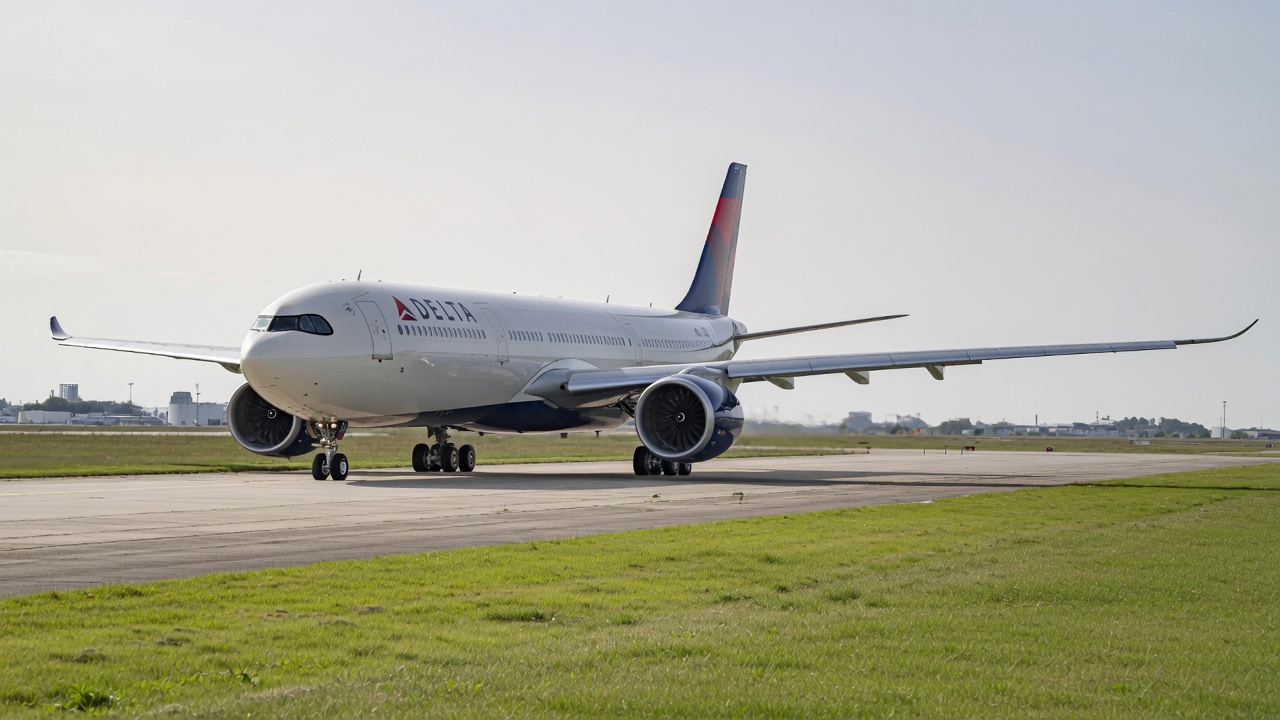
Delta Air Lines is set to return to Tokyo Narita after seven years, with a lone flight clearly aimed at ‘sticking it to’ Alaska Airlines. They fly exclusively to Haneda airport, and don’t really offer Asian connections beyond there. They gave up their Tokyo hub in favor or connecting passengers through Seoul on joint venture partner Korean Air. All of their flights go to the more-desireable close-in Haneda. But since Alaska Airlines now flies to Tokyo from Seattle, Delta is adding a flight the same airport – even though this will be the fifth Seattle – Tokyo flight, Alaska’s doesn’t appear to do especially well, and Delta’s hub is weaker than Alaska’s to support domestic connections for the flight (and these connections are likely to harm revenue for the airline’s existing Tokyo service). 1 daily A330neo from March 27, 2027 — Ishrion Aviation (@IshrionA) August 7, 2026 Delta Air Lines is returning to Tokyo Narita in 2027, seven years after eliminating the airport from its network. IshrionA reports that Delta will launch Seattle–Narita, and says the flight will operate daily with an Airbus A330neo beginning March 27, 2027. This will be a second daily Delta flight between Seattle and Tokyo, with Delta serving both Tokyo airports. Delta Walked Away From Its Tokyo Narita Hub Delta’s Narita operation came from Northwest Airlines. Northwest began serving Tokyo in 1947, moved its Tokyo hub from Haneda to Narita when the new airport opened in 1978, and used broad fifth freedom rights to carry passengers onward beyond Tokyo with flights across Asia. Tokyo Narita When Delta acquired Northwest in 2008, Northwest was serving 19 destinations from Narita. The combined network peaked at 22. U.S. flights fed Bangkok, Hong Kong, Manila, Singapore, Taipei and cities. Then Delta determined that the model had become obsolete. Long-range more efficient aircraft made flying non-stop from more U.S. cities to more destinations in Asia feasible, bypassing a Tokyo connecting hub. Opening up Haneda to transpacific flights meant that lucrative business travel wanted to fly there and not Narita, since it’s so much closer to the city. That left Tokyo Narita flights more for lower yield customers – the passenger mix didn’t support the same connecting traffic. Delta didn’t have a Japanese joint venture partner adding traffic and connecting options beyond Tokyo like United had with ANA and American with Japan Airlines. In 2017 Delta said it was moving connecting traffic through Seoul instead of Narita. Its transpacific joint venture with Korean Air began in 2018, giving it a much better connecting hub at Incheon. Delta says more than 2,000 passengers in each direction now connect over Seoul daily. Then Delta received a large portfolio of Tokyo Haneda route authorities, so it could move the flights it wanted to operate from the U.S. to the close-in airport. It ended Narita – Singapore in 2019, moved Manila to Seoul, and completed its planned Narita exit in March 2020, putting all of its U.S.–Tokyo flying at Haneda. The reported new flight begins exactly seven years after Delta had scheduled its final Narita–Manila service to end on March 27, 2020. But Delta will have no meaningful connecting options beyond Tokyo for this flight. It will rely solely on passengers flying to Tokyo willing to travel to the less-desireable airport. Tokyo Haneda Delta’s Seattle Hub Underperforms Already In 2023, 95% of Delta’s Seattle domestic routes ranked in the bottom 40% of its network on a stage-length adjustment basis. Delta called its first Seattle – Tokyo Haneda flight loss-making when it cancelled the route in 2015, although that service had undesireable overnight timings at Haneda. Seattle – Hong Kong ended in 2018 because of soft demand. Seattle – Taipei had only a 71% load factor during its first year. (That’s a flight that has offered unusually good SkyMiles pricing much of the time.) Amsterdam and Paris have broadly filled, though, so Asia is weaker for Delta from Seattle than Europe. And Delta has also upgauged Seattle – Haneda, Seoul, Shanghai and Taipei to Airbus A350s, adding about 55,000 annual seats and 40% more premium seats. It opened a Delta One lounge, secured priority access to 18 gates, and added Rome (also sticking it to Alaska Airlines) and Barcelona. Upgrading Taipei, though, was more about matching product to the Taiwanese carriers flying the route and upgauging cargo capacity. Delta averaged about 233 tons of cargo per month on the route before the upgauge and 515 tons afterward. Delta Airbus A350 It’s no coincidence that Delta is putting new Asia flights at Los Angeles. They haven’t succeeded in Seattle as they’d hoped, but they see a window to grow in Los Angeles while competitors are gate-constrained there. They launched Los Angeles – Hong Kong in June and will add Los Angeles – Manila in March 2027. Alaska’s Tokyo Flight Has Been Weak, More Narita Capacity Won’t Help Either Airline Alaska made Seattle – Narita the first route in its plan to build a global gateway in Seattle with at least 12 long-haul destinations by 2030. The flight launched in May 2025 using a Hawaiian Airlines Airbus A330. Alaska said the local market had about 400 Seattle – Tokyo passengers in each direction per day (this does not support five daily flights). Half of the tickets sold for Alaska’s inaugural season originated outside Seattle. Alaska has better domestic feed in Seattle than anyone else. The route’s performance started out very weak. Government T-100 data show an aggregate 77.8% load factor for May through December 2025, compared with 88.7% for Japan Airlines on the same route. Alaska did have a strong March 2026 with a 90.5% load factor. That doesn’t say anything about fares or profitability. However, Alaska says the flight did finally make money in March. However, public T-100 data through April put Alaska’s Narita load factor at 79.7% for the first four months of 2026. In contrast, Japan Airlines Seattle – Tokyo Narita has run at an 89% load factor. They are part of a joint venture with American and connections beyond Tokyo. Plus, they use a smaller Boeing 787-8. This Is More ‘Strategic Flying’ From Delta Delta already serves the more convenient Tokyo airport. It no longer has a Narita hub to feed. There’s not much more business to win on the route, it’s not a clear winner for Alaska to begin with and Delta is likely to underperform Alaska on the route (and even if this route fills up, that may just be drawing connections away from strong Delta flights with lower fares). It was Alaska’s first Asia flight, and Delta appears to be dumping capacity on a city pair they already serve out of spite. After Alaska announced Seattle–Rome, Delta matched it three weeks later. Topics on this page
Delta Quit Tokyo Narita Seven Years Ago. Now It’s Returning To Hurt Alaska Airlines In Seattle
Full Article
Original Source
Read the full article at Viewfromthewing →KhanList aggregates and links to publicly available news content. We do not host full articles from third-party sources. Always verify important information with original sources.