
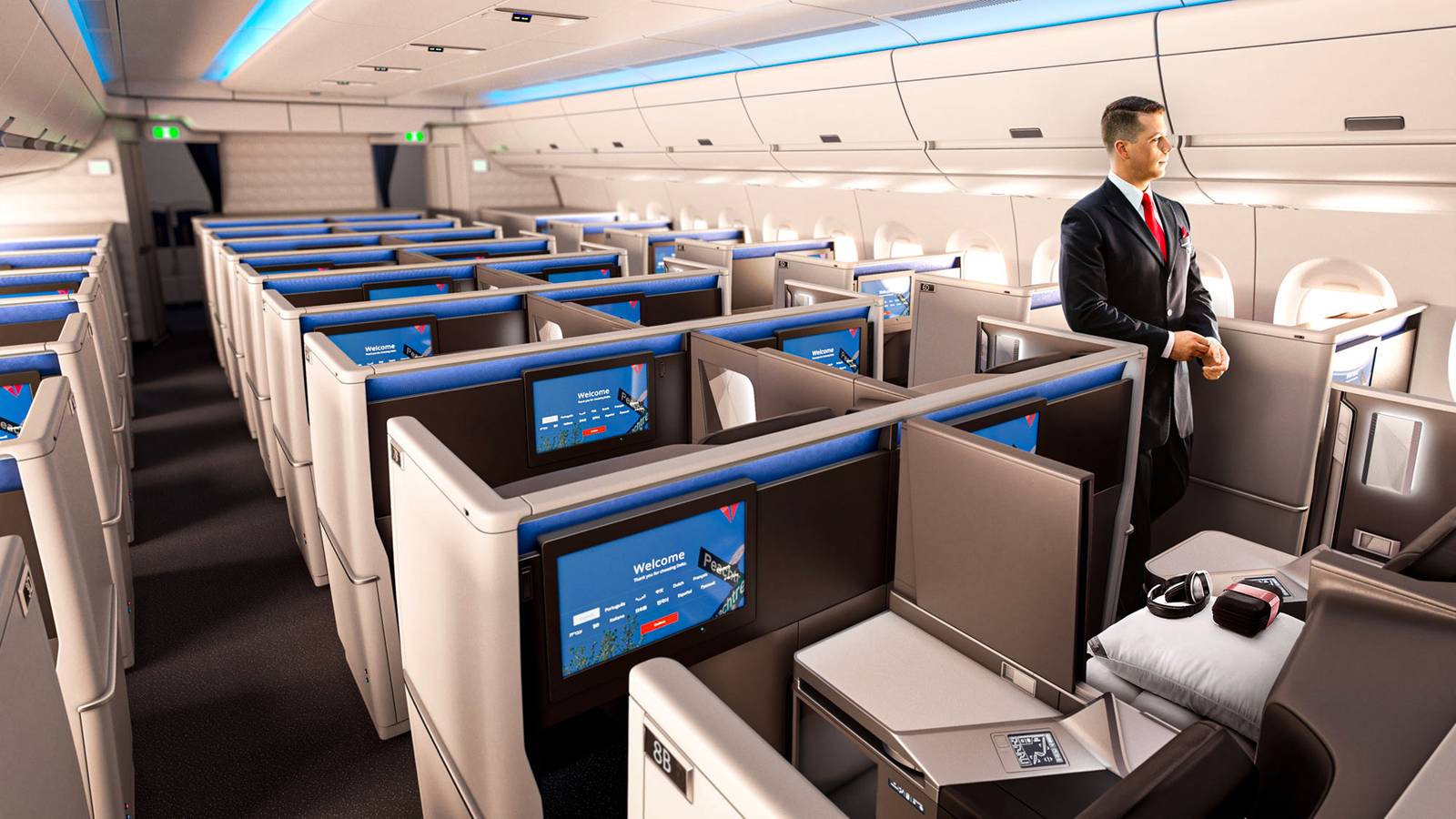
Published Jul 18, 2026, 2:00 PM EDT Airline and Airport Management Graduate, Student Commercial Pilot and Commercial Aviation Writer. Based in London & Nagoya A massive, unexpected award drop has completely rewritten the playbook for transatlantic travel this summer. Delta Air Lines, well known for charging astronomically high, dynamically priced award rates that frequently climb past 300,000 SkyMiles for a single business class seat, has quietly opened the floodgates. Across dozens of routes connecting major hubs in the United States to prime European destinations, travelers can now book Delta One suites for just 115,000 SkyMiles one-way, accompanied by a small $5.60 in government taxes and fees. For co-branded credit cardholders, there is even more reason to be interested in this development. Using the standard co-branded credit card benefit that provides a 15% discount on award travel, the required mileage drops to a net total of 97,750 SkyMiles per direction. The scale of this premium release, covering thousands of peak summer travel dates from mid-June through late August 2026, is a rare window into the changing dynamics of the high-end transatlantic aviation market. Opening Up Premium To The World Credit: Shutterstock Rather than offering a handful of seats on less desirable routes, this flash sale has made a staggering amount of premium inventory available to the public. Award tracking tools initially identified more than 4,000 distinct itineraries priced at this low saver rate across peak vacation months. These flights span from primary gateways such as New York and Boston to key European cities, including Rome, Paris, Barcelona, Madrid, Lisbon, and Munich. Perhaps most surprising is that the flat rate applies equally to ultra-long-haul routes, such as a ten-hour nonstop crossing from Salt Lake City to Paris, which typically commands a heavy premium. The onboard experience of Delta One is a major upgrade over typical transatlantic cabins, particularly on modern aircraft like the Airbus A330-900. Passengers are treated to fully lie-flat seats that convert into a bed measuring 79-80 inches (200.6-203.2 cm) in length, paired with a generous seat width of 22 inches (55.8 cm). The staggered layout ensures that every passenger has direct aisle access, while the sliding suite doors provide an extra layer of privacy during overnight flights. On the ground, travelers booking these awards gain access to elite pre-flight services, including priority check-in, fast-track security, and entry into the highly rated Delta Sky Clubs and Delta One Lounges. This redemption opportunity represents a monumental difference in value for a loyalty currency that has often been jokingly referred to as SkyPesos by frequent flyers who feel frustrated by ongoing program devaluations. When cash prices for transatlantic business class tickets routinely exceed $5,000 round-trip during peak summer months, redeeming under 100,000 miles each way is an extraordinary return on investment. Delta does not pass along heavy carrier-imposed fuel surcharges on its own flights, so the cash portion remains at a rock-bottom $5.60, making this one of the most accessible premium award opportunities in years. How It Stacks Up Against European Rivals Credit: Shutterstock Why this release has caught the attention of the travel community comes down to the standard award options across the Atlantic and how they compare. European loyalty programs like Air France-KLMFlying Blue or Virgin Atlantic Flying Club frequently advertise lower base mileage requirements for business class seats, though those awards carry a massive financial catch. Passengers booking a flight through Virgin Atlantic, for instance, are routinely hit with carrier-imposed fuel surcharges that can top $1,000 for a round-trip ticket. Delta's decision to keep cash fees restricted to basic government taxes completely changes the financial calculation for budget-conscious luxury travelers. Delta's recent promotional award space stacks up well against competing options on typical transatlantic routes during peak summer travel periods. United's MileagePlus also provides the small $5.60 one-way cash fee, which demonstrates that the US-based carriers are far more lenient when compared with the European carrier fees. Where they lack, however, is the entry-level mileage cost, which is up to half of Delta's discounted rates. Even though 115,000 miles is a substantial sum, the total out-of-pocket cost makes it an incredibly attractive option. Airlines frequently use partner programs to quietly unload excess premium inventory, but releasing this space directly through their own native booking engine is highly beneficial. It allows the carrier to keep valuable customer interactions within its own ecosystem, encouraging loyalty members to burn down their massive point balances while feeling rewarded for their brand loyalty. What Does This Mean For Airlines As A Whole? Credit: Shutterstock The sudden appearance of thousands of saver-level business class seats raises intriguing questions about the broader health of premium travel demand. For the past three years, international travel has enjoyed an absolute surge, with affluent leisure travelers eagerly paying record-high cash prices to sit at the front of the plane. However, as transatlantic capacity reaches all-time highs and economic pressures begin to moderate consumer spending, airlines can no longer take full business class cabins for granted. This sudden injection of award space indicates that carriers are shifting their strategies to proactively secure baseline passenger loads well ahead of the summer rush. It also highlights a growing sophistication among modern luxury travelers who are increasingly unwilling to settle for poor redemption values. By dropping these coveted summer seats, Delta is reclaiming a highly favorable narrative for its loyalty program, proving that SkyMiles can still deliver unmatched value when the timing is right. To maintain the prestige of their high-fee co-branded credit cards, airlines have to periodically offer high-value redemptions that remind consumers why they keep those cards in their wallets year after year. Ultimately, this flash sale provides a fascinating glimpse into the current state of airline revenue management. Rather than letting business class seats fly empty or relying entirely on last-minute, cash-only upgrades, major carriers are increasingly using targeted award sales to capture value from high-value point holders. For travelers, it shows that while the golden era of fixed award charts may be gone, incredible opportunities still exist for those who are ready to book when the floodgates open. What Unbundling Means For Rewards Credit: Shutterstock The timing of this massive SkyMiles release is not a coincidence. It occurred almost simultaneously with Delta’s official rollout of its new Basic Business fare category, which is really the ultimate frontier of unbundling premium travel. Historically, purchasing a business class ticket was an all-inclusive experience that guaranteed premium ground services, lounge access, and generous baggage allowances. Today, major airlines are stripping away these perks to lower cash price points while preserving their elite products for high-yield corporate accounts. Through Basic Business, Delta allows passengers to experience the onboard luxury of a Delta One suite, but everything else is stripped away. Passengers traveling on these entry-level cash fares are assigned seats only after check-in, receive significantly reduced SkyMiles, and face restrictive change policies. Most notably, after a grace period ending January 18, 2027, they will be entirely barred from entering the newly designed Delta One Lounges and standard Sky Clubs unless qualified through credit card status or membership status. The new unbundled environment highlights the extraordinary value of the 115,000-mile award dump. Cash buyers are being pushed into a tiered ecosystem in which every premium service carries an extra fee, though award tickets booked through this SkyMiles sale avoid the basic restrictions completely. Passengers booking with miles are placed into the standard Delta One Classic category, which includes complimentary seat selection, free flight changes, and full lounge access. If Only All Flights Cost The Same Credit: Shutterstock If booking this deal sounds appealing, pricing asymmetry will instantly prove to be a problem. Eastbound flights from the United States to Europe are widely available at the 115,000-mile level, while the return flights heading westbound start at a massive 205,000 SkyMiles. Because westbound flights operate during the day, paying a premium for a flatbed is often less of a priority for travelers than on overnight eastbound legs. To avoid this cost disparity, smart flyers can combine different booking strategies. One popular approach is to fly eastbound on Delta One and book Delta Premium Select for the daytime return, which starts at 92,000 SkyMiles. Alternatively, searching for return flights using partner programs like Virgin Atlantic or Air France-KLM tends to be a cost-effective option, as these frequently offer lower mileage requirements for partner-operated westbound flights back to the United States. In order to make this asymmetric booking strategy work seamlessly, the departure airport for your return journey can make all the difference. Flying out of major European hubs like London Heathrow can trigger hefty local departure taxes and passenger service charges that can easily add hundreds of dollars to your ticket, even when booking with partner miles. Instead, heading to a mainland European city like Dublin or Paris for your return flight can dramatically lower those out-of-pocket cash fees, especially if you are traveling with multiple bags up to the generous 70 lbs (32 kg) baggage limit allowed for premium passengers. A Future Under Six Digits? Credit: Shutterstock The sudden appearance of 115,000-point redemptions for premium cabins raises questions about the future of airline loyalty programs. For several years, flyers have watched standard business class award rates balloon into six-digit territory, making the dream of a premium crossing feel increasingly out of reach. This unexpected summer dip could signal that the algorithm has finally met its match in consumer price sensitivity, leading to a stabilization of dynamic pricing models. Alternatively, it might simply represent a brief operational truce in an ongoing battle to fill seats during a highly competitive travel season. Delta alone has expanded its summer schedule to over 650 weekly flights, flooding the market with lie-flat beds that feature up to 76 inches (193 cm) of sleeping space. When corporate travel predictably slows during the peak vacation months of July and August, airlines face the challenge of selling these high-yield spaces to leisure travelers. Instead of letting these prime suites fly empty, carriers use loyalty programs as a release valve. Slashing award rates to 115,000 miles allows the airline to clear out excess inventory and pacify frustrated frequent flyers, all without officially lowering their cash ticket prices or diluting their premium brand image. Having a 115,000-mile rate is a welcome relief, but it is unlikely to become the new year-round floor for business class travel. Autumn is approaching, and corporate accounts will begin to resume their standard schedules, meaning the balance of supply and demand will shift back in favor of cash-paying business clients. To capitalize on these pricing valleys, the best strategy remains flexibility, targeting shoulder periods and monitoring seat maps for sudden inventory releases.
Delta One To Europe Just Hit 115,000 SkyMiles: Here's What It Says About Summer 2026 Premium Demand
Full Article
Original Source
Read the full article at Simpleflying →KhanList aggregates and links to publicly available news content. We do not host full articles from third-party sources. Always verify important information with original sources.