
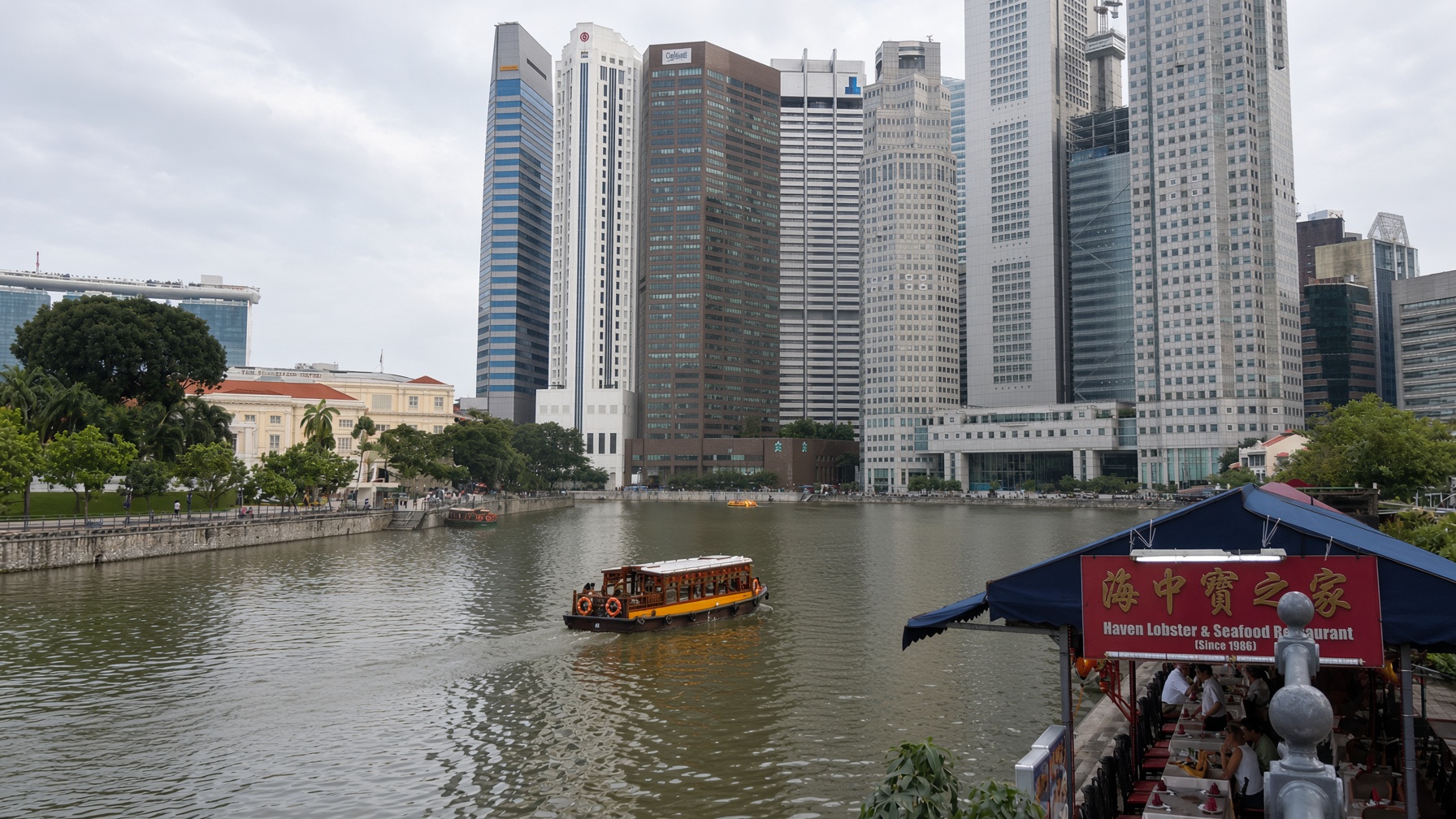
Delta Air Lines is throwing an Asian night market in Seattle on December 2, where they’ll finally reveal non-stop Singapore service. That would put Delta into a roughly 17 hour nonstop fight with Singapore Airlines, giving its customers a way to reach one of Asia’s most important business centers without changing planes in Seoul. Enilria reported the December 2 Seattle announcement several days ago and highlighted the invitation’s Asian theme. Aviation watchdog JonNYC has now corroborated that direction, reporting that the event has an “Asian destination inspired holiday night market theme,” then adding: “Singapore as in.” Heard the Delta Seattle event has an Asian destination inspired holiday night market theme — JonNYC (@xJonNYC) November 23, 2026 The invitation is for Delta Night Market at MOPOP, Seattle’s Museum of Pop Culture, on Wednesday, December 2 from 6 p.m. to 9 p.m. It promises food, drinks, shopping and cultural experiences built around Asian destinations, along with city-inspired charms guests can collect. The line that caught Enilria’s attention: Seven destinations. One unforgettable night. Delta’s current and announced East and Southeast Asian destinations are Tokyo, Seoul, Shanghai, Taipei, Hong Kong and Manila. That’s seven airports when you count both Tokyo Haneda and Narita, but six cities. If they’re counting cities, Singapore makes seven. So I don’t take this to mean seven new routes, though of course there may be additional routes announced. . And there’s a more concrete clue than the party theme. In a July 29 presentation to a Pacific air traffic coordination group, Delta wrote: New markets announced for 2027 are Manila and Singapore. This Has Been Coming For More Than A Year I reported Delta’s plans to return to Singapore and Manila in October 2025. The following month, I wrote about their internal view that Europe was already pretty full, and that future long haul growth would lean heavily toward Asia, from both Los Angeles and Seattle. JonNYC has been all over this story. In August, Delta revealed at an event for its largest corporate customers that Singapore would follow closely behind Manila. Los Angeles–Manila is scheduled to begin March 28, 2027, initially three times weekly before going daily June 7. Delta last served Singapore in September 2019, as a flight from Tokyo Narita. They dismantled the connecting hub inherited from Northwest, moved their U.S.–Tokyo flying to Haneda and relied more heavily on Korean Air’s Seoul hub to get passengers elsewhere in Asia. Singapore Is A Market Delta Needs To Sell Singapore combines regional headquarters, finance, technology and a wealthy local market. For the multinational business traffic Delta wants, it has become more important than Hong Kong. There are now several times as many regional corporate headquarters in Singapore than Hong Kong. Hong Kong remains a major destination for the Greater Bay Area of China, while Singapore is where companies increasingly put the people managing businesses across the region. Plus, even for the China market Singapore increasingly matters. It’s the first stop for Nvidia chips before moving to Malaysia. Men just want to be seen 😂 https://t.co/a32B5SSQlV — Autism Capital 🧩 (@AutismCapital) November 10, 2026 Delta has been pushing Singapore traffic through Seoul on Korean Air. But a Seattle business traveler isn’t going to want that over a nonstop on Singapore Airlines, or for that matter the entire West Coast market is better served with a Singapore Airlines connection through Seattle, San Francisco or Los Angeles. Those choices can affect domestic flying and credit card spending as well. Meanwhile, Seattle is a shorter trip to Singapore than Los Angeles, which helps with fuel burn and payload on an already very long route. And Alaska is becoming a long haul competitor. It has announced Osaka and Tahiti for 2027, taking its announced Seattle intercontinental network to nine destinations, with a goal of at least 15 by 2030. Delta’s recent additions of Rome and Tokyo Narita have gone directly after Alaska. Singapore would give Delta a destination Alaska doesn’t fly itself. Delta has already invested in a Delta One Lounge and more gate access in Seattle. Adding a long business route gives them another way to sell that investment. The Seattle lounge photo below is courtesy of Delta. Delta’s Pacific Growth Hasn’t Produced Great Passenger Results I wrote last month that Delta’s Pacific passenger performance was trailing United and even American. Airline Pacific passenger revenue per available seat mile, Q3 2026 vs. Q3 2025 Delta Air Lines +5% United Airlines +10.9% American Airlines +11.3% Delta added 8% more Pacific capacity, while the share of seats filled fell two percentage points. Over two years, they added about 16% more flying while passenger revenue per seat mile barely moved. However, Delta reported $959 million in total Pacific operating revenue for the quarter against $756 million in passenger revenue. That’s another $203 million. Including it, total revenue per seat mile grew roughly 10%, rather than 5%. Delta doesn’t break out how much of that regional difference comes from cargo versus international joint venture settlements. Singapore has greater potential than adding a second Tokyo airport to go after Alaska. And it’s a stronger business market than Manila. There’s also an historical irony in taking on Singapore Airlines. The two airlines used to be partners. Singapore bought a 5% stake in Delta in 1989 and sold it a decade later, but their frequent flyer relationship lasted until May 2010. Back then, the best use of SkyMiles was redeeming for Singapore Airlines first class. Topics on this page
Delta Holding December 2 Seattle Event To Announce New Singapore Flight—And Pick A Fight With Its Former Partner
Full Article
Original Source
Read the full article at Viewfromthewing →KhanList aggregates and links to publicly available news content. We do not host full articles from third-party sources. Always verify important information with original sources.