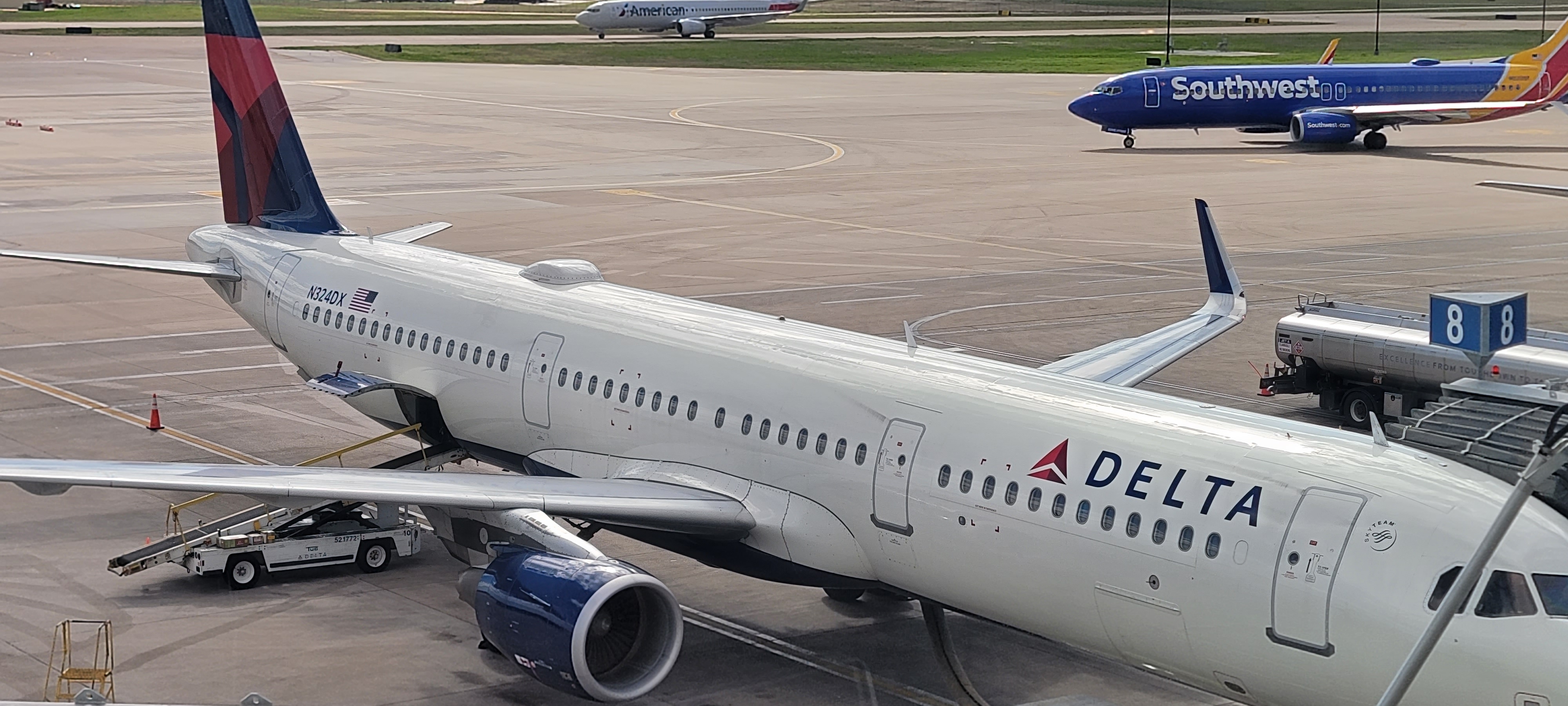
Delta Air Lines has spent years turning Austin into its next major operation, securing 15 gates, planning more than 40,000 square feet of lounge space and even announcing a new Paris flight starting next summer. On an earnings call last fall, they even admitted the reason – attract customers to their American Express credit card. Now CEO Ed Bastian has said where he is looking next: San Antonio. Asked about the airline’s growth opportunities on Scott McCartney’s Airlines Confidential podcast, Bastian explained the long-range Texas strategy: I think the long-term opportunities for us are more on the international side than the domestic. And, as you know, our domestic business is our bread and butter, and we’re always going to be investing and looking to grow that. So whether it’s the buildout in Austin or looking even further down the road for me in San Antonio, looking for places to continue to grow and expand into Texas—we’re not as big in Texas as we’d like. And so those are two markets that we have found some really good reception. Fifteen Years From Start To Finish In Austin Strategies like this have long lead times. They need the gates, lounges, employees, and aircraft. Austin took eight years to get to the Paris route announcement. I broke the news in June 2018 that Delta planned to make Austin a focus city based on a sales job posting that said the person would build local relationships to support the carrier’s “Focus City initiative.” The pandemic interrupted that build, American Airlines tried its own Austin growth experiment and when it retreated, Delta squatted the gates they’d been using until it was ready. They flew short intra-Texas flights subsidized by full fare migrants being transported from the border during the Biden administration to keep costs low and losses to a minimum. By 2025 Delta was approaching 30 Austin destinations. Its internal town hall described an 800% increase in connecting activity in four months and hundreds of bags transferring between flights even on a slow day. The carrier talked about roughly 150 daily flights as a longer-term ambition, bigger aircraft, a flight attendant base and a much larger local workforce. It has continued adding domestic breadth, seasonal leisure flying and international. Delta is slated to control 15 preferential gates on the existing main concourse. Southwest gets 18 gates in the new concourse, while American and United receive smaller footprints. Delta also took 41,206 square feet designated for club space – a 30,000 square foot Sky Club at the future tunnel interface to the new concourse (potentially with direct boarding to aircraft) while preserving the current 9,000 square foot Sky Club by the international gates which presumably becomes a Delta One lounge. This all may not arrive until the early 2030s. Austin Is An American Express Strategy Delta is looking at route planning beyond just ticket revenue and operational costs. In October 2025 Bastian acknowledged that Austin and Raleigh-Durham are places where Delta acquires a lot of American Express cards. A route can make SkyMiles more relevant to affluent local consumers who put groceries, restaurants, business expenses and everything else on a co-brand card. The network sells the card, and American Express is the largest and highest margin customer Delta has. Austin has a large professional and technology workforce, fast population growth and high household income. San Antonio is not as rich a card spend market as Austin. The cities are 75 miles apart but the economics are wildly different. San Antonio is large and growing, with military, health care, tourism, government and corporate demand. It also gives Delta a way to build in Texas without attacking American at DFW or United in Houston. Austin and San Antonio together create more relevance across Central Texas broadly. Delta Has Already Real Estate Coming In San Antonio San Antonio approved a long-term airline-use agreement while developing its new Terminal C with up to 18 gates, a new federal inspection facility and more than 29,000 square feet of club lounge space, with opening targeted for the second half of 2028. The original gate allocation contemplated four Delta gates in Terminal C, and the airline committed to a new Sky Club. It subsequently sought roughly 10,000 additional square feet for its club. Southwest fought the original plan, then settled with the city in May 2026 and signed the agreement, receiving three gates in Terminal C and three in renovated Terminal B once construction is complete. This Is Delta’s Second Run At Texas Delta’s airline’s first passenger service began from Dallas in 1929, and it operated a Dallas – Fort Worth hub for three decades. By the time Delta dismantled that hub in early 2005, it was cutting an operation that had roughly 250 daily departures to 66 cities. Meanwhile, Southwest built an enormous intra-Texas franchise. Delta became very strong nationally while remaining structurally weak in one of the country’s largest and fastest-growing states. Now Delta’s CEO says “We’re not as big in Texas as we’d like.” Henry Harteveldt, speaking after Bastian’s interview, remembered the old hub and framed the strategic opening well: American is headquartered in Fort Worth and United has a major presence at Houston’s George Bush Intercontinental. And, of course, Southwest is practically the unofficial state airline of Texas with an extensive intra-Texas network. I remember when Delta had a hub at DFW, and I keep thinking that they never should have walked away from that—that they should have made Dallas more of a focus city. I think it’s going to be really interesting to see what they do in Austin, potentially San Antonio, and who knows where else the airline looks. What “Coming For San Antonio” Probably Means Delta is unlikely to copy the Austin schedule. San Antonio has different corporate demand, less premium card spend and a strong Southwest presence. The first steps are more likely to be schedule depth to Delta hubs and a lounge that gives local premium customers a reason to choose the airline. A handful of non-hub business and leisure routes may follow as Delta learns which markets perform and as Terminal C opens. “Next” though may not be “soon.” Topics on this page
Delta CEO Says They’re Coming For San Antonio Next After Austin—Texas Comeback Is Already Taking Shape
Full Article
Original Source
Read the full article at Viewfromthewing →KhanList aggregates and links to publicly available news content. We do not host full articles from third-party sources. Always verify important information with original sources.