
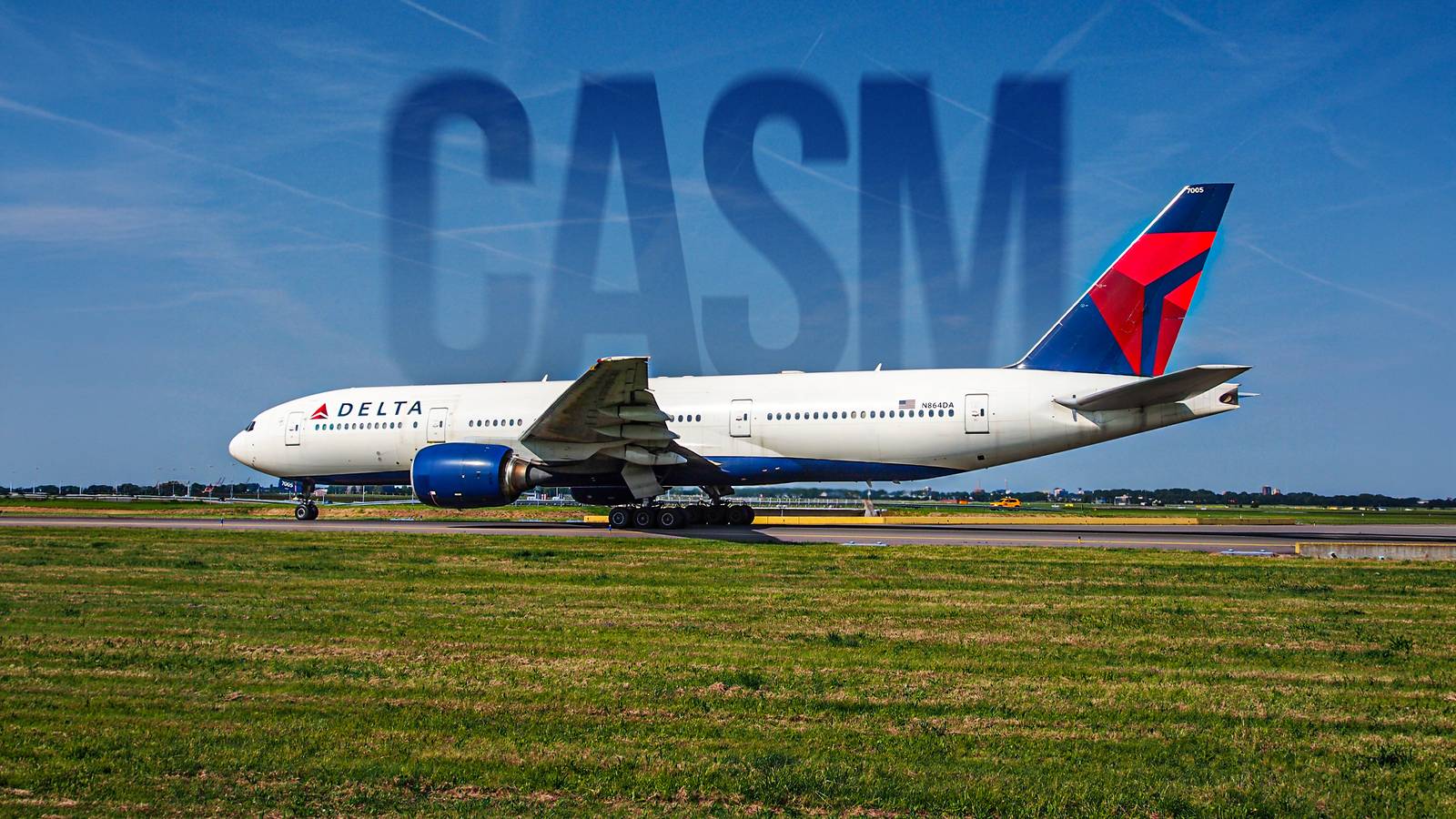
Before the days of the Airbus A350, the Boeing 777 was the clear jewel of Delta Air Lines' long-haul international fleet. Joining the airline's roster in 1999, the twin-engine widebody enabled the Atlanta-based carrier to expand its global coverage across transoceanic corridors with unprecedented operational authority. Whether crossing the Atlantic to European hubs or traversing the Pacific, the 777 family was what solidified Delta’s modern long-haul reputation for reliability, premium cabin comfort, and international reach. However, the unprecedented financial shock of 2020 abruptly altered the trajectory of global aviation, pushing network carriers to make drastic operational sacrifices to ensure liquidity. International passenger traffic plummeted, and daily cash burn spiked to nearly $50 million, so Delta accelerated its fleet modernization strategy by retiring all 18 of its 777 aircraft by December 2020. Including ten ultra-long-range 777-200LR variants, Delta began a full departure from older, high-maintenance twin-jets in favor of modern, high-efficiency Airbus widebodies. The Niche Delta Subfleet Delta's relationship with the 777 began back in 1999 with the arrival of eight 777-200ER aircraft, which immediately assumed heavy-lifting duties across prime transatlantic and South American routes. The sub-fleet reached its operational peak starting in 2008 with the introduction of ten 777-200LR (Longer Range) variants. Engineered for extreme endurance, the 777-200LR boasted a maximum range of 8,555 nautical miles (15,844 km), providing Delta the technical capability needed to connect distant global markets nonstop with no mid-route technical stops or substantial payload restrictions. Within Delta's network, the 777-200LR opened up flagship ultra-long-haul routes that were previously impossible or economically prohibitive to operate. Key routes included direct nonstop links such as Hartsfield-Jackson Atlanta International Airport (ATL) to Johannesburg Airport (JNB) and Los Angeles International Airport (LAX) to Sydney Kingsford Smith Airport (SYD), pairing extreme distance with high-demand premium demand. In Delta's standardized widebody layout, the 296-seat aircraft struck a balance between long-range fuel carriage and high-yield passenger revenue, establishing the carrier's presence in ultra-long-haul territory. Despite its exceptional capability, the 777 sub-fleet was more of a boutique operation within Delta's broader international network. Totaling just 18 airframes, the small fleet needed its own dedicated pilot bases, maintenance allocations, and bespoke spare-parts inventories. The 777-200LR's immense range made it an indispensable niche tool during periods of high demand and low fuel prices, though its unique operational demands left it vulnerable when airline strategy pivoted toward total fleet simplification. Retired After Being Refurbished? The sudden onset of the global health crisis in 2020 delivered an unprecedented financial shock to commercial aviation, destroying international demand almost overnight. With global travel restrictions taking effect and passenger volumes evaporating, Delta Air Lines faced a staggering daily cash burn of approximately $50 million. To survive the liquidity crisis, airline leadership had to take immediate, drastic action to slash capital expenditures, halt non-essential projects, and aggressively trim operating costs across every division of the company. In May 2020, Delta announced it would accelerate the retirement of its entire 777 fleet by the end of that year, turning what might have been a gradual, long-term fleet transition into an emergency restructuring measure, as noted by Simple Flying. This decisive pivot carried an immense upfront financial penalty; Delta expected noncash restructuring and write-down charges ranging from $1.4 billion to $1.7 billion as it purged the aircraft from its balance sheet. Walking away from an entire widebody family meant taking massive capital write-downs to remove long-term structural overhead. The fiscal irony of the decision was particularly striking given the recent capital investments poured into the airframes. Delta had completed a comprehensive multi-million-dollar cabin refurbishment program across its 777 fleet as recently as January 2019, introducing brand-new Delta One suites, premium select seating, and modern inflight entertainment systems. Furthermore, the 777-200LR units were relatively young, averaging only about 11 years of age. Nevertheless, the existential cash drain of the pandemic rendered sunk cabin investments irrelevant in the face of insurmountable operating costs. The A350 Just Made Sense Outside of the immediate cash crisis of 2020, the key justification for permanently grounding the 777 fleet was unit economics, the main reason why most airlines choose to go through a retirement phase. Specifically, Cost per Available Seat Mile (CASM) came into focus because, as airline revenue collapsed, operating efficiency became the key metric for fleet survival. Older widebody aircraft burdened by higher fuel consumption per passenger could no longer justify their place in a shrunken, cash-conscious network operating at drastically reduced load factors. The tipping point centered on a decisive fuel burn differential. According to Delta's operational analyses, incoming Airbus A350-900 aircraft burn 21% less fuel per seat than the 777s they replaced. The massive efficiency advantage stems from modern high-bypass Rolls-Royce Trent XWB engines and advanced composite wing designs optimized for long-haul aerodynamics. In an environment where fuel prices and cash preservation dictated corporate viability, a 21% per-seat fuel-burn disadvantage was something Delta just could not accept. When combined with lower heavy-maintenance overhead and streamlined pilot training, the Airbus widebody achieved a significantly lower CASM than its Boeing counterpart. The 777's robust performance and large cabin were no longer economic assets when every seat had to generate positive margins under depressed travel demand. So, by trading legacy widebodies for next-generation European twins, Delta found a way to greatly lower its cost baseline for intercontinental operations, because ultimately, thermodynamic efficiency supersedes mechanical ruggedness during systemic industry downturns. What The New Era Looks Like Retiring the 777 was the centerpiece of a strategic initiative led by Chief Executive Officer Ed Bastian, focusing on simplifying and modernizing Delta’s long-haul fleet. Operating mixed-manufacturer widebody fleets inherently leads to structural inefficiencies across flight operations, simulator training, and spare-parts logistics. With the 777 no longer in the overall equation, Delta aligned its entire intercontinental operations around a core group of modern European twin-aisle jets, led by the Airbus A330 family and the flagship A350-900. Standardizing around a common Airbus cockpit design allowed the carrier to optimize pilot cross-crew qualifications, streamline engine maintenance contracts, and scale supply-chain logistics across its global hubs. Rather than managing bespoke maintenance programs for disparate widebody families, Delta concentrated its technical resources on high-density, highly efficient Airbus equipment that could seamlessly cover both medium-haul transatlantic runs and ultra-long-range Pacific routes. The removal of the 777 also accelerated Delta's broader commitment to environmental sustainability and operational agility. Retiring legacy widebodies in favor of next-generation aircraft allowed the carrier to reduce total carbon emissions per available seat mile and create a cleaner, more predictable fleet structure. What began as an emergency liquidity measure during an unprecedented downturn ultimately fueled a long-term strategic vision: transforming Delta's international footprint into one of the most streamlined, fuel-efficient widebody operations among global legacy carriers. The Final Farewell The 777’s two-decade era at Delta Air Lines came to an emotional close on October 31, 2020. The final commercial flight, operating as Delta flight 677 from New York to Los Angeles, departed just one day after a penultimate flight from the airline's primary hub in Atlanta. Aviation enthusiasts, long-time flight crews, and loyal frequent flyers gathered to bid farewell to the iconic twin-jet, marking the end of a flagship chapter that had defined Delta's global expansion since 1999. Following the 777's departure, the A350-900 seamlessly stepped into the breach, assuming Delta's most challenging long-haul routes. The A350 quickly proved its capability in ultra-long-range sectors, taking over demanding routes such as Atlanta to Johannesburg. With modern quiet-cabin technology, higher humidity levels, and lower cabin-pressure altitudes, the new flagship matched the reach of the 777-200LR while delivering superior passenger comfort and significantly lower seat-mile costs. Delta’s long-haul modernization strategy continues to expand around the Airbus widebody premise. To build on the success of the A350-900 and support ongoing international growth, the airline has committed to adding the larger A350-1000 to its fleet starting in early 2027. As noted in Simple Flying analysis, the next-generation flagship will offer higher premium seating capacity and enhanced cargo capacity. What is clear is that the legacy of ultra-long-haul innovation initiated by the 777 lives on in a new era, in a world defined by efficiency, sustainability, and fleet commonality. A Faster Departure Than Expected The swift retirement of Delta Air Lines' 777 fleet resulted from extraordinary economic disruption that can permanently accelerate long-term fleet evolution, turning beloved flagship aircraft into financial liabilities when unit costs no longer align with market realities. While the long-range variants possessed unmatched technical reach and had recently received multi-million-dollar cabin upgrades, the overwhelming pressure of daily cash burn during an unprecedented global downturn forced a pragmatic reassessment of core operating expenses. Delta continues to expand its modernized, standardized European widebody operations with forthcoming additions like the A350-1000 starting in early 2027, and the painful pivot of 2020 has culminated in a highly resilient, streamlined intercontinental network. Phasing out an entire widebody family in exchange for high-efficiency twins has significantly lowered the carrier's cost baseline, leading to a new benchmark for fleet harmonization among major legacy operators. The 777's storied two-decade chapter at Delta is now history, replaced by an efficient next-generation fleet designed to deal with the economic and environmental realities of modern global air travel.
Delta Air Lines Replaced Its Unique Boeing 777-200LRs With New Airbus A350s After The CASM Became Too Much
Full Article
Original Source
Read the full article at Simpleflying →KhanList aggregates and links to publicly available news content. We do not host full articles from third-party sources. Always verify important information with original sources.