
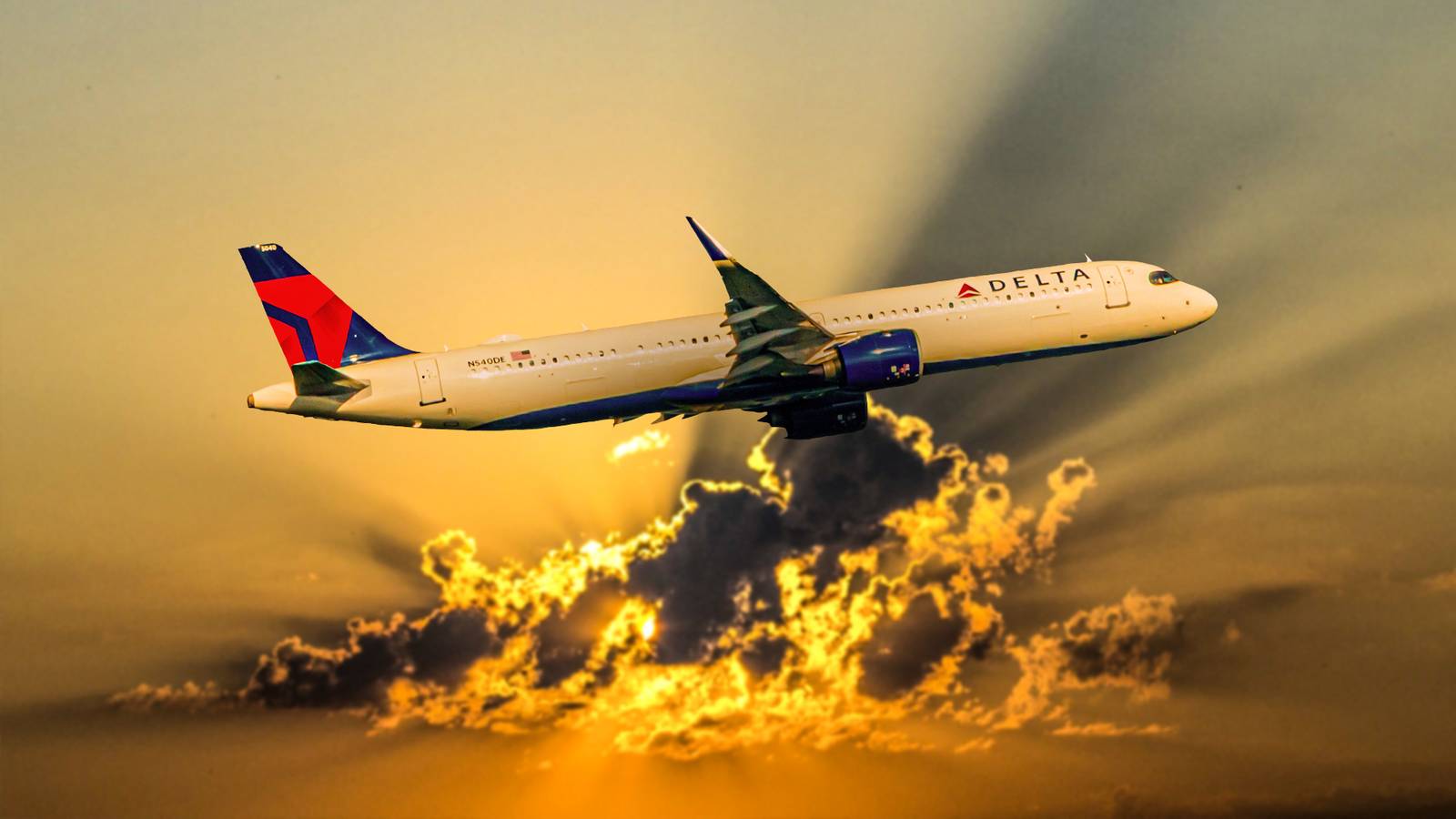
Delta Air Lines stands apart from the other two world-leading carriers that make up the elite club that is the 'big three' of US air travel. Even as American and United Airlines have both brought in the new Airbus A321XLR to replace aging aircraft like the Boeing 757, DAL has decided to go in a different direction. DAL does not want to compromise the level of premium service that it currently offers on long-haul journeys by downsizing its airframe. Many airlines see it as the long-awaited successor to the Boeing 757, and United says the jet will help retire its own 757s. Delta still flies dozens of those older aircraft, yet its plan for replacing them points somewhere else entirely. Delta has systematically phased out transatlantic narrowbody routes. Long-haul operations are assigned to its widebody order book, which includes the Airbus A330neo, Airbus A350, and Boeing 787. Delta has invested heavily in the standard A321neo, expanding to 189 jets, but these are employed on short-to medium-haul routes. Airbus rates the XLR at 4,700 nautical miles (8,704 km), enough for most popular transatlantic routes. Yet, Delta has decided that even if the plane can fly the mission, it would rather use a widebody or refer travelers to a partner airline within its Alliance for a consistent experience from takeoff to touchdown. Delta And The Successor To The 757 That Never Was Credit: Airbus At Delta's third-quarter earnings call in October 2025, a Jefferies analyst asked about transatlantic capacity, and President Glen Hauenstein replied that Delta had chosen not to fly narrowbodies across the Atlantic because of 'product and brand issues,' according to ch-aviation. Even before that, at Delta's 2019 investor day, CEO Ed Bastian said he was not convinced the XLR was the right aircraft for the transatlantic market, as The Points Guy reported. Bastian instead asked Boeing to launch a New Midmarket Airplane instead, a proposed jet meant to replace both 757- and 767-sized aircraft on Europe routes. Unfortunately, his remarks came only weeks before the 737 MAX grounding was announced following the second deadly crash. As a direct result, Boeing officially shelved the NMA development program in early 2020 to refocus entirely on rectifying the 737 MAX software issues and securing its clearance to fly. Delta explicitly stated an interest in acquiring up to 200 of these jets to serve as a direct replacement for its aging fleets of 757 single-aisle and 767 twin-aisle jets on transatlantic routes. Faced with zero product options from Boeing for the middle market, Delta systematically shifted its long-term purchasing strategy toward Airbus. For the transatlantic and premium transcontinental missions previously slated for the NMA, Delta turned entirely to the Airbus widebodies. The A330neo became Delta's default replacement for the aging 767 fleet, while A350-900s have also been introduced in steadily greater numbers. For the lower end of the mid-market, Delta pivoted heavily to the standard A321neo. These jets assumed many routes previously flown by the 757, which also led observers to believe that the A321XLR would be a natural successor to some of the longer trips previously flown by the type, but DAL has defied expectations. Where Delta Puts Its Atlantic Growth Instead Credit: Airbus Delta made history in 2024 when it became the first US carrier to place an order for the largest twin-aisle Airbus has to offer. DAL Order: 20 examples of the A350-1000, which are expected to begin arriving on the flight line in Atlanta next year. Today, Delta's money continues to flow into larger aircraft with even more orders in 2026. Delta placed a firm order for 16 Airbus A330-900s and 15 more A350-900s, with deliveries starting in 2029 and purchase rights on another 20 aircraft, ch-aviation reported. All things from the company indicate that Delta plans a premium heavy layout for its even bigger A350 extra-wide-body jets, as they will become the flagship of its roughly 1,000-strong fleet and the centerpiece of its brand. Notably, Delta also placed its first direct order for the Boeing 787 in 2026. The agreement to purchase a block of 30 787-10s with rights for 30 more was a long-awaited move after the company's unexpectedly strong investment in Airbus widebodies or its fleet modernization program of the past few years. The first Dreamliners are due from 2031 and are meant for transatlantic and South American routes, according to Boeing. The 787 made it to market years before the A350, and that's why it's become the best-selling widebody in history, which made it even more noteworthy that Delta has waited so long to buy its first Dreamliner. How The 757 Retires Without An XLR Credit: Airbus To date, Delta's answer to the 757 question has been the A321neo, which is a solution that comes with limits. The reason is range. The standard A321neo cannot match a 757 over the North Atlantic, and an airline that wants that mission must buy the XLR variant or choose a larger aircraft. Delta has chosen the larger aircraft. The airline has replaced its aging 757 jets by splitting the operating roles across multiple targeted aircraft types, combined with a strategy of prolonged, gradual retirement. In practice, that means 757 routes to Europe either move to a bigger jet such as the 767, or disappear, while the A321neo takes over flying that stays within the United States. Scramble reported that Delta firmed up 34 options in February 2026, bringing its firm orders for the type to 189 aircraft, with the added deliveries beginning in 2029. That makes the A321neo the largest type in the fleet by order count. For the vast majority of the 757-200 fleet flying domestic hub-to-hub routes, Delta is deploying standard A321neos. A handful of these jets are also being retrofitted for a 'premium heavy' Coast-to-Coast transcontinental route that connects New York and Los Angeles. For the busiest hub-to-hub domestic corridors, Delta has 100 firm orders for the Boeing 737 MAX 10 to absorb this high-capacity narrowbody demand. Configured with roughly 184 seats, the MAX 10 lacks the sheer size of the 757-300 but offsets it with lower trip costs and modern operating economics. Yet, Delta is not rushing to eliminate the 757 overnight. Instead, it is utilizing its massive in-house maintenance division, Delta TechOps, to overhaul engines, refresh interiors, and extend the active life of its remaining 757s into the 2030s. What Delta Is Betting On Next Credit: Airbus Delta is effectively betting that either Boeing or Airbus will give it something better, or that rather than flying narrowbodies across the Atlantic like American and United, Delta is completely shifting its international operations to twin-aisle widebodies. Thin European routes previously operated by the 757 are being upgauged to the A330neo or routed through European hub partners like Air France-KLM via joint ventures. Delta has given every indication that it intends to rely on widebodies to maintain its standard premium service layout, sacrificing the point-to-point niche capability of the XLR for cabin space and operational reliability. According to DAL, widebodies can carry the Atlantic through the 2030s, and they will have to since Boeing has announced no 757 replacement. The Federal Aviation Administration (FAA) finally signed off on the 737 MAX 10 in October, while the 737 MAX 7 has already received certification. However, it still needs to get its new 777X certified. While this delay slows international widebody growth for other carriers, it affects Delta less directly because Delta’s widebody strategy relies entirely on the certified and active Airbus A330neo and A350. Still, the general engineering and manufacturing squeeze that the heavily backlogged, bottlenecked assembly lines are facing is likely to delay the eventual introduction of any NMA Class jetliner from Boeing. Even with the MAX 10 cleared for service, holding onto 757s until a theoretical New Midmarket Airplane arrives in the mid-2030s presents severe long-term liabilities. The Risk Of Opting Out Of The A321XLR Credit: Airbus The 757 burns significantly more fuel per seat than modern narrowbodies. If fuel prices spike in the late 2020s or early 2030s, the daily operating cost of maintaining a 757 sub-fleet will severely degrade Delta's margins compared to American and United’s highly efficient A321XLR operations. The most immediate risk is the permanent concession of secondary transatlantic markets to AA and UA. United and American are deploying the long-range narrowbody to establish highly profitable, exclusive nonstop routes to cities like Edinburgh, Porto, Vienna, Toulouse, and Palma de Mallorca. Because Delta relies entirely on a widebody international fleet, it cannot justify flying a 250-seat Airbus A330neo or Boeing 767 to these smaller markets without suffering severe financial losses from empty seats. On overlapping transatlantic routes where Delta chooses to compete directly against an American or United A321XLR using its own widebody aircraft, Delta operates at a margin disadvantage. Consequently, Delta must yield these point-to-point markets entirely to its competitors, forcing its passengers to take longer, multi-stop itineraries through continental hubs like Paris or Amsterdam with joint-venture partners. The A321XLR lowers the economic break-even point for a transatlantic flight. An extra-long-range narrowbody provides an airline with unique operational insulation. Delta lacks this multirole flexibility within its international fleet. If a thin transatlantic route operated by a Delta widebody suffers a drop in premium demand, Delta cannot downsize the aircraft to match the lower volume. Then there's the cold, hard math of wear and tear. Airframes do not age by years. They age by pressurization cycles, or takeoffs and landings. Keeping 757s on busy routes rapidly accumulates cycles, meaning Delta will hit hard, non-negotiable airframe fatigue limits on these hulls long before Boeing can ever design, certify, and produce a brand-new mid-market successor.
Delta Air Lines Is The Only US Legacy Carrier That Doesn't Want The Airbus A321XLR
Full Article
Original Source
Read the full article at Simpleflying →KhanList aggregates and links to publicly available news content. We do not host full articles from third-party sources. Always verify important information with original sources.