
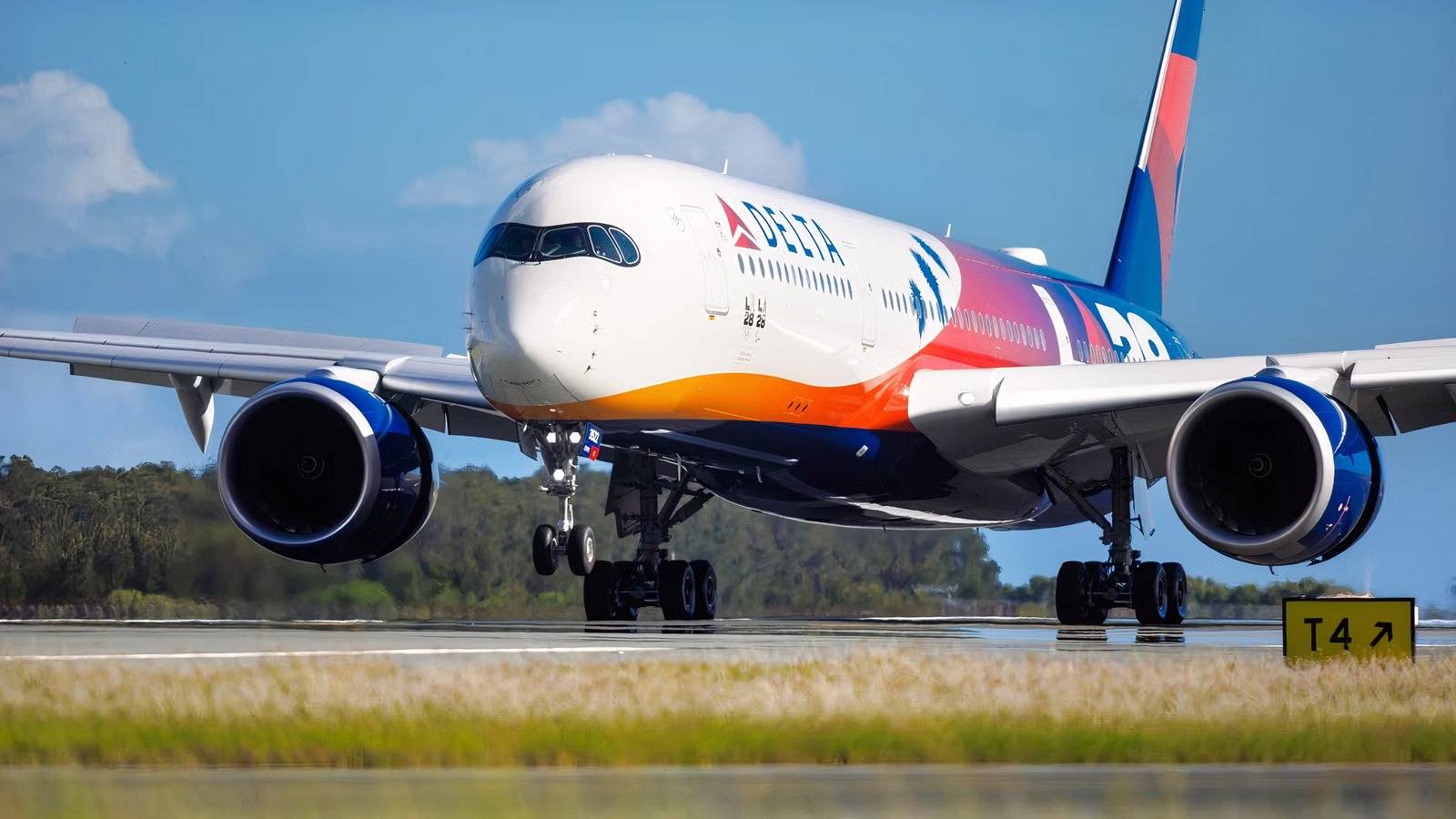
Published Aug 14, 2026, 2:42 PM EDT Paul has had a career of 25+ years focused on the international technology sector, which has taken him to over 100 countries. Along the way, he developed a deep love for aviation, with a travel bucket list measured by aircraft types flown rather than destinations reached. Now he is bringing that avgeek passion, along with the journalism experience he accumulated early in his career, to write insightful pieces for Simple Flying. Delta Air Lines has made no secret of its ambitions to rebuild its presence across Asia, and Singapore now appears to be firmly on the list. Speaking to The Points Guy this week, Chief Commercial Officer Joe Esposito confirmed that Singapore Changi Airport (SIN) is in Delta's future plans, although the airline has yet to reveal a route, aircraft or launch date. The comments follow Delta's return to Hong Kong International Airport (HKG) in June, and announcements of new Manila and Tokyo Narita services for 2027, and a broader shift in long-haul attention toward the Pacific. For Delta, Singapore would be both a new chapter and a return to familiar territory. The carrier last served the city in 2019, but that operation bore little resemblance to the nonstop service it would likely launch today. Singapore was once a spoke in a vast connecting operation through Tokyo that the carrier inherited from Northwest Airlines. Seven years after leaving, Delta has the fleet and US gateways to bypass that intermediate stop altogether. Delta's Singapore History And The Fall Of Narita Credit: Shutterstock Delta's last Singapore flight operated on September 22, 2019, ending a daily Boeing 767-300ER service between Tokyo Narita Airport (NRT) and Singapore. At the time, Delta cited "financial pressure" on the route, with nonstop US-Singapore capacity growing, local carriers benefiting from stronger brand loyalty, and a losing battle against alliance partners at the Star Alliance hub. Singapore's disappearance was also closely tied to Delta's decision to withdraw from Narita altogether and concentrate its Tokyo flying at the more conveniently located Tokyo Haneda Airport (HND). The Narita operation itself was a legacy of Northwest, which had built an unusual overseas hub using fifth-freedom rights allowing it to carry passengers between Japan and other Asian countries. When Northwest merged with Delta in 2008, it served 19 destinations from Narita. Flights arriving from US gateways synchronized with onward services to Asian effectively creating a connecting hub in Japan much like Delta's domestic hubs in Atlanta or Detroit. Northwest's Narita Network In 2008 Destinations US gateways Detroit, Honolulu, Minneapolis/St. Paul, Los Angeles, Portland, San Francisco, Seattle, Honolulu Asian onward destinations Bangkok, Beijing, Busan, Guam, Guangzhou, Hong Kong, Manila, Saipan, Seoul, Shanghai, Singapore, Taipei Total NRT destinations 19 That model gradually lost its purpose. Longer-range aircraft increasingly allowed Delta and other airlines to overfly Japan and connect US cities directly with Asian destinations. At the same time, greater US access to Haneda made Narita less attractive for passengers actually traveling to Tokyo. Perhaps most importantly, Delta also established a joint venture with Korean Air, turning Seoul's Incheon International Airport (ICN) into a powerful alternative connecting point. Delta has said the partnership now operates 38 daily flights between the US and Korea, carrying nearly 10,000 passengers each day. That means that Incheon has effectively replaced much of what Narita once did for Delta, but without requiring Delta itself to operate a large fifth-freedom network across Asia. As Esposito explained: “Our exceptional joint venture with Korean Air allows us to offer unmatched connectivity between the US and Asia, leveraging strong hubs on both sides.” Delta Is Turning Its Attention Back To Asia Credit: Shutterstock The reversal is notable because Delta has spent much of its recent international expansion looking east across the Atlantic rather than west across the Pacific. Summer 2026 has been its largest-ever transatlantic season, with more than 650 weekly flights to nearly 30 European destinations and new services including Porto, Malta and Olbia in Sardinia. Esposito suggested there is simply less white space left in Europe: Delta already has an extensive network of its own plus powerful joint ventures with Air France-KLM and Virgin Atlantic, while Asia still contains major markets it does not serve. "There's still unique destinations to fly to [in Europe], but we have really great access already. We don't have as much access to Asia... so Asia, to us, is where we have opportunity for growth in the future." Recent additions show that rebalancing is already underway. Delta restored Shanghai Pudong International Airport (PVG) from Los Angeles International Airport (LAX) in 2025, launched from Salt Lake City International Airport (SLC) to Seoul that June, returned to Hong Kong from LAX in June this year, and will add Manila (MNL) and Narita next spring. Route Launch Aircraft Seattle — Taipei June 2024 A330-900neo Los Angeles — Shanghai June 2025 A350-900 Salt Lake City — Seoul June 2025 A350-900 Los Angeles — Hong Kong June 2026 A350-900 Los Angeles — Manila March 2027 A350-900 Seattle — Tokyo Narita March 2027 A330-900neo Crucially, Delta is not recreating Northwest's Narita model. Instead, the carrier is using its West Coast hubs in Los Angeles and Seattle as launchpads for nonstop flights to the largest Asian markets. Where a travelers final destination is a city not yet served nonstop from the US by Delta or its SkyTeam partners, Korean Air's Incheon hub supplies the onward connectivity that Narita once provided. Seattle Looks Like The Obvious Gateway — But When? Credit: Airbus Esposito specifically ruled out Los Angeles as the jumping off point for Singapore, leaving Seattle-Tacoma International Airport (SEA) as the standout candidate. Delta itself calls Seattle its "premier Pacific gateway," with more than 160 peak-day departures to over 62 destinations, giving a prospective Singapore flight substantial domestic feed. There would be formidable competition: Singapore Airlines already flies SEA-SIN daily using an Airbus A350-900, proving both that the market exists and the likely aircraft required to handle the roughly 16-hour westbound mission. The A350-900 would also be Delta's logical choice. It already has 41 in service and another 18 on order, and the type anchors much of Delta's deepest Pacific flying. The forthcoming Airbus A350-1000 is an intriguing alternative option: Delta's first examples arrive next year, and offer a greater range and more cargo capacity. However, Delta has indicated that it is reserving its new flagship for high-premium trunk routes, and would be unlikely to start a new route to a Star Alliance fortress with its largest aircraft. So the remaining question is when is this likely to happen? Delta could technically launch Seattle-Singapore with aircraft it operates today, making a summer 2027 possible. However, with its immediate focus on other new routes such as Manila and Narita, and with Singapore still an intention rather than a formally announced route, late 2027 appears to be the earliest credible window, with 2028 perhaps more realistic.
Delta Air Lines Is Planning To Return To Singapore, Report Says
Full Article
Original Source
Read the full article at Simpleflying →KhanList aggregates and links to publicly available news content. We do not host full articles from third-party sources. Always verify important information with original sources.