
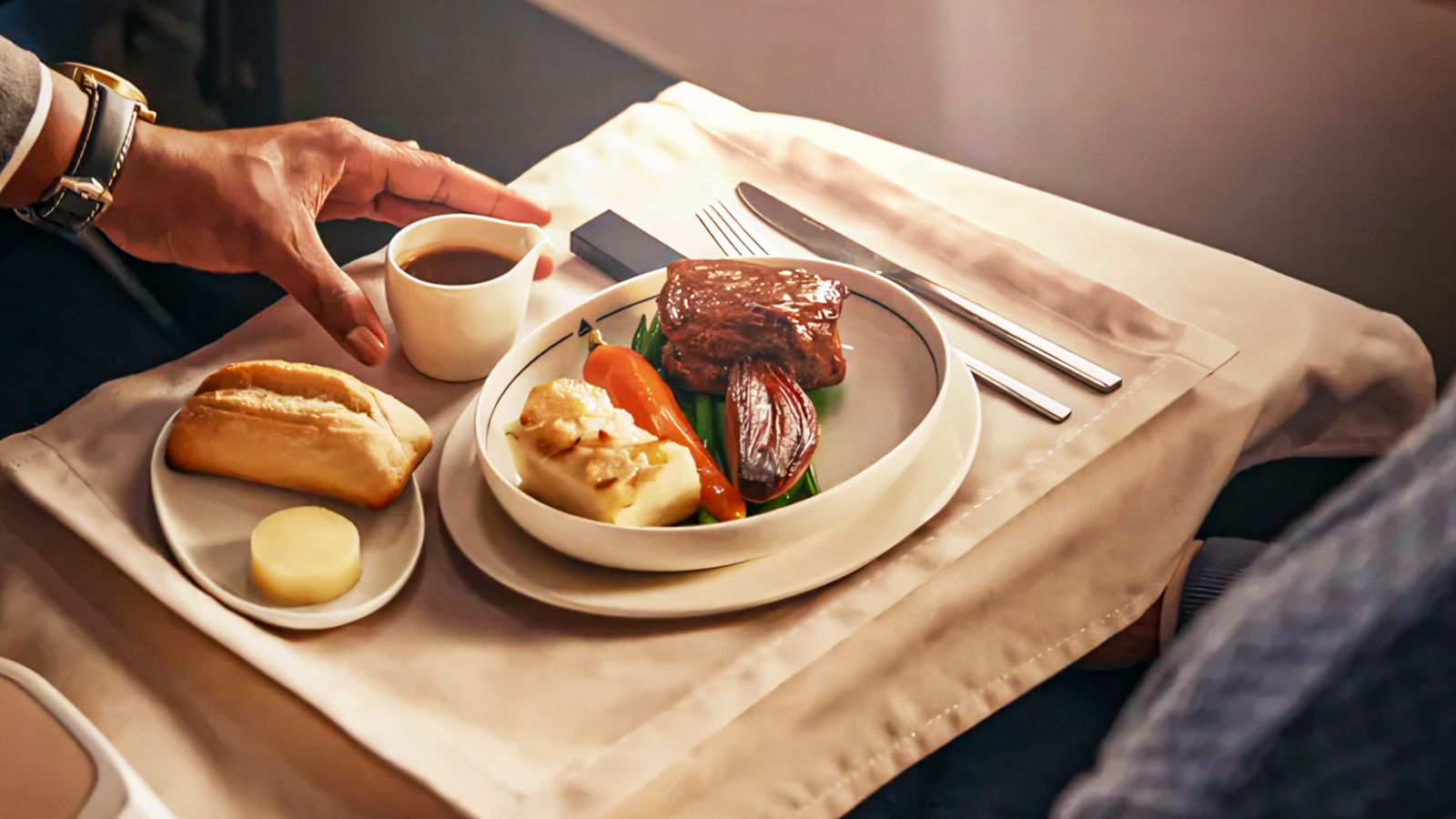
Delta Air Lines is making a seemingly small adjustment to its business-class dining service that could make a difference to passengers booking premium international travel. The Atlanta-based carrier is shortening its Delta One meal pre-order deadline from 24 hours to just 18 hours before departure, giving travelers more flexibility to select their preferred dishes closer to takeoff. This change comes alongside a significant overhaul of the airline's premium-cabin dining, bedding and onboard service. The six-hour extension is part of what Delta describes as its most comprehensive Delta One product redesign in nearly 30 years. With new menus, premium wines, redesigned tableware and improved linens arriving before the introduction of next-generation Airbus A350-1000 suites in 2027, the airline is investing heavily in its premium proposition. But what makes the new meal-ordering deadline particularly interesting, and how does it fit into Delta's wider strategy to attract high-spending travelers? Why Delta's 18-Hour Meal Pre-Order Deadline Is Different Credit: Ceri Breeze | Shutterstock Delta Air Lines is shortening its Delta One meal pre-order window from 24 hours to 18 hours before departure, making it the closest-to-departure ordering deadline among US carriers. Although the difference is just six hours, it gives passengers more time to finalize their dining preferences, especially when travel arrangements change shortly before departure. Meal pre-ordering is an important part of modern premium-cabin operations. Airlines use advance selections to estimate demand for individual dishes, organize catering quantities, and reduce the chance that passengers will discover their preferred meal is unavailable once onboard. A shorter ordering window requires coordination between the airline's digital booking systems, airport catering providers, and onboard service teams. For passengers, however, the benefit is clear. Those who finalize their travel plans at short notice will have more time to choose their meals without relying entirely on the options remaining onboard. Delta's adjustment also reflects a broader shift toward personalized premium services, where travelers increasingly expect airlines to accommodate their preferences rather than provide a standardized dining experience. However, the shorter deadline is only one part of a much broader transformation of Delta One. Wagyu Burgers, Hong Kong-Style Sea Bass & $200 Wine Credit: LukeandKarla.Travel | Shutterstock Delta's redesigned dining experience focuses on elevated classics, with recognizable dishes prepared using premium ingredients and presented more carefully. Rather than relying exclusively on experimental cuisine, the airline is introducing familiar meals passengers can enjoy on long-haul international services. The new menu, available to view online, includes a Wagyu beef burger served on toasted brioche, Hong Kong-style sea bass, braised lamb, and seasonal mushroom risotto. British chef Simon Hulstone, whose restaurant has held a Michelin star for two decades, developed the culinary program alongside regional culinary consultants. Delta is also placing greater emphasis on the practical challenges of preparing restaurant-inspired meals for consumption at altitude. For example, its seasonal mushroom risotto is designed to maintain its texture during reheating and onboard service, while the broader selection offers alternatives for passengers who prefer lighter dishes. The beverage program is also receiving a substantial upgrade. Delta evaluated approximately 1,600 wines with Master Sommelier Andrea Robinson before selecting 13 wines from 11 winery partners. The resulting collection includes Silver Oak Cabernet Sauvignon, a Napa Valley wine retailing for more than $200 per bottle. Champagne Taittinger is also expanding to domestic Delta One services, while Blanton's Single Barrel Bourbon is scheduled to join the onboard selection on December 1, 2026. The airline is also introducing Dassai 45 sake on flights to and from Tokyo Haneda Airport (HND) from November 3. Meanwhile, the service itself is being redesigned around a new 'sip and settle' moment. This features a hot towel, warm nuts, and passengers' preferred beverages before the main meal. More than 60 new pieces of tableware bearing Delta's distinctive widget logo, along with redesigned linens and glassware, will help create a more consistent premium experience. However, passengers will not receive all these improvements at once, as the airline is introducing the new service in phases. How Delta's Rollout Will Reach Its International & Domestic Fleet Credit: Philip Pilosian | Shutterstock Delta is introducing its redesigned Delta One service on long-haul flights departing Los Angeles International Airport (LAX), beginning with transoceanic services to Auckland Airport (AKL) on October 24 and Brisbane Airport (BNE) on October 26. Sydney Kingsford Smith Airport (SYD) and Melbourne Airport (MEL) are following on November 3. The Points Guy separately reported that the wider LAX introduction began on November 2. The phased launch will precede the airline's planned global rollout in 2027. Los Angeles is a strategic choice because Delta has been investing in premium airport facilities, including its Delta One Lounge. The airline wants passengers to experience a consistent standard of hospitality throughout their journey, from the airport lounge to the aircraft cabin. Improved dining, beverages, and bedding are therefore intended to complement the ground experience rather than operate as independent upgrades. The expansion will continue in 2027, starting with selected domestic Delta One flights in February before rolling out across the global network from March 1. This phased introduction gives the airline time to coordinate catering supplies, staff training, and service procedures across its extensive operation. The timing is relevant because Delta is experiencing strong demand for its premium cabins. In the September 2026 quarter, premium ticket revenue rose 18% year over year, underscoring the growing importance of higher-paying passengers to the airline's financial performance. With premium revenue growing faster than main-cabin revenue, Delta has a clear commercial incentive to keep investing in the experience it offers its most valuable customers. The next stage of that investment, however, will involve something considerably more substantial than new menus and tableware. Why The A350-1000 Will Be The Next Major Step For Delta One Credit: Simple Flying Delta's soft-product transformation is arriving ahead of its next-generation business-class suites, which are expected to debut aboard the Airbus A350-1000 in 2027. The aircraft will introduce an updated Delta One product featuring more spacious suites, improved sleeping arrangements, and additional passenger amenities Delta plans to introduce 20 A350-1000s, making the aircraft an important part of its long-term international fleet strategy. The new suites are expected to feature 24-inch entertainment screens, longer beds exceeding six-and-a-half feet, and improved storage. These enhancements aim to address key aspects of long-haul business-class travel, particularly privacy, sleeping comfort, and the ability to store personal belongings in the suite. These aircraft will offer a significant physical upgrade over existing Delta One configurations. The timing of the introduction means that Delta does not need to wait for new aircraft deliveries to improve its premium offering. The airline can upgrade dining, bedding, tableware, and service procedures across existing aircraft, strengthening its proposition while the more expensive cabin transformation remains underway. A350-1000 features Planned specifications Planned fleet 20 Introduction 2027 Business-class product Next-generation Delta One suites Entertainment 24-inch screens Sleeping arrangements Beds exceeding 6.5 feet Additional features Improved storage and sleeping comfort This also means that passengers flying on older aircraft can benefit from many of the improvements before the A350-1000 enters commercial service. Delta's broader fleet and customer-experience transformation represents an investment of approximately $1 billion. Its longer-term ambition also includes having privacy doors across 90% of its Delta One fleet by 2030. Combining improved physical suites with a more sophisticated onboard service should help the airline establish a more consistent premium experience. Nevertheless, new aircraft will also intensify competition with other US carriers investing heavily in their own business-class products. How Delta Is Competing With American & United For Premium Travelers Credit: Just Dance | Shutterstock Delta's decision to shorten its meal pre-order deadline is particularly interesting when compared with the policies of its domestic competitors. American Airlines and United Airlines have both been investing in their premium-cabin offerings, including improved dining programs, upgraded seats, and additional services aimed at attracting business travelers. However, the published meal-selection deadlines give Delta an opportunity to differentiate itself through greater flexibility. American Airlines allows eligible premium-cabin passengers to reserve meals up to 20 hours before departure on qualifying flights. United Airlines' international Polaris Chef's Table selections can be made up to 24 hours before takeoff. Delta's new 18-hour deadline gives it a two-hour advantage over American and six hours over United in these examples. The difference is relatively small, but it shows how airlines compete on details passengers may not have considered important in the past. For someone booking a last-minute business trip, an additional six hours to select a preferred meal could make a practical difference. It also gives Delta another selling point when competing for corporate travelers and passengers willing to pay more for international business-class accommodation. However, a shorter pre-order window does not necessarily guarantee that every passenger will receive their preferred dish. Catering availability, aircraft substitutions, and operational disruptions can still affect the final selection. Delta will need to ensure that its catering partners can accommodate the shorter preparation period without compromising food quality or menu availability. The airline's ability to maintain consistency across airports and aircraft will ultimately matter as much as the ordering deadline. Delta's Premium Strategy Goes Beyond New Business-Class Seats Credit: 365 Focus Photography | Shutterstock Delta's investment in its premium cabins reflects a broader shift in airline economics, with carriers increasingly relying on passengers willing to pay more for comfort, privacy, and personalized service. The airline's September 2026 financial results show why this segment is important, with premium ticket revenue continuing to rise. This growth provides a strong commercial incentive to improve the onboard experience and differentiate Delta One from competing international business class products. The airline's challenge will be delivering those improvements consistently across its fleet. The February 2027 domestic introduction and March 1 global rollout will test whether Delta can translate its Los Angeles premium-service concept into a standardized offering across different aircraft, airports, and catering operations. The arrival of the A350-1000 will add another dimension to the transformation, combining improved physical suites with the redesigned hospitality program. Overall, the 18-hour meal pre-order window is a relatively small operational adjustment within a much larger premium-cabin strategy. Nevertheless, it illustrates how Delta is trying to compete through details passengers notice before they even board. Whether the airline can turn these improvements into a lasting advantage over American and United will depend on how consistently it delivers the complete experience.
Delta Air Lines' 18-Hour Meal Pre-Order Window Is The Closest To Departure Of Any US Carrier
Full Article
Original Source
Read the full article at Simpleflying →KhanList aggregates and links to publicly available news content. We do not host full articles from third-party sources. Always verify important information with original sources.