
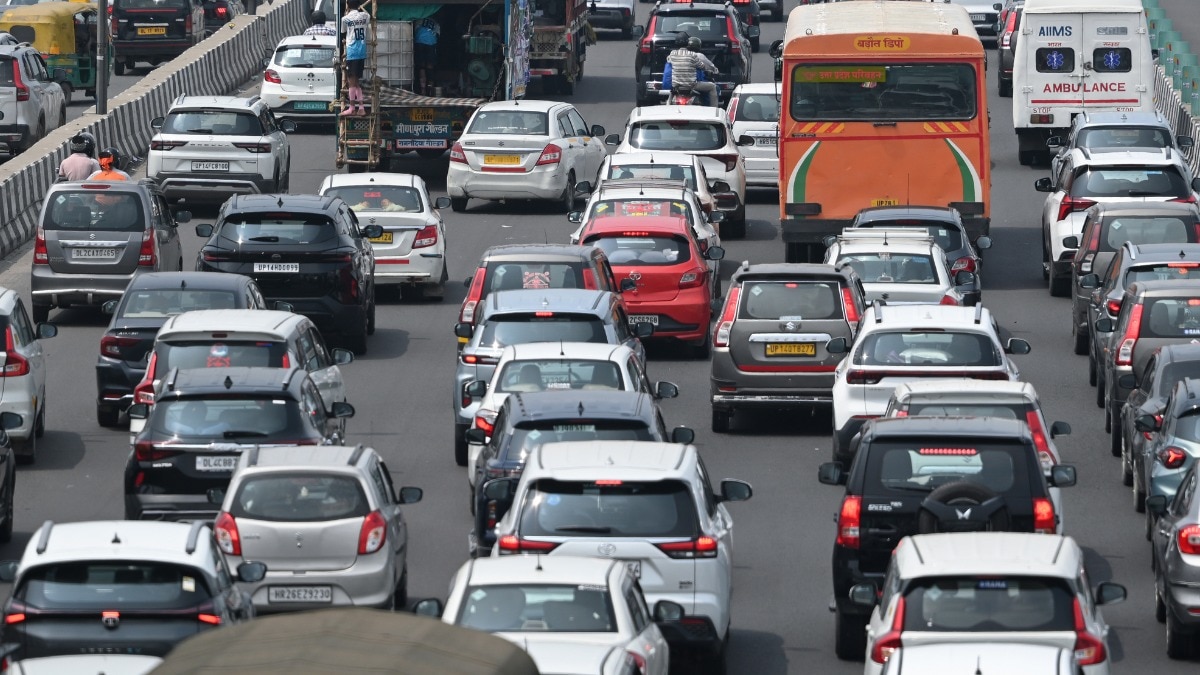
The fight for clean air has extracted a festive sacrifice as non-BS-VI vehicles from neighbouring cities face a three-month entry ban from November 1Delhi seems set for an unusual Diwali this year, with fewer cars coming in from Gurugram, Noida, Ghaziabad, Faridabad and other neighbouring cities for Dhanteras shopping, card parties, gift exchanges and the usual festive celebrations. There could perhaps be even fewer shoppers thronging the capital’s glittering markets and plazas—all in the good fight against air pollution.From November 1, with Dhanteras and Diwali barely a week away—vehicles that do not conform to Bharat Stage VI (BS-VI) emission norms and are registered outside Delhi will not be allowed to enter the national capital. We are talking about nearly 1 million vehicles here.Delhi’s BJP government, in consultation with the Centre, has decided to ban pre-BS-VI emission standard petrol and diesel vehicles registered outside Delhi from entering the metropolis till January 31, 2027. The ban is more stringent than the usual measures taken every year to tackle Delhi’s winter pollution, and shifts the focus beyond heavy goods vehicles to both private cars and commercial vehicles.Dhanteras is on November 6 whereas Diwali is on November 8, a time when people shop, visit relatives and friends, party hard and exchange gifts. Many of these activities, for the residents of Gurugram, Faridabad, Noida and Greater Noida as well as Ghaziabad, require trips to Delhi—and more often than not in private cars. However, the dampener will be the restrictions the Delhi government has indicated would be enforced with utmost seriousness. Transport minister Pankaj Kumar Singh, on October 28, confirmed that no exemption would be granted whatsoever to vehicles travelling to the capital that do not comply with the pollution-control standards.The government had been preparing for this for months now. Union environment, forest and climate change minister Bhupender Yadav had held a high-level meeting on September 28, in which both the Centre and the state government were on the same page regarding the anti-pollution measures.On October 25, Delhi environment minister Manjinder Singh Sirsa met senior law enforcement officials from Delhi, Noida, Faridabad, Gurugram, Sonipat and Bahadurgarh to discuss the preparations.Among the various things, the meeting also discussed how to make pollution under control (PUC) checks effective, how to divert heavy vehicles not destined for Delhi and how to control traffic at the highly congested border checkpoints.The potential impact looks significant. More than 400,000 vehicles in Noida and Greater Noida, approximately 400,000 in Ghaziabad and nearly 200,000 in Gurugram and Faridabad do not meet BS-VI standards. Exceptions to this are electric vehicles, CNG vehicles and specified emergency/essential-service vehicles.This results in a distinction inside the same metro area. The entry restriction would not be applicable on a petrol BS-IV vehicle registered in Delhi. Other anti-pollution measures for vehicles registered in Delhi, however, including the age restrictions and provisions under the Graded Response Action Plan (GRAP).The state transport department has deployed 39 enforcement teams to operate around the clock at 13 major border points and toll plazas. Around 250 enforcement personnel have been assigned to border checkpoints, toll plazas and pollution hotspots.The department has stepped up efforts to crack down on vehicles that do not meet current pollution-control requirements. Between October 11 and October 25, officials impounded 145 buses and 558 overloaded vehicles while 4,572 vehicles were fined for invalid PUC certificates. Another 48 cases involved vehicles emitting visible smoke.The immediate test of the curbs could come on November 1 when a Congress-led rally is scheduled at Ramlila Maidan. The event is likely to attract participants from neighbouring states, bringing buses and private vehicles towards Delhi. The Chamber of Trade and Industry (CTI) has estimated that 15,000 to 20,000 buses could arrive for the event, but the number that may not meet the applicable emission requirements is unknown. Traders have also voiced apprehensions over the rally and associated traffic diversions, which could affect businesses in markets near Ramlila Maidan ahead of Diwali.Significantly, it does not matter if the outstation vehicles have a PUC certificate, making this one of the most stringent vehicle restriction measures against air pollution in India. The bigger issue is the following days when festive travel between Delhi and its adjoining cities is likely to pick up. Shoppers from across the National Capital Region (NCR) travel to Delhi’s markets to purchase jewellery, clothes, household goods, sweets and gifts, feeding India’s consumption economy. The vehicle restriction introduces a new consideration for traders in these markets, which is why there is a significant backlash.“I don't understand this penalising of lawful cars. I live in Gurugram and my office is in Delhi. I travel by my car. It was bought in 2017 and is not BS-VI compliant, but I have paid a hefty amount as road tax at the time of purchase. Yet my car, with a valid PUC certificate, will not be allowed into Delhi,” a motorist has said on Reddit, leading to a stream of similar criticism.“What’s the point to have PUC checks?” asked entrepreneur and musician Arijit Mukherjee on social media platform X. “And are cars really the cause of pollution in Delhi? It’s just a nightmare for the next three months when none of us can take their cars to Delhi.”The vehicle restrictions are part of a much bigger package of measures aimed at tackling recurring winter air pollution in Delhi. As per the notification issued as part of the Delhi government's winter action plan, parking charges at authorised parking facilities would be doubled from November 1 till February 28, excluding parking facilities owned and managed by the Delhi Metro Rail Corporation. Staggered office timings and work-from-home arrangements have also been prescribed by the government to minimise traffic congestion.The notification also provides for measures to curb dust generation from building demolition and outdoor civil construction activities during winter, including additional restrictions from December 10 to January 20, with certain exemptions for essential and emergency activities.These measures are in addition to actions under GRAP, which allows for more stringent temporary controls if air quality worsens. However, this vehicle-entry ban is not a requirement at a particular stage of GRAP but rather notified as a seasonal ban.“An important differentiation for motorists is the PUC certificate. BS-VI means emission standards the vehicle was designed to comply with while a PUC certificate means the vehicle complies with the applicable standards and requirements of pollution-testing. These are two separate kinds of pollution-control compliances,” explained a senior Delhi government official.Accordingly, a BS-VI vehicle will be allowed to come into Delhi if it has a PUC certificate. In all of this, what cannot be ruled out are problems in enforcement at the multiple entry points of Delhi, especially during rush hour. Critics have pointed out that the time spent verifying cars at border check-posts may itself increase congestion and pollution from idling engines.The bottom line: this Diwali and onwards, the fight for clean air in Delhi may demand sacrifices even in the season of festive indulgence.Subscribe to India Today Magazine- Ends
Delhi's unusual Diwali: Pollution brake on 1 million NCR vehicles
Full Article
Original Source
Read the full article at Indiatoday →KhanList aggregates and links to publicly available news content. We do not host full articles from third-party sources. Always verify important information with original sources.