
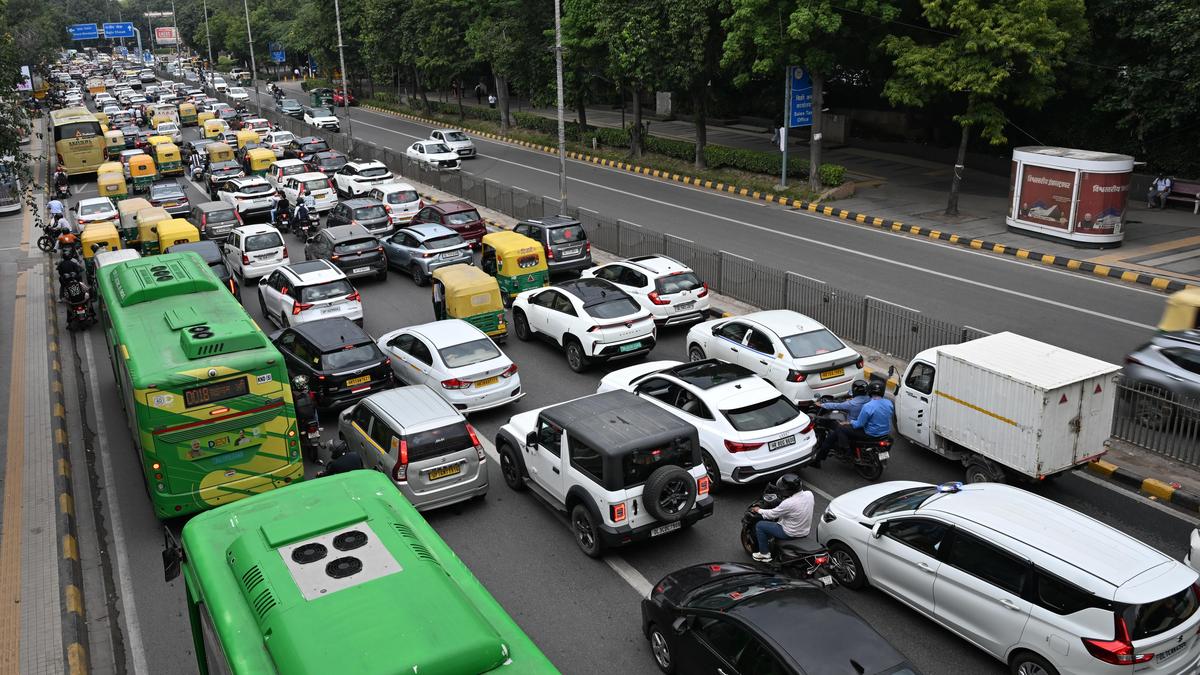
The Delhi BS-4 vehicle entry ban will come into force on November 1, restricting the entry of vehicles registered outside Delhi and meeting BS-4 or older emission standards. File | Photo Credit: Sushil Kumar Verma The Delhi Government is enforcing fixed-term winter restrictions to combat rising air pollution across the National Capital, starting on Sunday (November 1, 2026). The restrictions will remain in force for varying periods between November 1 and February 28. In addition, a complete ban on construction and demolition activities, barring specified exemptions, will be imposed between December 10 and January 20.The plan aims to limit vehicular emissions, curb dust and reduce road traffic during peak winter months. To ease daily traffic congestion, office timings are also staggered. Delhi Government offices will function from 10:00 a.m. to 6:30 p.m. while Municipal Corporation of Delhi offices will operate from 8:30 a.m. to 5:00 p.m. through February 28. Parking charges at authorised municipal sites will be doubled through February 28 to discourage private car use.The restrictions will be enforced by the Transport Department, Delhi Traffic Police, Delhi Pollution Control Committee and municipal authorities, among other agencies.What vehicles and activities are banned in Delhi?To directly cut down air pollution, the Delhi Government has banned specific actvities and vehicles: Ban on plying of non-Delhi-registered motor vehicles that are below BS VI emission norms (From November 1 to January 31) Ban on dust-generating demolition activities and outdoor civil construction activities (From November 1 to January 31) Delhi Government offices and private offices have to mandatorily implement 50% work from home (From November 1 to January 31) Existing parking charges at authorised parking sites will be doubled to discourage use of private vehicles (From November 1 to February 28) No fuel at fuel stations without a valid Pollution Under Control Certificate (PUCC) Which vehicles and activities are exempted from bans?1. Ban on plying of non-Delhi-registered motor vehicles that are below BS VI emission normsExemptions:a. Vehicles operating on Compressed Natural Gas (CNG) or electric power.b. Emergency and sovereign duty vehicles, including ambulances, fire tenders, and police vehicles.c. Any other category of vehicles as may be specifically exempted by the Environment Department of the Delhi government.2. Ban on dust-generating demolition activities and outdoor civil construction activitiesExemptions:a. Essential public infrastructure projects.b. Finishing/plumbing/electrical etc. permitted within the construction site with strict compliance to Construction & Demolition Waste Management Rules and dust prevention/ control norms.3. Delhi Government and private offices have to mandatorily implement 50% work from homeExemptions:a. Essential and emergency servicesb. For government offices, all administrative Secretaries and Heads of Departments have to attend office regularly.c. For government offices, administrative Secretaries and Heads of Departments can call officers to the office if required to ensure uninterrupted delivery of essential and emergency public services.4. Existing parking charges at authorised parking sites will be doubled to discourage use of private vehiclesExemptions:a. Parking spaces owned and managed by the Delhi Metro Rail Corporation (DMRC), which provide essential public transport connectivity and park-and-ride facilities.5. No fuel at fuel stations without a valid Pollution Under Control Certificate (PUCC)No exemption to this rule.* Vehicles found without a valid PUCC at fuel stations, which are identified through Automatic Number Plate Recognition (ANPR) cameras or otherwise, will be penalised.What actions and penalties will violators face in Delhi?Enforcement will be heavily monitored by special enforcement teams, Automatic Number Plate Recognition (ANPR) cameras at borders and fuel stations and an AI-enabled Integrated Command and Control Centre (ICCC), according to a statement issued by the Chief Minister’s Office (CMO).E-challans will be generated against non-compliant vehicles, while the traffic police will take action, including impounding vehicles, as per rules. Dedicated teams will also conduct physical inspections. Transport authorities have also coordinated with neighbouring states to halt non-BS-VI public buses at state borders. At construction sites, teams from the DPCC, municipal bodies and other agencies will carry out inspections. Unauthorised construction or demolition activities will attract immediate work-stop notices and environmental compensation penalties, besides sealing and other legal action wherever necessary.(With PTI inputs) Published - November 01, 2026 08:49 am IST
Delhi winter pollution curbs from Nov 1: Here’s what’s banned
Full Article
Original Source
Read the full article at Thehindu →KhanList aggregates and links to publicly available news content. We do not host full articles from third-party sources. Always verify important information with original sources.