
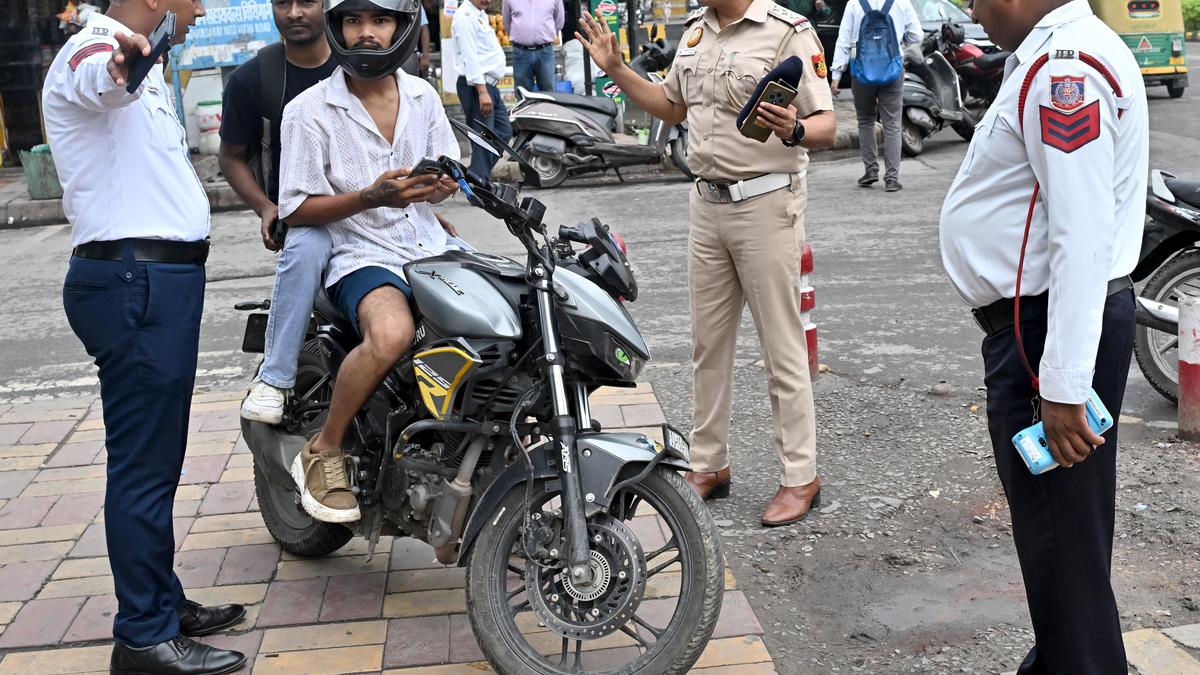
Traffic personnel inspect commuters in New Delhi. | Photo Credit: SHASHI SHEKHAR KASHYAP N Flagging 1,421 vehicles that have each accumulated 100 or more traffic challans, the Delhi traffic police has sought action against registered owners of these vehicles from the Transport Department, officials said. The list prepared by the traffic police’s Zone-I comprises 723 commercial vehicles, 600 private cars, 85 two-wheelers and 13 vehicles belonging to other categories. The matter has been taken up with the transport commissioner, Government of the National Capital Territory of Delhi, with a request to examine the cases for appropriate action under the Motor Vehicles Act, 1988 and other applicable rules. The Transport Department has started issuing notices to the registered owners of the identified vehicles, the police said. According to the traffic police, the high number of challans against individual vehicles points to repeated violations rather than isolated instances of traffic offences. It said such persistent non-compliance warranted closer scrutiny, particularly because it posed risks to pedestrians, cyclists and other motorists. The traffic police have asked the Transport Department to examine the violation history of each vehicle and consider appropriate action against its registered owner. The initiative aims to ensure that vehicles with repeated traffic violations are followed up by both enforcement and transport authorities. The police have also urged vehicle owners to check their vehicles’ challan history and take corrective measures, particularly if the vehicles are in use by multiple people. Owners have been asked to bring recurring violations to the attention of drivers and ensure that traffic rules are followed. Published - November 22, 2026 05:35 am IST
Delhi Traffic Police flags 1,421 vehicles with more than 100 pending challans to Transport Department
Full Article
Original Source
Read the full article at Thehindu →KhanList aggregates and links to publicly available news content. We do not host full articles from third-party sources. Always verify important information with original sources.