
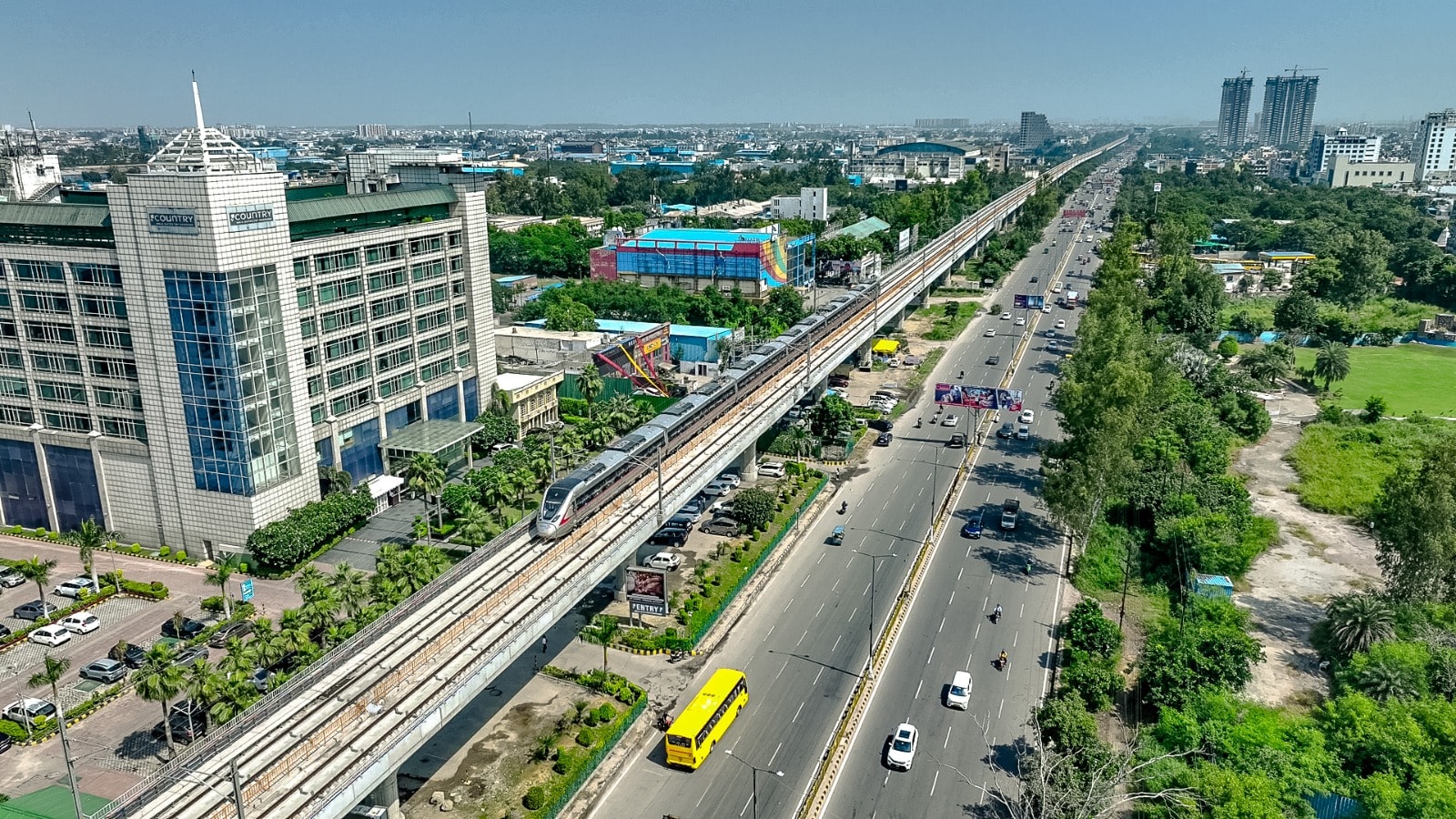
Delhi-NCR's connectivity with Haryana is set for a major upgrade, with the proposed Delhi-Panipat-Karnal Namo Bharat corridor receiving approval from the National Highways Authority of India (NHAI). The development brings the 136.3-km rapid rail project a step closer to reality and could change how thousands of people travel, work and choose their homes across the region.The corridor, which will be developed by the National Capital Region Transport Corporation (NCRTC) at an estimated cost of Rs 33,051 crore, is targeted for completion by 2030. It will run parallel to the Delhi-Ambala highway (NH-44), connecting the national capital with important urban and industrial centres in Haryana.The project has already received clearances from the Centre and the Haryana government. NHAI has now granted land-use permission for pier construction, station development and the shifting of high-tension power lines along the route. Preliminary work has also started on an approximately 22-km stretch between Narela and Murthal.Also Read | Layoffs Are Rising In Tech, But These Skills Are Helping People Unlock Better PayFor commuters, the biggest attraction will be the reduction in travel time. A road or regular train journey from Delhi to Panipat currently takes around two to two-and-a-half hours. The Namo Bharat corridor is expected to bring this down to nearly one hour.The journey to Karnal, which can currently take three-and-a-half to four hours, is expected to fall to around 90 minutes.Delhi-Panipat-Karnal Namo Bharat Corridor: Route, Stations And SpeedThe 136.3-km corridor will have 22 proposed stations across Delhi, Sonipat, Panipat and Karnal. Most stations will be elevated, while Kashmere Gate in Delhi and stations in Panipat will be underground or at ground level, as planned.Namo Bharat trains will have a maximum design speed of 180 kmph and an operating speed of 160 kmph. Services are proposed at intervals of five to 10 minutes.The route will also connect Haryana to the wider Namo Bharat network through the existing Delhi-Meerut corridor, creating a faster regional transport link between Delhi, Haryana and Uttar Pradesh.The corridor will also offer several important interchange facilities.Sarai Kale Khan will emerge as a major transport hub, connecting the Delhi-Meerut Namo Bharat corridor, Hazrat Nizamuddin railway station, the ISBT and the Metro's Pink and Blue lines.Kashmere Gate will provide access to the Red, Yellow and Violet Metro lines. Other stations in Delhi will connect with the Pink and Magenta lines.In Haryana, Kundli will offer connectivity to the proposed Rithala-Kundli Metro line. The KMP Expressway interchange will connect passengers to the Orbital Rail network, while Ganaur station will provide access to the international fruit and vegetable market.These interchanges could make the corridor useful not just for people travelling to Delhi but also for those moving between Haryana's industrial, educational and commercial centres.Delhi-Panipat-Karnal Namo Bharat: How Will It Change Daily Commuting?The biggest beneficiaries could be people who travel regularly between Delhi and Haryana for work, education and business.At present, road commuters depend heavily on NH-44, where traffic congestion can make travel unpredictable. Regular train services are another option, but they do not offer the same frequency and flexibility as the proposed rapid rail system.With trains expected every five to 10 minutes, commuters could have greater flexibility in planning their journeys.A person living in Panipat or Sonipat could potentially travel to Delhi for work without spending several hours on the road. Similarly, people working in Haryana's industrial and commercial areas could access a wider residential market.Students, business owners and salaried professionals could also benefit from better access to educational institutions, offices, markets and healthcare facilities.The corridor could gradually change the traditional relationship between Delhi and its neighbouring Haryana cities. Instead of depending entirely on Delhi for employment and economic opportunities, these cities could become more attractive locations for businesses and professionals.Real Estate Impact: Sonipat, Panipat, Karnal To Gain?Beyond commuting, the corridor could have a significant impact on the real estate markets of Haryana.Faster connectivity often changes where people are willing to live. When daily travel becomes easier, homebuyers can consider locations farther away from their workplaces, particularly if these offer more affordable housing and better living space.This could bring Sonipat, Panipat and Karnal into sharper focus among homebuyers who want to remain connected to Delhi without necessarily purchasing property in the national capital or its expensive neighbouring markets.Abhay Kumar Mishra, President and CEO of Jindal Realty, told NDTV that the corridor could give a new dimension to connectivity between Delhi-NCR and Haryana."The Delhi-Panipat-Karnal Namo Bharat corridor will give a new dimension to connectivity between the NCR and Haryana. It will shorten the distance between Delhi and cities such as Sonipat, Panipat and Karnal, and help these areas connect better with major economic centres," he said.Mishra added that improved public transport could increase the potential for residential, commercial and mixed-use developments, particularly in areas that have struggled to attract investment because of inadequate connectivity.The impact may not be limited to housing. Better connectivity could also encourage the development of offices, shopping centres, hotels and other commercial establishments around stations.Vinod Kumar, Director and Founder of Sky Byte Developers, told NDTV that locations such as Kundli, Bahalgarh Chowk and Rajiv Gandhi Education City could become more attractive for people working in Delhi.He said the corridor could allow professionals to live in emerging residential locations while remaining connected to their workplaces in the national capital."As a developer, we expect improved connectivity to drive demand for both residential and commercial real estate along this belt," Kumar said.Stations Could Become New Real Estate Growth CentresThe proposed Transit-Oriented Development (TOD) policy of the Haryana government could further influence the development pattern along the corridor.Under this approach, residential and commercial development is encouraged around public transport stations. The idea is to bring homes, workplaces, retail outlets and everyday services closer to transport facilities.This could lead to the development of high-rise residential buildings, office spaces, commercial complexes and retail centres around selected stations.For instance, Kundli and Bahalgarh could attract homebuyers looking for better access to Delhi. Rajiv Gandhi Education City could benefit from improved connectivity for students, faculty and professionals.Murthal and Ganaur could see greater interest because of their commercial and industrial linkages. Panipat and Karnal could also attract investment as commuting between these cities and Delhi becomes easier.Yashank Vasan, Managing Director of Royal Green Realty, said the corridor could create new opportunities for homebuyers in Sonipat, Panipat and Karnal. "With fast and easy access to Delhi, people will take these cities more seriously as places to live," he said.Vasan added that the demand for retail outlets, schools, healthcare facilities and other everyday amenities could also increase around the stations.However, the extent of the real estate impact will depend on the pace of project execution, actual travel times, station accessibility and the availability of supporting infrastructure.What Does The Corridor Mean For Delhi-NCR's Expansion?The Delhi-Panipat-Karnal corridor is part of a wider shift towards developing a connected urban network rather than concentrating economic activity within Delhi and its immediate surroundings.Sonipat, Panipat and Karnal have their own industrial, educational and commercial ecosystems. Better access to Delhi could help these cities attract more residents, businesses and investments.The corridor could also improve access to Haryana's industrial belts and agricultural markets. Connectivity to the KMP Expressway, Orbital Rail network and Ganaur's international fruit and vegetable market could strengthen regional movement of people and goods.For homebuyers, the potential attraction is straightforward: more housing choices, improved connectivity and access to employment opportunities across a wider region.For businesses, it could mean access to a larger workforce and a better-connected customer base.The 2030 completion target, however, remains important. The real benefits will depend on construction progress, station development and the integration of the corridor with other transport systems.If executed as planned, the Delhi-Panipat-Karnal Namo Bharat corridor could do more than reduce travel time. It could reshape commuting patterns, influence housing demand and create new centres of economic activity across Haryana.
Delhi To Karnal In 90 Minutes: How Rs 33,051 Crore Namo Bharat Corridor Will Transform Connectivity
Full Article
Original Source
Read the full article at Ndtv →KhanList aggregates and links to publicly available news content. We do not host full articles from third-party sources. Always verify important information with original sources.