
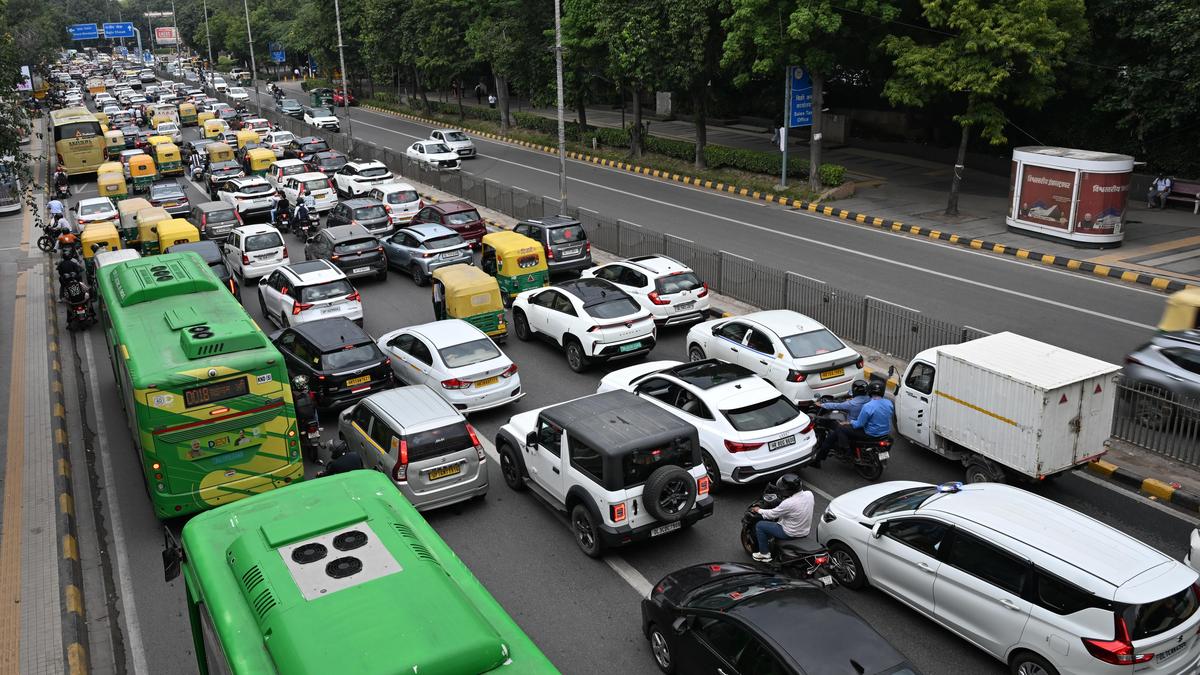
The Delhi government has barred the entry of vehicles registered outside Delhi that do not meet BS-VI emission standards. Only BS-VI, compressed natural gas (CNG) and electric vehicles will be allowed to enter the city. | Photo Credit: Sushil Kumar Verma The Delhi High Court Bar Association on Friday urged the Acting Chief Justice of the Delhi High Court to seek an exemption for judicial officers, advocates and court staff from the proposed restrictions on the entry of non-BS-VI vehicles into Delhi, saying they “cater to the essential service of dispensation of justice”.In a formal representation, the association pointed out that a significant number of members of the legal fraternity, including judges and court employees, reside in neighbouring satellite cities such as Noida, Gurugram and Ghaziabad, largely due to the high cost of housing in Delhi. It urged the Acting Chief Justice Nitin Wasudeo Sambre to take up the matter with the Delhi government and prevail upon it to exempt judicial officers, advocates and court staff from the proposed entry restrictions.The restrictions, which will come into effect on November 1 and remain in force until January 31 under the Graded Response Action Plan (GRAP), have also raised concerns among commuters and transporters, who say the move will affect their daily commute and livelihoods.The Delhi government has barred the entry of vehicles registered outside Delhi that do not meet BS-VI emission standards. Only BS-VI, compressed natural gas (CNG) and electric vehicles will be allowed to enter the city. Trucks and other vehicles not destined for Delhi will be diverted through the Eastern or Western Peripheral Expressways or alternative routes. Even BS-VI vehicles without a valid pollution under control certificate (PUCC) will not be permitted to enter, a traffic police release said.For commuters using BS-IV vehicles, primarily those purchased before 2020, the restrictions will affect their daily commute.“I am from Noida and work in a private company in Connaught Place. The restrictions will affect my travel directly as I will have to depend on others for my travel or take public transport,” said Manoj Verma, a marketing professional. “It would be helpful if the company allowed us to work from home,” he said.Supriya Balraj, a chartered accountant working in Noida, said she had to commute to Delhi at least four days a week to meet clients and would be affected by the restrictions.“I bought my car in 2018 and it is working well. The fitness certificate was also renewed recently. I am not sure what is the criterion on the basis of which they have issued such directions. What about the huge number of commercial and public service vehicles? Is there proper enforcement on them? Delhi-registered vehicles will not spread pollution?” she said.Jagpreet Kaur, a Gurugram resident, said the restrictions would disproportionately affect people who could not afford to replace their vehicles every few years.“Should I buy a new car for the winter season? Those who can afford to shell out over ₹15 lakh for new vehicles or EVs will not be affected by these restrictions. It is people like us who cannot afford to buy new vehicles every few years who are impacted the most. What if there is a medical emergency? I have my mother living in Delhi and at times I have to go and meet her. This will create inconvenience for us,” she said.The restrictions on BS-IV taxis will also affect drivers who depend on them for their livelihood, transporters said.“The transport and tourism industry was affected during COVID-19. The industry has faced several challenges since then. The vehicles registered in the NCR that ply in Delhi to earn a livelihood or carry regular customers in the city will not be able to work,” said Sanjay Samrat, president of the Delhi Taxi and Tourist Transporters Association.The association has written to Chief Minister Rekha Gupta, urging her to withdraw the proposed restrictions, saying they would dampen the transporters’ Diwali festivities.The traffic police have made arrangements to enforce the restrictions. “Efforts are being made to prevent the entry of non-compliant inter-city and inter-State buses, and such buses will be turned back at the border itself, as diversion after entering the city will create traffic chaos. These also include government buses. Around 126 display boards have been placed prominently across the city indicating prohibitions. Non-destined vehicles and those carrying construction materials will also be restricted,” said K. Ramesh, Deputy Commissioner of Police (Traffic), Central. Published - October 31, 2026 04:58 am IST
Delhi High Court Bar Association seeks exemption from proposed restrictions on non-BS-VI vehicles
Full Article
Original Source
Read the full article at Thehindu →KhanList aggregates and links to publicly available news content. We do not host full articles from third-party sources. Always verify important information with original sources.