
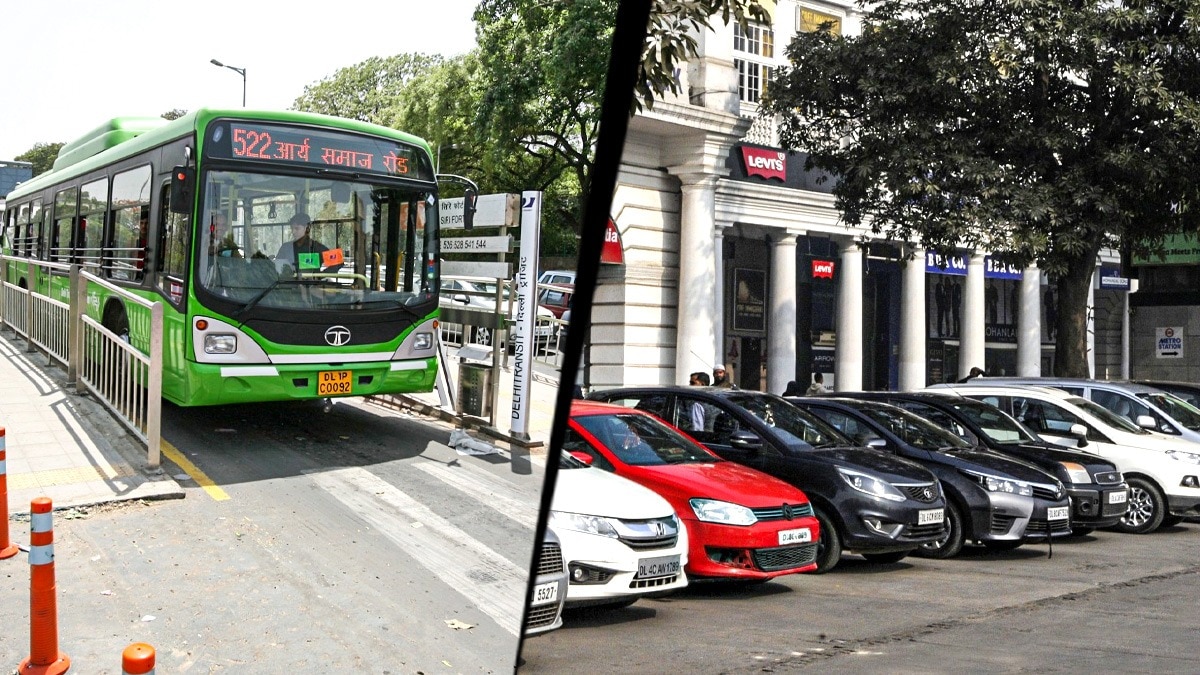
The Master Plan for Delhi 2047 (MPD-2047) has proposed several changes to the city's transport system, including higher parking charges during peak hours and the possible return of the Delhi BRTS (Bus Rapid Transit System), which was once criticised for worsening traffic in the national capital.The newly released Master Plan proposes dynamic parking charges in areas with heavy traffic and parking congestion, and says agencies might explore BRTS on identified routes.The proposals are part of an attempt to reduce Delhi's dependence on private vehicles and make better use of existing road and public transport infrastructure. The plan calls for area-specific parking management, greater regulation of on-street parking, multi-level parking, and measures to encourage walking, cycling and public transport.The MPD-2047 was unveiled on Thursday (August 20) by Union Housing and Urban Affairs Minister Manohar Lal Khattar along with Delhi Chief Minister Rekha Gupta and Lieutenant Governor Taranjit Singh Sandhu. The scale of the challenge is clear from Delhi's vehicle numbers. As of March 19, 2026, the city had 87.6 lakh registered vehicles, according to the Delhi Economic Survey 2025-26. This included 59.2 lakh two-wheelers and 21.2 lakh cars and jeeps.But the problem is not limited to vehicles registered in the capital, because Delhi also receives a large daily influx of vehicles from the National Capital Region (NCR). An estimate cited by the Centre for Science and Environment puts the number of vehicles entering and leaving the Delhi region each day at about 11 lakh. So, against this backdrop, the MPD-2047's approach is to use parking and public transport as tools to influence how people travel rather than simply keep adding road space.DYNAMIC PARKING CHARGES TO TARGET DELHI'S BUSIEST AREASThe MPD-2047 plan proposes the creation of Parking Management Areas (PMAs) in places such as markets and commercial hubs with "high vehicular traffic and parking congestion". For these areas, local bodies would prepare Parking Management Area Plans covering parking supply, demand management, regulation of available parking, no-parking zones and dynamic parking charges.The key proposal is that parking charges should depend on how busy an area is.The document says public parking in areas identified as traffic congestion zones should be regulated through "high parking charges to discourage use of private vehicles". It further specifies that "dynamic parking charges shall be linked to peak times and level of activity/congestion in different areas."The plan, therefore, envisages parking becoming costlier when demand is highest, rather than having one flat rate throughout the day.The document does not prescribe a specific rupee rate for such parking. It leaves the details to area-level parking plans to be prepared by local bodies, potentially in consultation with road-owning agencies, Traffic Police and local stakeholders.The plan also seeks to make organised parking more attractive than parking on the street. Within 500 metres of an existing multi-level parking facility, on-street parking for private vehicles is to be discouraged and priced higher than the off-street facility.Residential parking could also face tighter regulation. The document proposes a phased system for regulating on-street parking in residential areas, including parking permits and a possible policy linking registration of new vehicles to the availability of parking space.BRTS, SCRAPPED AFTER TRAFFIC AND ACCIDENT CONTROVERSY, FINDS A PLACE AGAINThe MPD-2047 released by the Centre also leaves the door open for BRTS, nearly a decade after Delhi dismantled its controversial South Delhi corridor.The document says agencies "may explore options such as BRTS, trams, double-decker buses in identified areas or along specific routes", with such routes potentially identified through a Comprehensive Mobility Plan. It also says Delhi's existing public transport network should be reinforced with systems including BRTS, Metro Lite/Metro Neo and Light Rail Transit, "wherever feasible".For land-pooling areas, the plan goes a step further, saying that "new bus route network, Bus Rapid Transit System (BRTS), high speed bus routes, etc. shall be planned and implemented."Land-pooling is a policy under which private landowners voluntarily pool their land holdings so that a portion is returned to them for development after the authority carves out space for roads, infrastructure and public facilities.This reference is significant because Delhi's earlier BRT experiment became one of the city's most contentious transport projects.The first BRT corridor, launched in 2008 under the Sheila Dikshit-led Congress government, was designed to give buses dedicated road space and encourage public transport. The operational corridor ran between Ambedkar Nagar and Delhi Gate, with the 5.8-km section between Ambedkar Nagar and Moolchand becoming the focus of the controversy.Motorists complained that the dedicated bus lanes reduced road space for private vehicles and contributed to congestion. Residents and commuters also raised concerns over the design and access to bus stops. The project faced a legal challenge, although the Delhi High Court eventually upheld it.By 2016, the AAP government decided to scrap the BRTS corridor, citing public demand, accidents and what it described as haphazard traffic movement.The new Master Plan appears to be approaching the idea differently. Rather than prescribing a citywide BRT network, it says BRTS could be considered on identified areas or specific routes, subject to feasibility. It defines BRTS as a "high-quality bus-based mass transit system" using segregated right-of-way infrastructure, rapid and frequent operations, and a focus on reliable and cost-effective urban mobility.The document does not announce an immediate revival of the old South Delhi corridor. The MPD-2047 says the metro and bus system will form Delhi's primary public transport network, with other systems, including BRTS, supplementing it wherever feasible.Taken together, the plan proposes making driving and parking less convenient in crowded areas while expanding public transport. Whether these measures change travel habits will ultimately depend on how effectively they are implemented.- EndsPublished By: Anand SinghPublished On: Aug 21, 2026 15:50 IST
Delhi could levy dynamic parking charges, bring back disputed BRTS: Masterplan
Full Article
Original Source
Read the full article at Indiatoday →KhanList aggregates and links to publicly available news content. We do not host full articles from third-party sources. Always verify important information with original sources.