
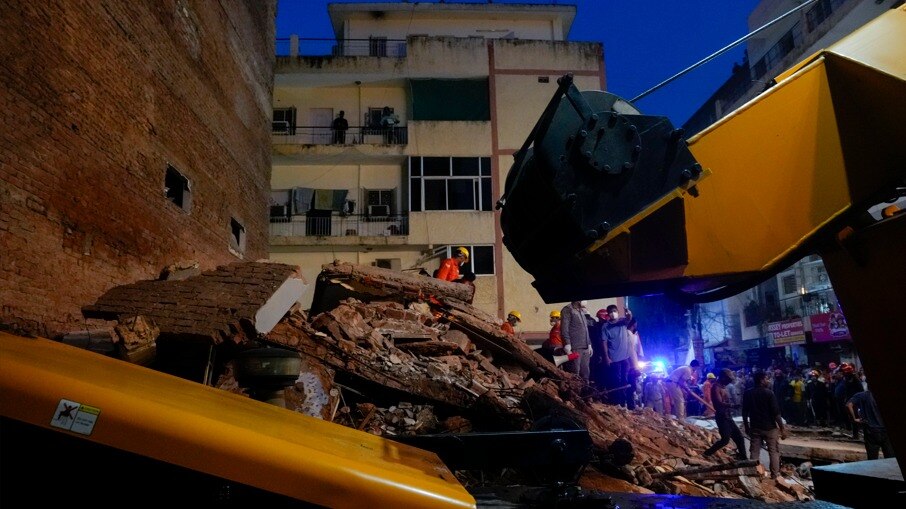
A PG building collapse in Satya Niketan killed seven people, including five Delhi University students. The collapse has raised fresh questions over surveys, permissions and structural checks in Delhi's student housing hubs.Seven people have been confirmed dead after a PG in Delhi's Satya Niketan collapsed. (PTI Photo)Seven people, including five Delhi University students, were killed when a five-storey PG building collapsed in Satya Niketan on Sunday. The building had no sanctioned plan, an unauthorised basement and no NOC from the Fire Department, according to the MCD’s post-collapse assessment. Its fifth floor was also not permitted under building rules.The building was not among those classified as dangerous in this year’s pre-monsoon survey. Reports quoting MCD data said around 30.7 lakh buildings were surveyed and 62 were declared dangerous.Under the MCD’s system, civic engineering staff carry out physical surveys before the monsoon and can flag buildings that are ruinous, likely to fall or otherwise pose a danger to people. Under Sections 348 and 349 of the Delhi Municipal Corporation Act, the civic body can order a dangerous building to be repaired, secured, demolished or vacated.It's worth noting that Delhi has had questions over the effectiveness of such surveys before. In 2019, after a five-storey building collapsed in Ashok Vihar three weeks after a municipal team had inspected it, the MCD identified 49 unsafe buildings across the city.Arunava Dasgupta, then an expert at the School of Planning and Architecture, called the number “unbelievable” and said the survey appeared to have been conducted in a rush. He said engineers needed to look beyond visible defects such as tilting and rust and check for internal cracks, leakages and the strength of common walls.A 2020 Delhi government action plan similarly proposed structural-safety audits in phases, prioritising high-risk buildings and those identified as unsafe during pre-monsoon surveys. For private buildings with high public use, it proposed that owners get the structures evaluated by qualified structural engineers and submit the reports to the local body. The distinction is important because the annual survey does not amount to a detailed structural audit of every building.And the death toll shows the scale of the risk. NCRB’s Accidental Deaths & Suicides in India data records nearly 170 deaths in Delhi from “collapse of structure” between 2020 and 2024, excluding dam and bridge collapses. Delhi recorded 25 such deaths in 2020, 18 in 2021, 41 in 2022, 43 in 2023 and 42 in 2024. A peer-reviewed study published in Injury Epidemiology examined 929 Delhi Police records of construction-site accidents between 2016 and 2018.It found 1,217 workers and children were injured in those cases, including 356 fatal injuries. The collapse of an old building accounted for 268 cases, or 22% of the recorded accidents. Another 19% involved the collapse of roofs, walls or parts of buildings under construction.Injuries were most common during the rainy season.The Satya Niketan area shows some of the pressures behind the problem. Around 100 metres from the collapsed building, PG rooms were still being offered in a five-storey building where damp walls, leaking pipelines and poorly lit stairs were visible. In nearby Moti Bagh village, residents said additional floors had been added to old houses over the years.Two other hostels operated by the same company, within roughly 70-100 metres of the collapse site, were also found to have narrow access passages, single entry-exit routes, locked gates and poorly arranged electrical wires. One was a five-storey building, despite buildings above three floors reportedly not being permitted in the area.The demand for such accommodation is partly driven by the shortage of university hostels. Delhi University attracts students from across the country, while private PGs offer accommodation close to campuses, often at a lower cost than formal housing.The Delhi High Court has now sought a wider audit of PGs and hostels and asked authorities to examine whether they have valid permissions and comply with building rules. The government has ordered structural audits in PG hubs, while five MCD officials have been suspended following the Satya Niketan collapse.Several buildings near the collapse site have also been inspected, with some issued vacation notices after being found in dangerous or ruinous condition.Simply put, Delhi has a system to identify dangerous buildings before the monsoon and a separate framework for detailed structural audits of high-risk buildings. Yet the Satya Niketan building, despite its unauthorised construction and alterations, was not on this year's dangerous-building list.The question now is whether Delhi’s safety checks are finding the buildings that pose the greatest risk — before they collapse.- EndsPublished By: Koustav DasPublished On: Sep 8, 2026 12:52 IST
Delhi building collapse: How unsafe PGs and buildings keep slipping through checks
Full Article
Original Source
Read the full article at Indiatoday →KhanList aggregates and links to publicly available news content. We do not host full articles from third-party sources. Always verify important information with original sources.