
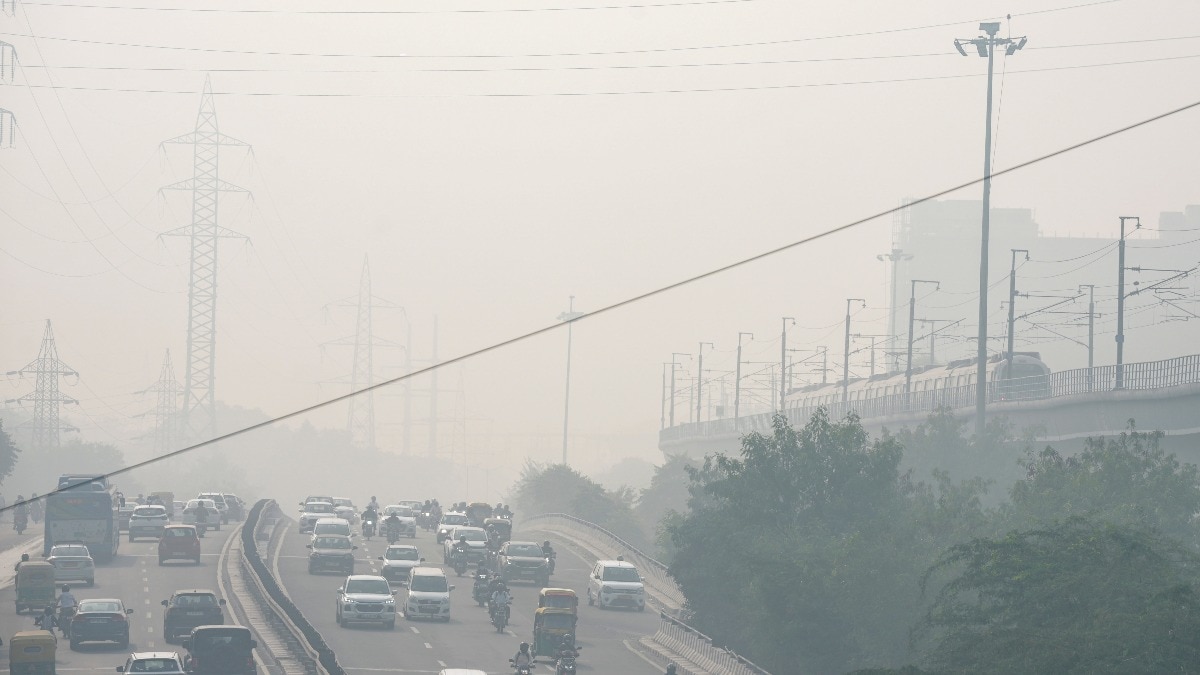
Delhi woke up to another alarming spell of air pollution on Saturday, November 7, with the Air Quality Index (AQI) touching 525 at 10:01 am, according to AQI.in.The reading comes amid a constant deterioration in air quality over the past few days, with the national capital witnessing a sustained rise in pollution levels since the end of October. People row a boat amid haze on the Yamuna river. (Photo: PTI) The situation has become particularly concerning with Diwali just two days away, when firecracker emissions could add to the already polluted air.Responding to the situation, the Commission for Air Quality Management (CAQM) invoked Stage III of the Graded Response Action Plan (GRAP) on Friday evening, November 6, across Delhi-NCR, bringing in stricter restrictions to prevent pollution from worsening further. But what exactly does GRAP-III mean, and what changes does it bring for residents on the ground? A graph illustrating Delhi's AQI in the last 24 hours. (Photo: AQI.in) WHAT IS GRAP-III AND WHY IS IT IMPOSED?GRAP is an emergency set of measures designed to control air pollution in Delhi-NCR. It works in four stages, with restrictions becoming progressively stricter as air quality deteriorates. Under the revised framework, Stage III is associated with severe air quality, generally when the AQI falls between 401 and 450, as per the Central Pollution Control Board (CPCB).However, authorities can invoke restrictions pre-emptively based on pollution forecasts and weather conditions.In this case, CAQM took the decision on Friday after reviewing the worsening pollution situation and forecasts indicating that unfavourable weather, including falling wind speeds, could prevent pollutants from dispersing. People are seen bursting firecrackers. (Photo: PTI) The restrictions could prove important ahead of Diwali, when firecracker smoke can add to the existing pollution burden.WHAT ARE THE RESTRICTIONS UNDER GRAP-III MEASURES?One of the biggest measures under GRAP-III is a halt to several construction and demolition activities across NCR, including excavation, demolition, road construction, piling, brickwork and other activities that generate large amounts of dust.Certain essential infrastructure projects, such as metro, railway, hospital and highway works, are exempted as long as they adhere to pollution-control requirements.The restrictions also target older, more polluting vehicles.BS-III petrol and BS-IV diesel four-wheelers face restrictions in Delhi and selected NCR districts, including Gurugram, Faridabad, Ghaziabad and Gautam Buddha Nagar. Certain older diesel goods vehicles are also restricted. A traffic police official checks emission standards details of a vehicle. (Photo: PTI) Furthermore, stone crushers and mining activities across NCR must also shut down.Schools have another important provision to follow, too. Classes up to Class V are required to shift to a hybrid system, allowing children to attend either physically or online wherever feasible.State governments may also allow 50% of staff in public and private offices to work from home, while encouraging people to use public transport and avoid unnecessary journeys.With Delhi's pollution already reaching alarming levels before Diwali, GRAP-III is an attempt to prevent the situation from spiralling further.- Ends
Delhi AQI crosses 500: What are GRAP-III measures imposed ahead of Diwali?
Full Article
Original Source
Read the full article at Indiatoday →KhanList aggregates and links to publicly available news content. We do not host full articles from third-party sources. Always verify important information with original sources.