
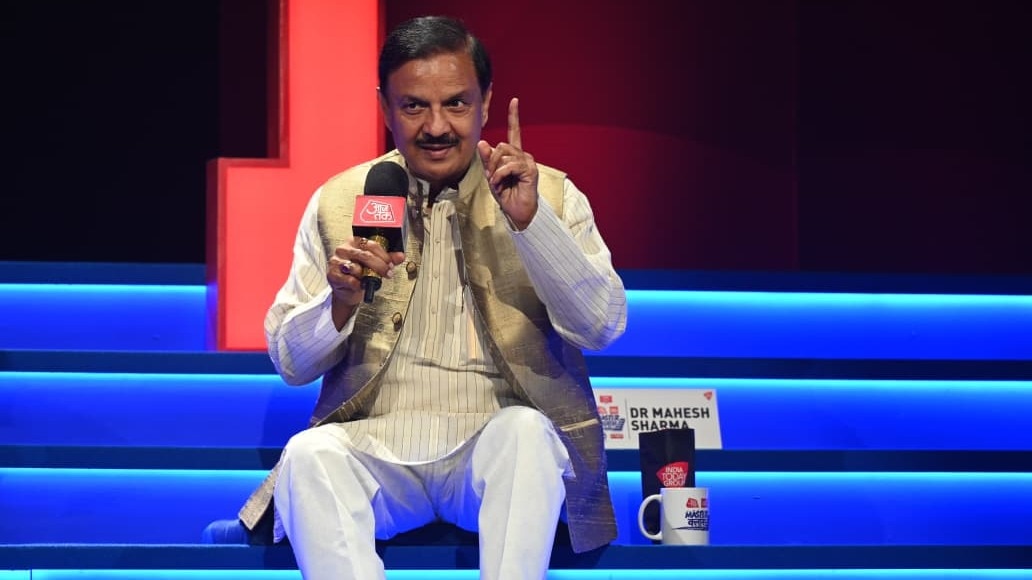
From starting a medical practice with just Rs 600 to building a chain of 10 hospitals, Dr Mahesh Sharma shared lessons from his career journey. Speaking at Aaj Tak Masterclass's session 'Naukri ka prescription', the Kailash Group founder discussed healthcare jobs, skill gaps, merit-based hiring and why India needs more job creators.From starting a medical practice with just Rs 600 to building a chain of 10 hospitals, Dr Mahesh Sharma shared lessons from his career journey. New Delhi,Nov 20, 2026 13:05 ISTA degree may help you get through the door, but it is your skills that determine whether you can do the job. That was one of the key messages from Dr Mahesh Sharma, Founder and Chairman of Kailash Group of Hospitals, as he spoke about careers, employment and the future of India's healthcare sector.Speaking at Aaj Tak Masterclass during the session 'Naukri ka prescription', Sharma urged young people to look beyond academic qualifications and focus on developing skills that employers actually need. He also encouraged them to consider healthcare as a career, pointing to the sector's growing opportunities and India's increasing presence in global medical services.Drawing from his own journey, Sharma explained how he started his medical practice in Noida with just Rs 600 and gradually built a hospital network that now employs thousands of people.FROM RS 600 TO 10 HOSPITALS: THE JOURNEYWhen Sharma arrived in Noida in 1982, the city was still developing. Having completed his medical education at Safdarjung Hospital in Delhi, he came from a rural background in Rajasthan with little financial support. His father gave him Rs 600 to begin his practice. With a stethoscope, a white coat, a table and a chair, he started seeing patients.He also worked at a charitable dispensary, where he was offered Rs 2,000 instead of the Rs 2,500 salary he had requested. Recalling the conversation, he said he told the trust representatives that while they were doing charity, he was not, and needed the additional Rs 500 to pay for petrol for his scooter.His practice gradually grew, and what began as a small six-bed nursing home eventually developed into a hospital network.Today, Kailash Group has 10 hospitals, around 9,600 employees and 846 doctors.'WHAT CAN YOU ACTUALLY DO?': THE SKILLS GAPAddressing the growing competition for jobs, Sharma said India faces a shortage of skilled workers even as unemployment remains a concern.He referred to a familiar situation during job interviews, where candidates list their degrees and additional qualifications but struggle when asked what they can actually do."The real question is what can you actually do?" he said, stressing the need to bridge the gap between academic qualifications and workplace skills.He encouraged young people to develop practical abilities instead of relying only on degrees and certificates.Sharma also highlighted the opportunities in healthcare, saying that India's medical infrastructure has expanded significantly over the years. He pointed to the growth in medical colleges and MBBS seats, while noting that demand for medical education continues to remain high.He said medical tourism is another growing area, with international patients increasingly looking towards India for affordable healthcare services.'DOCTORS ARE STILL UNDERPAID': THE REALITY OF HEALTHCARE JOBSSharma also addressed an issue that often gets overlooked when discussing careers in medicine: salaries and working conditions.Asked whether doctors and nurses are adequately compensated for their years of education, skills and demanding schedules, he said doctors continue to be underpaid.He pointed out that the challenges are particularly significant in rural areas, where doctors may not have access to adequate infrastructure, housing or educational facilities for their children.According to him, these factors also influence why many doctors hesitate to work in villages.He explained that medical professionals often work through the night, stand for six to eight hours during surgeries and may be called in at any time."Behind every white coat is a human being," he said, highlighting the emotional and physical pressures that come with the profession.He recalled how doctors continued working through difficult circumstances during the Covid pandemic, with some even losing their lives while treating patients.NO RECOMMENDATIONS FOR DOCTORS AND NURSESWhen asked whether political recommendations influence recruitment across his hospitals, Sharma said requests for jobs were common but the organisation did not compromise when hiring doctors and nurses.He said recommendations might sometimes carry around 10 per cent weightage for certain positions, such as computer operators or X-ray technicians.However, recruitment for doctors and nurses was strictly merit-based."The person who deserves the job should get it," he said.Explaining the importance of this approach, Sharma asked people seeking recommendations to consider whether they would want their own family members treated by a doctor appointed only because of someone's influence.INDIA NEEDS JOB CREATORS, NOT JUST JOB SEEKERSTowards the end of the session, Sharma spoke about the importance of creating employment opportunities within the country.He said the nearly 9,600 people directly employed by Kailash Group were only part of the larger employment ecosystem. When allied services such as catering, laundry and other outsourced operations were included, the number of livelihoods connected to the hospitals reached nearly one lakh."We need to become job creators," he said.Sharma added that he had the opportunity to move abroad after completing his medical education, where he could have earned considerably more. However, he chose to remain in India and build his career here.His message to young people was to recognise the opportunities available in India, develop relevant skills and contribute to building the country's future.- Ends
Degrees don't guarantee jobs: Kailash Hospitals founder Mahesh Sharma on skills gap
Full Article
Original Source
Read the full article at Indiatoday →KhanList aggregates and links to publicly available news content. We do not host full articles from third-party sources. Always verify important information with original sources.