
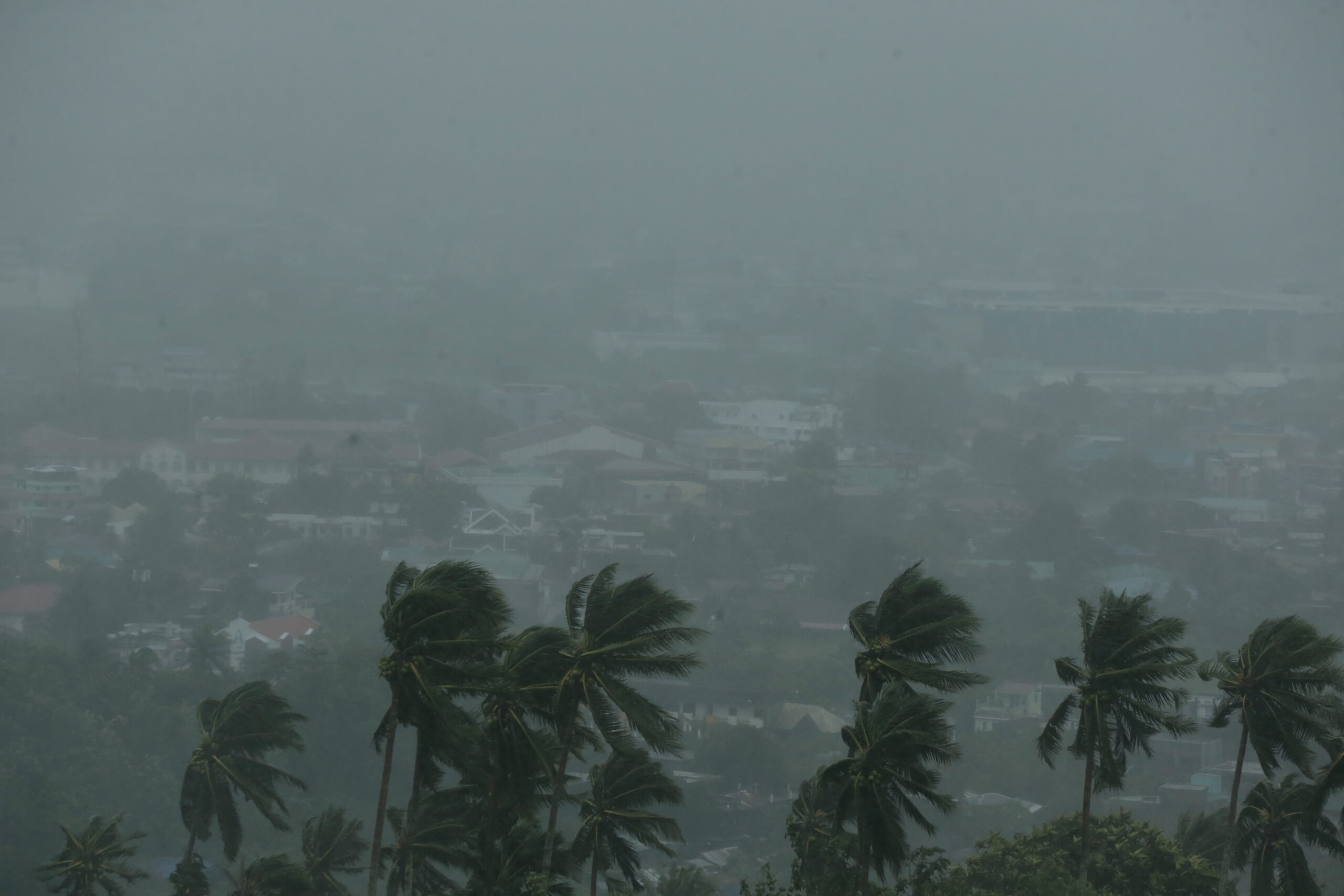
The defunding of weather observation systems across the world as countries focus on military spending is making it harder to predict extreme events at a time when the planet is reaching unprecedented heat levels. Weather and climate observations worth about $10 billion globally are at risk, according to the World Meteorological Organization. Key measurements have already declined and others could be interrupted, said the WMO’s Secretary-General Celeste Saulo, in an interview on the sidelines of the COP31 climate summit in Antalya, Turkey. (Editor’s note: This article was published by Bloomberg on Nov. 11). “Geopolitical tensions have resulted in a large majority of governments redirecting their investments to defense, instead of observing and understanding the climate system and preparing to adapt to it,” Saulo said. In terms of observations, she added, “We are increasingly far from solving a problem that’s not hard to solve.” Data gathered in hundreds of weather stations across the world are essential to allow forecasters to make predictions on storms, heat waves and drought. They also feed into early-warning systems that can alert populations just before disasters strike. In addition, scientific models depend on that information to make long-term projections of how man-made global warming will impact the planet. Because climate investment from developed countries is falling, “everything points to a decline in adaptation funding in 2026 and 2027 that will have a great impact on observation systems,” Saulo said. “Many countries in the Global South have no resources to invest.” The risk that the US will defund global ocean observations is of particular concern, she said, because no other country has the capacity to deploy resources to gather ocean data at a similar scale. A halt in these observations would lead to a so-called single point of failure, in which the ocean observations system collapses. “Everyone assumes the system will keep functioning as it has for the past 20 years, but that’s not the case,” she said. “When the system stops working, it will be too late.” The WMO Global Climate Observing System, which assesses the state of global climate observations, needs $500 million a year to operate, while coordination efforts with different agencies cost about $10 million a year. Developing nations need a combined $150 million a year to strengthen their observation systems, the WMO estimates. All of that is under threat, Saulo said. “These are not unimaginable sums,” she added. However, “private sectors and philanthropists are not assuming that responsibility either.” Lack of funding is an issue across the whole UN climate system. The UN Framework Convention for Climate Change has warned it needs more money to facilitate increasingly large events like COP31 and to provide the growing amount of reports countries are asking for. “We face challenges — mandates are growing, funds are shrinking,” the UN climate body’s Executive Secretary Simon Stiell said in his opening speech at COP31. “Serious work is needed with parties on our budget consultations over the next six months. We cannot keep doing more with less.” The UN’s Intergovernmental Panel on Climate Change, which produces the landmark Assessment Reports that evaluate all relevant climate research every few years, may not have enough funds to finish its next report, according to an October editorial in the scientific journal Nature. The body relies on voluntary contributions from countries and other UN agencies and needs more than 20 million Swiss francs ($24.5 million) to stay operational until the end of 2029. If contributions continue at current levels, according to the editorial, it will be left with just 5 million Swiss francs by the end of 2028. Photograph: Strong wind batters coconut trees at Legazpi City in Albay province, south of Manila on November 9, 2025, after Super Typhoon Fung-wong made landfall; photo credit: Charism Sayat/AFP/Getty Images Copyright 2026 Bloomberg.
Defunding of Weather Observation Makes Planet More Unpredictable
Full Article
Original Source
Read the full article at Insurancejournal →KhanList aggregates and links to publicly available news content. We do not host full articles from third-party sources. Always verify important information with original sources.