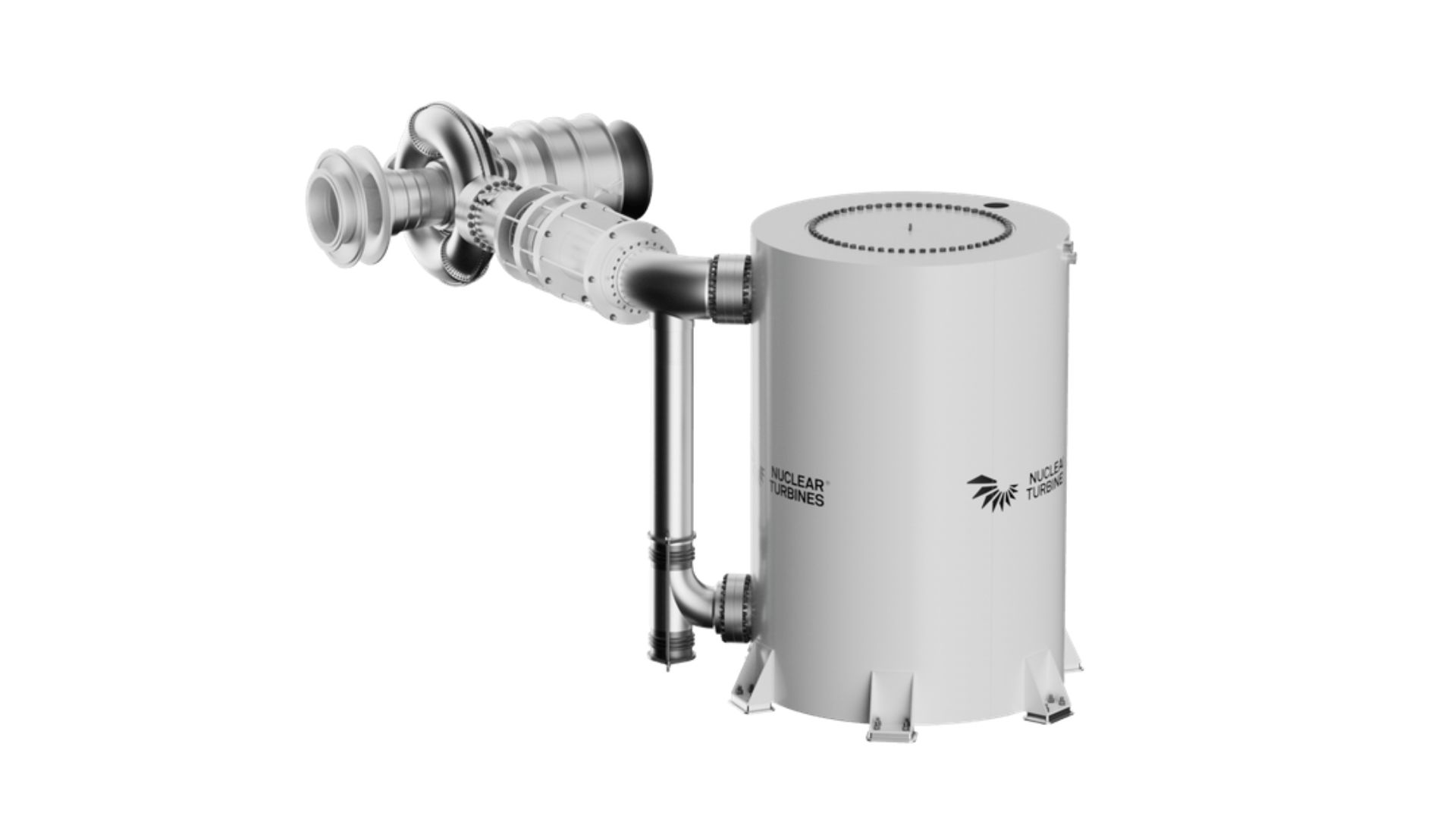
A British startup is working to solve the challenges of cost and scale for the nuclear energy industry by using highly efficient high-temperature turbines used by gas-fired power plants and jet engines. Emerging from stealth, Nuclear Turbines promises to leverage British expertise in engineering and design to build smaller, affordable nuclear energy reactors. As countries grapple with demands for energy and increasing instances of extreme weather events due to climate change, nuclear energy is rapidly becoming the approach of choice to balance the two. With no carbon emissions and on-demand availability of energy, nuclear power is poised to make a major comeback to the energy scene. Interesting Engineering has previously reported on new innovative approaches being deployed in the fission energy sector, where modular and smaller-scale reactors are being tested to meet energy demands. Jeremy Owston, formerly an engineer at BAE Systems and a co-founder at Nuclear Turbines, however, believes there is a fundamental problem in how the nuclear energy sector approaches energy production. Flipping the script According to Owston, the nuclear energy industry designs its reactors first and then decides how it will convert the generated heat into electricity. At Nuclear Turbines, and his co-founder, Tim Abram, a professor at The University of Manchester, are replacing the steam turbine systems with those used in gas-fired power plants. Nuclear power plants use steam turbines because the reactors produce low-temperature heat (572 Fahrenheit, 300 degrees Celsius). The nuclear reactor design requires the use of large tanks, boilers, heat exchangers, and cooling systems that are meant to handle high-pressure water safely. The end result is a big infrastructure setup that is expensive to build and highly inefficient. In sharp contrast, gas turbines handle high-temperature heat and convert them directly into power. Used in jet engines too, these turbines are compact, extremely efficient, and cost-effective even at small scales. However, these turbines cannot be used directly in nuclear reactors, since they can operate at high temperatures of above 572 Fahrenheit (300 degrees Celsius). What Nuclear Turbines is doing differently Using first principles thinking, the team at Nuclear Turbines started with a system design that can generate electricity at the lowest cost. Much like a commercial gas turbine, the Nuclear Turbines reactor directly heats the compressed air before it is returned to the turbine at high temperatures to generate electricity directly. The radical change in thinking has also brought about a radical change in the size and complexity of the overall system. Unlike other radical changes that usually require technology to mature, the Nuclear Turbines team used off-the-shelf components, giving better control over costs and rapid advancement of their innovation too. While high-temperature turbines typically use graphite, which combusts when exposed to air, the team ensured that they replace it with novel materials to bypass the use of graphite completely. “This is the first time I’ve seen an SMR design that genuinely solves the economic and sustainability equation, and it’s at a time when market dynamics, government ambition and regulatory reform are creating unprecedented opportunity,” said Jordan Billiald, Principal at IQ Capital, who led a foundational funding round where the company raised nearly US$ 20 million (GBP 15 million). “Nuclear Turbines is perfectly positioned to capture that opportunity and to make sure the UK is not left out of the global nuclear race.” “Built on exceptional engineering expertise and innovative technology, Nuclear Turbines reflects our commitment to accelerating breakthrough innovation beyond defense and supporting UK growth, industrial resilience and energy security,” concluded David Ewing, Head of Technology Commercialization, BAE Systems. Recommended ArticlesGet the latest in engineering, tech, space & science - delivered daily to your inbox.Ameya is a science writer based in Hyderabad, India. A Molecular Biologist at heart, he traded the micropipette to write about science during the pandemic and does not want to go back. He likes to write about genetics, microbes, technology, and public policy.
Defense spin-off eyes nuclear energy sector domination with novel reactor design
Full Article
Original Source
Read the full article at Interestingengineering →KhanList aggregates and links to publicly available news content. We do not host full articles from third-party sources. Always verify important information with original sources.