
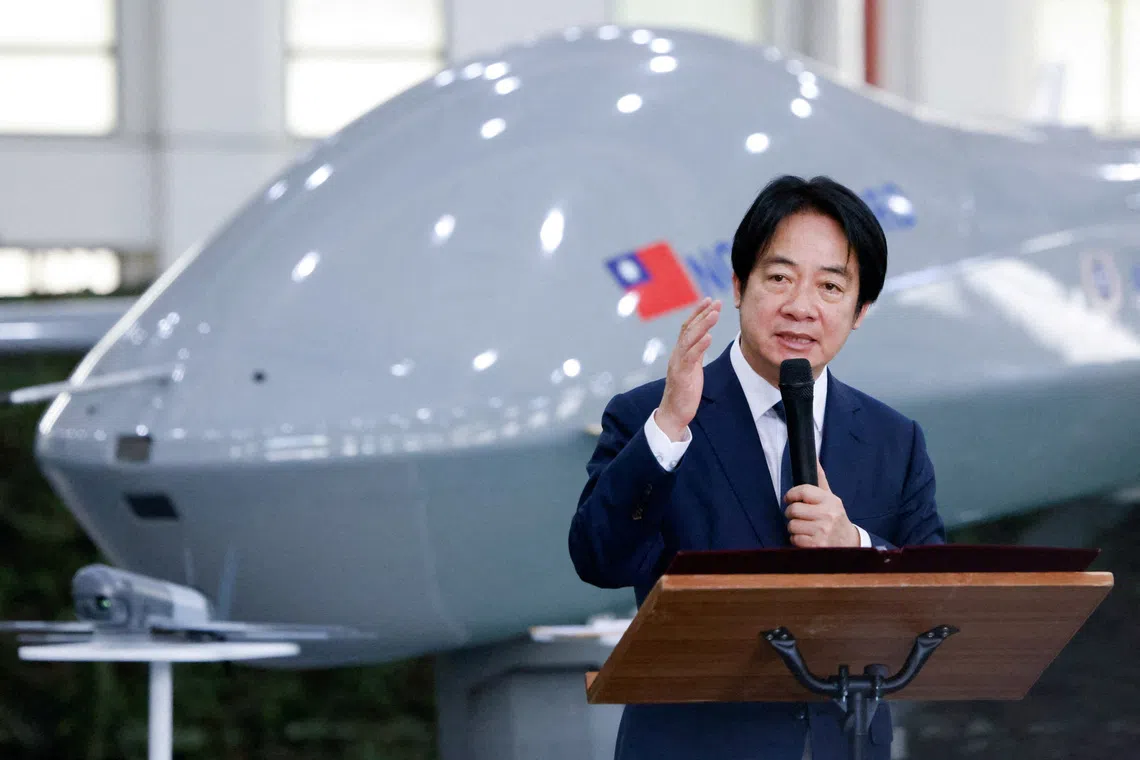
TAIPEI – Taiwan’s plan for defence spending in 2027 to exceed NT$1 trillion (S$40 billion) for the first time shows the international community the island’s determination to strengthen its defences, President Lai Ching-te said on Sept 2.Beijing, which views democratically governed Taiwan as its own territory, has ramped up military and political pressure over the past few years to assert its claims, which Taipei strongly rejects.Speaking to military officers on Taiwan’s Armed Forces Day, Lai said better preparations brought greater security.“Only by continuously enhancing defence capabilities and deterrent power can national security and regional peace be better ensured,” he said.The proposed defence budget for 2027 “demonstrates to the international community Taiwan’s determination to strengthen its self-defence capabilities”, Lai added.The government will continue to implement defence self-reliance, develop the military industrial sector, artificial intelligence and unmanned vehicles, and “enhance Taiwan’s overall capability to respond to future challenges”, he said.Speaking in Beijing at around the same time as Lai, a spokesperson for China’s Taiwan Affairs Office said Lai and his administration “recklessly incite cross-strait confrontation and antagonism while lavishly squandering the people’s hard-earned money”.Lai’s attempts to “resist reunification through force” are “nothing but a case of overestimating their own strength, which will only bring profound disaster to the people of Taiwan”, spokesperson Zhang Han told a regular press briefing.China’s determination to defend national sovereignty and territorial integrity is unwavering, she added.Lai says that only Taiwan’s people can decide their future. REUTERS
Defence spending plan shows determination to protect Taiwan: President Lai
Full Article
Original Source
Read the full article at Straitstimes →KhanList aggregates and links to publicly available news content. We do not host full articles from third-party sources. Always verify important information with original sources.