
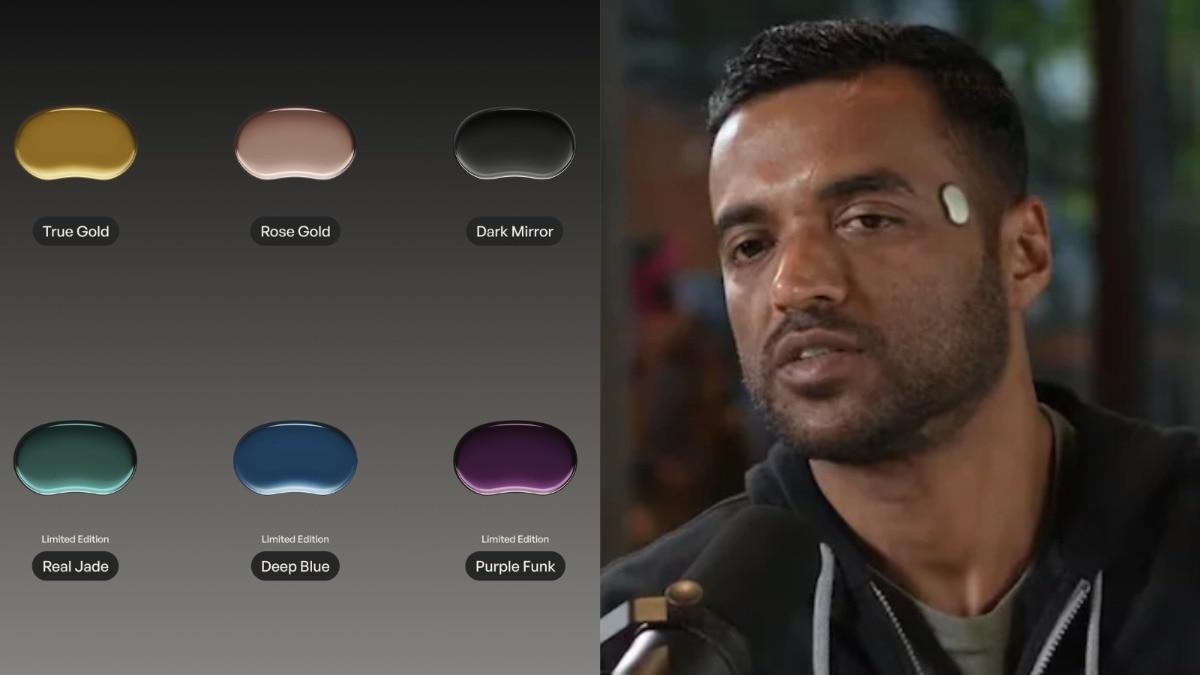
Deepinder Goyal is already thinking beyond the everyday health tracking use cases of Temple, his wearable device that sits on the side of the head. The Zomato founder says the device could eventually be used to assess whether pilots are fit to fly, while a future version may even be able to turn thoughts into text. Goyal made the comments while responding to users on X after announcing pre-orders for Temple in India. One user suggested that the device could be useful for restaurant managers and chefs, who could use its data to understand stress levels during busy periods, such as when supplies are running late or restaurants are facing shortages.Goyal said he had a different use case in mind. “I would certainly have it on pilots to check if they are fit to fly. And on the air force to check who is the fittest to fly a mission today,” he wrote. Deepinder reveals new qualities of Temple on X. Temple could one day turn thoughts into textIn another exchange, a user asked whether a future version of Temple could understand a person's intention, such as wanting to open an app, and then open it on their phone. Goyal said the company is already researching this area.“We have a research team working on thoughts to text, but that looks like a few years away. Maybe the 3rd or 4th version of Temple,” he said. That would put thought-based controls several generations away from the first Temple models. For now, the company is focused on the wearable's current sensing capabilities. Temple is being developed as a wearable that can continuously track signals and health-related data from the head. Goyal has also shared details about the device's BrainFlow feature, saying it has been tested against technologies used to measure changes in blood volume in the brain.Goyal shares more details about Temple's brain trackingGoyal recently said Temple's second validation study involved 60 participants and three physiological challenges. According to him, Temple BrainFlow showed a correlation of 0.84 to 0.91 with brain blood-volume changes when compared with time-domain NIRS, a technology that can distinguish brain blood volume from blood volume in the scalp. He said the study found the strongest correlation during a head-down tilt test, at 0.91, compared with 0.49 for scalp blood volume. The study has been posted as a preprint and submitted for peer review, according to Goyal.Temple is designed to sit against the side of the head and can be worn with glasses, according to Goyal. He said the device is slim enough to slip underneath glasses, while its grips are meant to stay in place during activities including sleep. The device uses a PPG sensor, similar to the technology found in smartwatches, rather than directly measuring brain signals in the way the user's question suggested. Goyal said there is therefore nothing in Temple that would harm a developing brain, although he questioned the need for the device among people under 18.At the moment, Temple is still a new product, with pre-orders expected to open soon. You can stay tuned to India Today Tech for all the updates.- Ends
Deepinder Goyal says Temple can tell if pilots are fit to fly, could read thoughts one day
Full Article
Original Source
Read the full article at Indiatoday →KhanList aggregates and links to publicly available news content. We do not host full articles from third-party sources. Always verify important information with original sources.