
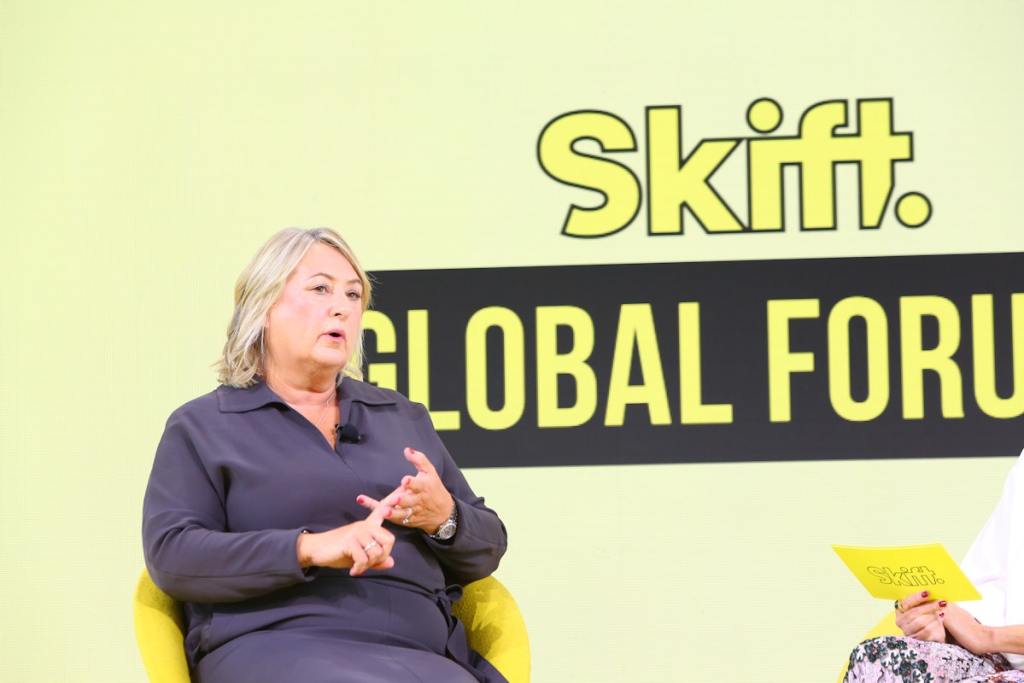
The Decision Brief Audrey Hendley, President, American Express Travel Moderated by Carolyn Kremins, President, Skift Sponsored by American Express Travel THE VERDICT The customers reshaping premium travel are younger than many brands have planned for. Hendley’s numbers make the case: Millennial and Gen Z spending on American Express rose 40% in Q2 2026, and together they account for 65% of its new customers globally. The average new U.S. Platinum cardholder is 32, and for Gold, it’s 29. These customers are prioritizing travel, and they expect perks, benefits, and points to make every trip better. An American Express survey found that 75% of millennials would take a job with fewer benefits in exchange for more time to travel. Premium, Hendley said, is “about how you use your time and what you value.” The brands that win this generation will be the ones that make that time count. PATHS FORWARD Expand what premium means. Hendley said premium now spans wellness-focused boutique hotels like the Six Senses in London and traditional luxury like the Dorchester — “they’re both definitions of luxury.” Travel companies that still define their premium tier by a single standard risk losing customers who don’t have a fixed definition of a premium experience. Use AI to enhance human interaction. Hendley described how American Express uses a “high-tech meets high-touch” model to reduce dead time on calls. She said customers can default to the phone at any point — “nothing beats picking up the phone to talk to somebody who has some judgment, who’s been at the destination.” The AI investment improves human-to-human engagement without replacing the option. Design physical spaces around how customers actually behave. Hendley said their Sidecar lounge concept came from observing how travelers used Centurion lounges — many had short dwell times and were traveling alone or with one other person. She said the company built a smaller, more intimate format specifically for that behavior and called it “a phenomenal success.” For other brands, the principle applies beyond lounges: build the experience around real customer patterns. WHAT TO WATCH Hendley acknowledged that American Express is looking at “a sub-segment of travelers.” The broader market tells a different story: Kremins cited that U.S. inbound tourism was down 11% in August 2026 and 7% in July 2026. Whether the premium-spending strength Hendley described is a durable generational shift or a pattern specific to high-income cardholders will become clearer if macroeconomic conditions tighten. Hendley said the nature of premium is changing from properties and destinations to “the enriching experiences we can provide for customers across the world.” That means travel companies now have to balance experiential programming with physical product upgrades. Access all the Skift Takeaways from this event, as well as full session videos, presentation documents, and more editorial coverage at our Skift Global Forum attendees hub.
Decoding the New Premium Traveler
Full Article
Original Source
Read the full article at Skift →KhanList aggregates and links to publicly available news content. We do not host full articles from third-party sources. Always verify important information with original sources.