
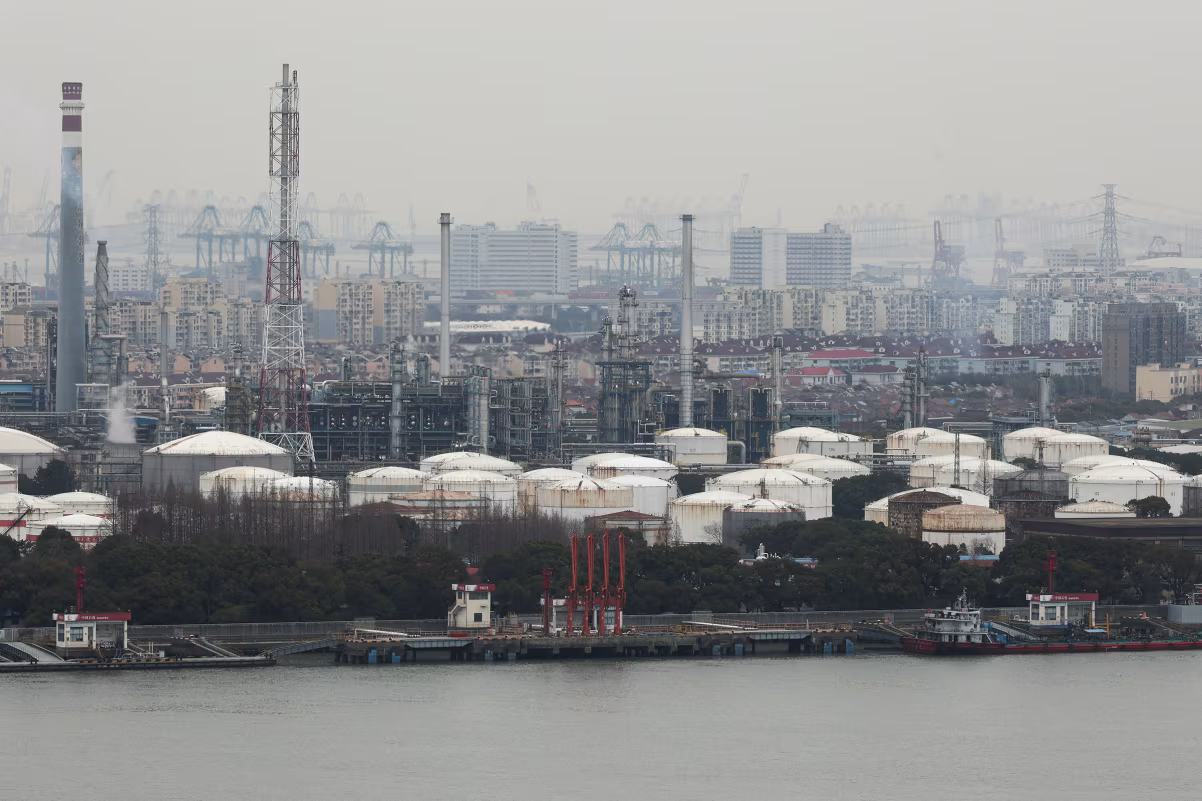
Oil storage tanks and facilities in Shanghai, China, on March 26, 2026. Go Nakamura/Reuters/File The International Monetary Fund (IMF) warned that the global economy may soon face a stern test to its resilience. This outlook stems from dwindling emergency oil stocks, rising debt levels and government budget deficits, alongside mounting risks posed by geopolitical tensions. In its World Economic Outlook report released on Tuesday, the IMF noted that the global economy has weathered the fallout from the Middle East conflict over the past six months better than anticipated. The rerouting of oil supplies away from the Strait of Hormuz and the release of strategic energy reserves, which are measures that helped mitigate the impact of the US-Iran conflict on oil prices, drove this resilience. Declining Oil Reserves However, the report noted a decline in emergency oil stocks, warning that high debt levels and fiscal deficits in many countries could limit governments’ ability to shield consumers from new waves of price hikes. The IMF said that the global economy could soon test the limits of its resilience unless nations work to boost production capacity and rebuild the reserves needed to weather crises; it pointed out that dwindling energy stocks leave markets increasingly vulnerable to the fallout from geopolitical shocks and supply disruptions. In March, the International Energy Agency announced the largest release of emergency oil stocks in its history, subsequently pledging to accelerate the process following a meeting of oil ministers last month. In a sign of the pressures facing energy markets, reports indicated that the US Strategic Petroleum Reserve has fallen to its lowest level since 1982. US President Donald Trump earlier in October agreed with Russian President Vladimir Putin to temporarily lift sanctions on US imports of Russian diesel in an effort to lower fuel prices – however, analysts considered it unlikely that this move would have a tangible impact on prices. Global Growth Forecasts Regarding growth indicators, the IMF raised its forecast for global economic growth in 2026 to 3.1 percent— up from the three percent projected in July’s update— while maintaining its forecast for 2027 at 3.4 percent. The IMF kept its forecast for US economic growth for the current year at 2.3 percent and raised its estimate for 2027 to 2.3 percent, up from the 2.2 percent projected previously. The report warned that sustained high oil prices and rising interest rates could weigh on consumption and investment, leading to a slowdown in economic growth over the coming year. Risks in the Middle East The IMF emphasized that risks to the global economy are skewed to the downside, noting that a continued stalemate or an escalation of conflict in the Middle East could drive up energy and food prices. It added that any new disruptions to energy infrastructure, cyberattacks, or extreme weather events could exacerbate the economic fallout. These warnings come as Trump continues to hint at the possibility of launching a new wave of attacks on Iran in the coming weeks, amidst a lack of clear signs that a peace agreement is within reach. According to the report, global inflation is expected to remain elevated for longer than previously estimated, projected to reach 4.7 percent in 2026 before easing to 4.1 percent in 2027—up from an earlier forecast of four percent. The IMF urged central banks to avoid overreacting to temporary spikes in inflation while remaining prepared to act swiftly should signs emerge that it is becoming a sustained trend, emphasizing the importance of flexibility and rapid decision-making amidst economic volatility. Artificial Intelligence Threat In addition to the pressures facing energy markets, the International Monetary Fund warned of potential risks regarding a collapse in AI-linked stock markets. It noted that any sharp downturn in these markets could threaten global financial stability, particularly given mounting concerns about the global economy’s resilience in the face of new shocks.
Declining oil reserves and rising debt threaten global economy: IMF
Full Article
Original Source
Read the full article at Egyptindependent →KhanList aggregates and links to publicly available news content. We do not host full articles from third-party sources. Always verify important information with original sources.