
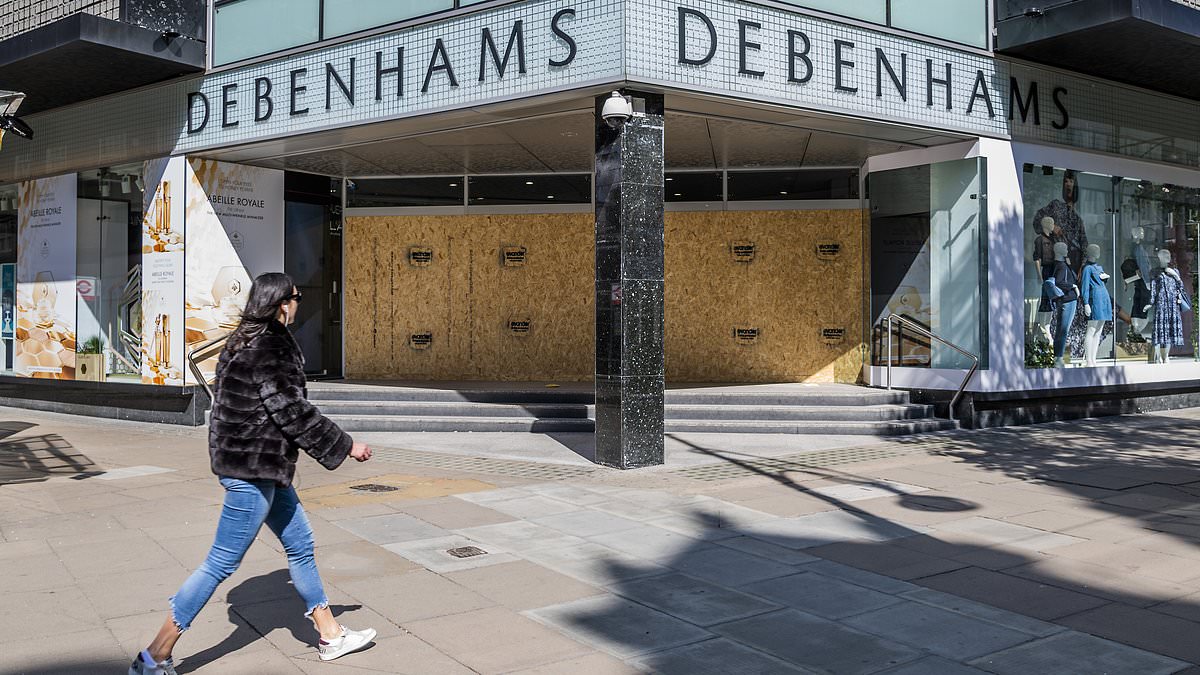
Once a retail titan, Debenhams has had a difficult few years. Fast-fashion firm Boohoo bought the department store chain out of administration in 2021, dispensing with its shops and going online-only in a major blow to the high street.Debenhams has also been the subject of a long-running spat with retail veteran Mike Ashley, whose Frasers Group is its biggest shareholder. More recently, Debenhams sold off youth brand Nasty Gal and announced the sudden departure of its chairman.But it is not all bad. The retailer has long trailed a turnaround in its fortunes, and last week revealed its earnings had bounced back into profit in the previous six-month period. Debenhams, which also owns the Karen Millen and Pretty Little Thing brands, cheered stronger sales and anticipates earnings to improve as it cuts costs.Boss Dan Finley said: 'Our turnaround continues at pace. This is a strong first half, and, importantly, one where growth accelerated as we went through it.'What caused Debenhams' downfall, and will its transformation efforts pay off? Collapse: Debenhams went into administration in April 2020 and Boohoo Group, now known as Debenhams Group, purchased its brand and website From high street giant to online challengerDebenhams was once one of the best-known department store chains, but struggled with lower profits, rising debts and shoppers switching to online. Its collapse in April 2020 led to the closure of all 124 of its shops and 12,000 job losses. Two hundred years of retail history disappeared in the blink of an eye.Boohoo Group, founded in 2006 by Mahmud Kamani and Carol Kane, bought the Debenhams brand and website for £55million in 2021. Following the acquisition, Boohoo Group rebranded itself in March 2025 to become Debenhams Group, operating across five core brands: Debenhams, Karen Millen, boohoo, BoohooMAN, Pretty Little Thing as well as several other labels such as Oasis and Warehouse. Dan Finley: The current boss took up the role in 2024 and quickly launched a turnaround planSuddenly, Debenhams Group had to take the old-style Debenhams people knew and loved and turn it into a modern online retail brand without any physical shops. Dan Finley joined Debenhams Group as chief executive of Debenhams in January 2022. He became the boss of the wider group two years later. In a BBC podcast this year, Finley admitted he was unsure about taking on such a challenging role. What went wrong for Debenhams?The years that have followed the Boohoo group's acquisition of the Debenhams brand and website have been torrid. Debenhams Group and other online retailers enjoyed a surge in demand during the pandemic, when many households went online to buy comfortable clothing to work and rest at home while high streets were closed.But once shops reopened, retailers saw fresh competition from cheap Chinese sellers like Shein and Temu, as well as secondhand marketplaces such as Vinted and Depop. Online firms like Debenhams Group, and particularly its 'youth' brands, took a hit. On a single day in July 2020, more than £1billion was wiped off the value of Debenhams Group, then still known as Boohoo Group, after it was revealed workers were paid less than the minimum wage at its Leicester garment factory. In November 2024, Debenhams Group launched an investor cash call and raised just shy of £40million. Losses across Debenhams Group were widening and a spat with Frasers Group's boss, billionaire Mike Ashley ramped up. In 2024, interim results showed Debenhams Group's losses had more than quadrupled. The group cut more than 1,000 jobs in the year to the end of February 2024 as its net debt rose to £95million.It was also urging investors to reject Ashley's attempt to install himself as chief executive of Debenhams Group at an emergency meeting.Billionaire Ashley, a shareholder in Debenhams Group, had wanted to acquire Debenhams physical shops but missed out on a deal. By March 2025, Finley said sales for the group's founding brand, Boohoo, as well as BoohooMAN and Pretty Little Thing, had fallen sharply as 'we lost our way'. Later that year, pre-tax losses widened to £263.9million, from £164.4million a year earlier, as revenue fell 12 per cent. A tarnished reputation, dwindling sales, more competition and a growing debt pile left the group in need of a radical transformation. Change is under way That has seen Debenhams Group pivot to a marketplace-led business model that it says is 'capital-lite, stock-lite, cost-lite and cash generative'. A marketplace model is when a retailer's website acts as a shop window, allowing third-party brands to sell items on its platform for a fee instead of stocking them itself. Debenhams wants marketplace activity to account for well over half of gross merchandise value (GMV). This is the total value of goods sold before fees and returns. When Finley became the group chief executive in November 2024, he began a multi-year transformation plan but warned it would take time, prompting nervousness among investors. Debenhams Group has automated parts of its supply chain, and cut investment in brands like Warehouse, Oasis, Wallis and Dorothy Perkins. This month, it sold its Sheffield distribution centre for £90million, with the lease reassigned to Primark. It also sold youth brand Nasty Gal to New York-based White Space, which also owns Von Dutch, for nearly £12million. Row: Debenhams Group has been embroiled in various spats with shareholder Mike AshleyJonathan De Mello, founder of retail consultants JDM Retail, told This is Money: 'The group initially floundered because it was weighed down by an asset-heavy infrastructure, soaring logistics costs, and massive customer return rates just as the post-pandemic online shopping boom collapsed. 'Unwinding a legacy fast-fashion empire is taking a long time because transitioning millions of customers and thousands of suppliers onto an entirely new tech and operational ecosystem requires a total structural overhaul.'Has the group reached a turning point?The sale of the group's Sheffield distribution centre is significant and should leave Debenhams Group's net debt at a negligible level by February 2027. Debt has been a key sticking point for investors, so the offloading of lease costs will go some way in strengthening its bottom line. In June 2026, the group said annual losses before tax fell to £108.6million in the year ending February 28, an improvement on the previous year. In its most recent update, Debenhams Group said it expected earnings to continue to improve amid further cost cuts. Adjusted earnings jumped 13.9 per cent to £24million, driven by the Debenhams brand, which accounted for 41 per cent of GMV. The firm said it was on track to secure £100million in cost savings by next year. On September 18, Debenhams Group announced its chairman, Tim Morris, was leaving the business with immediate effect, replaced by Iain McDonald. McDonald, who is a significant shareholder in Debenhams Group, was previously on the firm's board from June 2017 to February 2026. Debenhams Group said the reappointment came as its 'focus moves to rebuilding equity value' in the business after making progress in its turnaround efforts. Mike Ashley's Frasers Group previously wrote to Morris threatening to hold a shareholder vote over his position at the business. Jonathan De Mello added: 'While the results show the turnaround strategy entails a necessary pivot toward a lower-risk, asset-light digital marketplace model - evidenced by the offloading of the Sheffield automation hub and the Nasty Gal brand - it is premature to say the group has turned a corner. 'Fragile consumer confidence and intense competition from aggressive, ultra-cheap global players like Shein and Temu continue to heavily impact the business, meaning that while Q2 volume ticked up slightly to 2.9 per cent, Debenhams Group is still very much in financial triage mode as it attempts to permanently stabilise its baseline.'Are Debenhams shares a buy? Last autumn, shares in Aim-listed Debenhams Group plummeted to as low as 11.3p, but they have since recovered to around 25p. The latest trading update offers some relief to investors, as Debenhams Group continues to cut its debt and boost earnings. Russ Mould, investment director at AJ Bell, added: 'Several key brands returned to growth and the core Debenhams brand is also performing robustly despite a backdrop which is about as gloomy as a wet day in late November.'He added: 'Critically the company has made real progress with its balance sheet, partly thanks to disposals and as it focuses more heavily on cash generation. This will inspire greater confidence in the group's ability to see its way through what looks set to be a testing period.'Others think the retail group could still run into issues. Lale Akoner, an analyst at eToro, said: 'We still think that the shares remain a high-risk turnaround bet. Investors accepting volatility may see value, but sustained sales growth and positive free cash flow would provide proof.'DIY INVESTING PLATFORMSAJ BellAJ BellEasy investing and ready-made portfoliosHargreaves LansdownHargreaves LansdownFree fund dealing and investment ideasinteractive investorinteractive investorFlat-fee investing from £4.99 per monthFreetradeFreetradeInvesting Isa now free on basic planTrading 212Trading 212Free share dealing and no account feeAffiliate links: If you take out a product This is Money may earn a commission. These deals are chosen by our editorial team, as we think they are worth highlighting. This does not affect our editorial independence.Compare the best investing account for you
Debenhams returns to profit: Is the embattled department store finally turning a corner?
Full Article
Original Source
Read the full article at Dailymail →KhanList aggregates and links to publicly available news content. We do not host full articles from third-party sources. Always verify important information with original sources.