
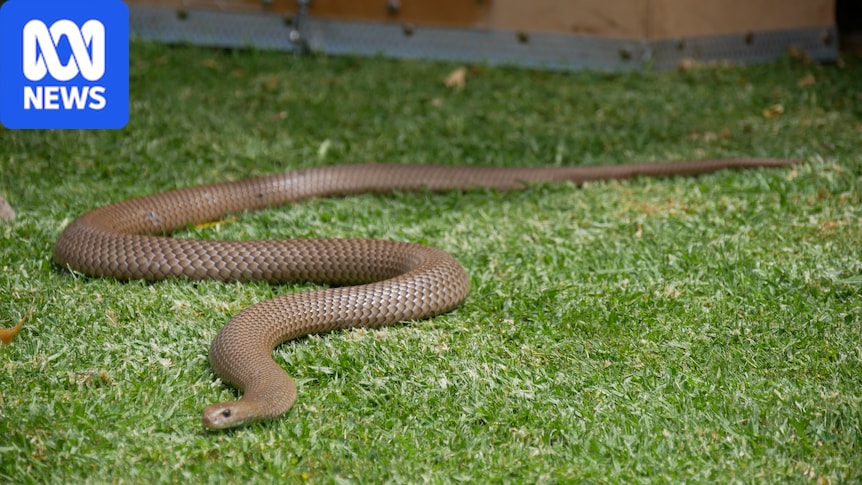
Like just about everyone who has spent their life on the land, Lyndall Scott is no novice when it comes to Australian reptiles.The retired farmer has had plenty of encounters with snakes on her property in Borenore, just outside Orange in the NSW central west."We've had yellow-bellied and red-bellied black snakes, this is reasonably common in our area," she said.Lyndall Scott with her granddaughter and her dog Gus. (Supplied: Lyndall Scott)But in September Ms Scott experienced an unwanted first, when her beloved German Pointer "Gussy" died after being bitten."It was a brown that took out our beautiful boy … we're talking a nearly 2-metre brown,” she said."He had mauled the snake, it happened so quickly, we couldn't have saved him."To see him die like that was shocking."The snake that killed Gussy is believed to be an eastern brown snake and suffered dog bites during the attack. (Supplied: Lyndall Scott)In the days since, Ms Scott has encountered several other snakes in her garden, including a large yellow-bellied black within 5 metres of her back door."It's a little bit more intensive, in terms of two massive predators, highly poisonous, within a couple of weeks," she said."This is rather early, we're talking about variable warmth and snakes come out in the warm, but we're not that warm yet, [so] this seems to us a little bit unusual."Vet adviceVeterinarian Caitlin Henning from Orange Veterinary Hospital said quick treatment was the key to giving pets the best chance to survive a snake bite."Try to keep your pet as quiet and still as possible during travel," she said."The sooner they get to the clinic for treatment, the more chance we will be able to administer life-saving antivenom in time — it can be a matter of minutes."An eastern brown snake. (ABC South East SA: Elsie Adamo)Ms Henning said it time spent trying to identify what sort of snake was involved could be counterproductive."We're very lucky to have a polyvalent antivenom available that treats for most brown and black snake species," she said."But otherwise it isn't necessary … the time is better spent getting to the vet clinic quickly."While the symptoms for each snake bite can vary, the common presenting signs seen are wobbliness, weakness or paralysis, hypersalivation, change to gum colour, vomiting, diarrhoea, dilated pupils or discoloured urine.Ms Henning said many animals acutely collapse, then have a period of apparent "recovery" immediately afterwards."This can be a sign of lethal envenomation and is usually followed by a second life-threatening collapse soon after, so not a sign to sit back and wait," she said.Increased snake bite riskAccording to the World Health Organisation's snake distribution mapping, many deadly snake species are predicted to increase in abundance and come into contact with more people due to climate change.The research found that many snake species would shift their ranges, meaning people would encounter new kinds of snakes in many areas.Stefanie Earl runs Wild Woofers Snake Catching in Bathurst. (Supplied: Stefanie Earl)That is already the case for Central West snake catcher Stefanie Earl."We've picked up a lot more eastern brown snakes than we have in previous seasons," she said."There's been a lot more bigger snakes … a lot more 4, 5, 6-foot snakes rather than the little two-foot snakes."Ms Earl said as snakes came out of brumation, they were on the lookout for water, food, shelter, or a mate."We have had a really warm winter compared to previous years, so I think that that attributes to a little bit of it," she said."We really haven't had much water, we haven't had much rain, so I think they come in looking for water and food closer to homes."
Deadly snakes on the move and pets at risk as weather warms up
Full Article
Original Source
Read the full article at Abc →KhanList aggregates and links to publicly available news content. We do not host full articles from third-party sources. Always verify important information with original sources.