
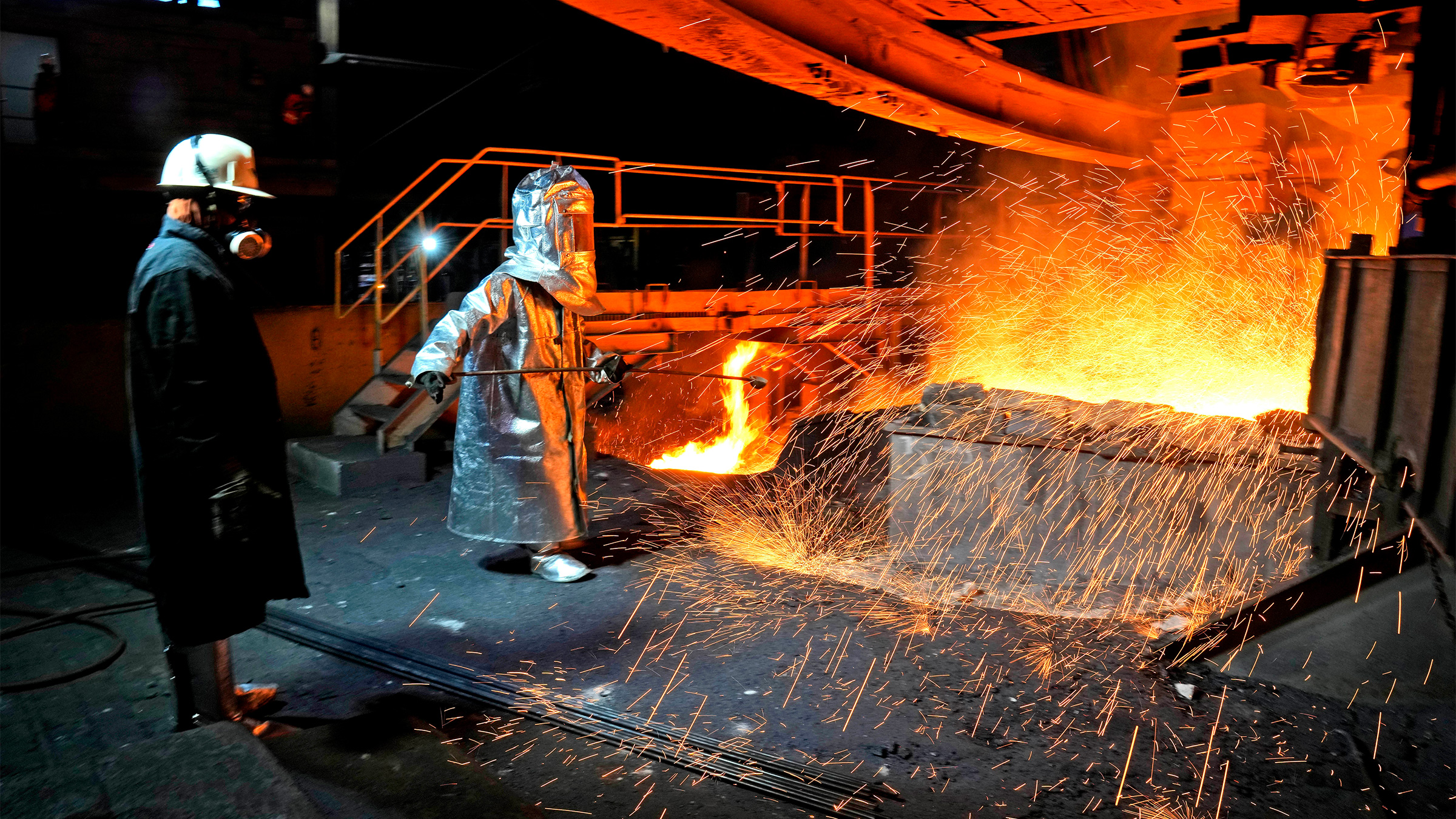
Workers’ unions at the Indonesia Morowali Industrial Park (IMIP), the world’s largest nickel-smelting complex, are resisting a new collective bargaining agreement, citing employers’ refusal to include them in workplace health and safety committees.The dispute follows a series of deadly accidents, including a 2023 furnace explosion that killed 21 workers; government data recorded 39 workplace deaths in the IMIP area between 2017 and 2023.The true toll may be higher, with some accidents going unreported or unrecognized as workplace fatalities; a labor ministry inspector cited 107 deaths at nickel-processing sites nationwide over the six years to 2025.While 10 unions support the proposed agreement, others question whether some labor groups are genuine or management-backed, and are continuing to demand better protections and working conditions. Since it was established in 2015, PT Indonesia Morowali Industrial Park, the world’s largest conglomeration of nickel smelters, has sat at the heart of Indonesia’s ambition to choke off exports of raw resources and force exporters to instead process the ore at home. Majority-owned by China’s Tsingshan Holding Group and home to more than 50 companies and more than 100,000 workers, the industrial park, known as IMIP, processes nickel into stainless steel and the basic materials that go into making batteries for electric vehicles and storage for solar and other intermittent sources of renewable energy. It may also be among Indonesia’s most dangerous industrial places to work. How dangerous, though, is a matter of debate. Unions, representing about 10,000 workers, including those in IMIP smelters, have said they won’t sign on to a collective bargaining agreement, or CBA, in part because employers won’t allow them to participate on health and safety committees that file formal incident reports. The issue has been a live one since December 2023, when a deadly blast at a nickel smelter furnace owned by Indonesia Tsingshan Stainless Steel, a Tsingshan subsidiary, ultimately claimed the lives of 21 workers. On Nov. 7 this year, unions, including the Federation of Independent Industrial Workers’ Unions (FSPIM), the Indonesian Morowali Industrial Labor Union (SBIMI), and the Mining and Energy Industry Labor Unions (SBIPE), called off a five day sit-in at government labor department offices in Morowali district, Central Sulawesi province. The sit-in had been launched in a bid, union leaders say, to forestall efforts on the part of employers to file the agreement with the government, which would have brought it into force. In this photo released by the Palu Search and Rescue Agency (KPP Palu) on Tuesday, March 26, 2025, rescuers search for victims after a nickel waste disposal site collapsed at Chinese-funded nickel smelting plants in Morowali, Central Sulawesi. Image by KPP Palu via AP. Workers have been without a new collective agreement since 2023. The Morowali labor department extended until this month the two-year contract expiring in November 2025, after talks to replace it collapsed. Union members say employers had failed to attend crucial talks that included membership on health and safety committees. “We want to avoid the same situation from last year when their employers just used the old CBA from the year before,” Zainal Arfin, advocacy coordinator and FSPIM delegate at the CBA talks, told Mongabay. During the talks, companies also demanded workers report for their shifts one hour before they start and rejected demands for mandatory breaks after at least four hours, Zainal said. Efforts to reach a spokesperson for IMIP for comment were unsuccessful. “This collective bargaining agreement serves as a foundational instrument for establishing worker welfare,” Komang Jordi, the FSPIM chair, told Mongabay in an interview. “It is perfectly legitimate for workers to reject it if they believe it does not serve the interests of the working class.” Thirty-nine workers, including Indonesian and Chinese nationals, have died in the IMIP area from workplace accidents during the seven years to 2023, when employment at the industrial park surged roughly tenfold to 74,000 people, according to government data. But what counts as a workplace fatality is at issue. One example: back-to-back accidents at PT Dexin Steel Indonesia (DSI), a steelmaker operating in the industrial park, in October 2024. An explosion and fire killed an Indonesian crane worker, prompting IMIP to issue a public statement. The following day, a Chinese national working on repairs at the same site was reportedly taken to hospital for severe dehydration, and later died. There has been no public statement from the company or government officials on the latter incident. Aerial photograph of the nickel processing facilities in Morowali. Image by Iqbal Lubis/The EITI via Flickr (CC BY-SA 2.0). Limited time and resources to verify incidents that occur in remote places, plus an often distracted public, mean many accidents go unnoticed, Li Qiang, executive director of China Labor Watch, told Mongabay in a written message. China Labor Watch first reported the fatality of the Chinese national at DSI. “We sometimes share information about these incidents with journalists, but news outlets are not always interested in reporting them,” Li said. “As a result, the accidents that become public may represent only a small portion of those that actually occur.” There were a total of 107 fatalities at nickel processing sites during the six years to 2025, according to a media report citing labor ministry inspector Hugo Nainggolan. Hugo, who is also a Ph.D. candidate at the University of Indonesia, painted a picture of a culture among nickel processors of targets first, safety second. The companies “work in a way where all that matters is that their targets keep moving,” Hugo is quoted as saying. To be sure, the dissenting unions that are balking at the new agreement are in the minority. Ten have lined up in favor, including the Metal, Machinery, and Electronics Federation under the Confederation of All-Indonesia Workers’ Union (KSBSI). “We hope that there is a path toward reaching an agreement so that we don’t stagnate with the last CBA,” Bernard Rolensius Siahaan, secretary of the federation’s Morowali branch, said in a statement. But the authenticity of other labor groups involved in the talks may be in doubt, said Nabiyla Risfa Izzati, a labor law lecturer at the Faculty of Law at Gadjah Mada University. Rules introduced after the end of the Suharto era in 1998 made it possible to organize unions with as few as 10 members, paving the way for management interference during labor talks. “To have so many unions involved is puzzling,” Nabiyla told Mongabay in an interview. “This might be a case where companies worry they can’t control a union, so they organize a management union.” Women and children clean clams collected from the Laa River, North Morowali. Some villagers say that nickel mines are polluting the river. Image by Iqbal Lubis/The EITI via Flickr (CC BY-SA 2.0). Komang, the FSPIM chairman, citing management absences from the talks and the one-year extension of the previous agreement, said he’s holding out for a better deal. Indonesian law requires unanimous consent from all unions before a collective agreement goes into force. “We will continue to lodge protests and seek improvements to this collective bargaining agreement,” Komang said. “We have the right to reject it.” Banner image: A worker in a protective suit pokes a metal rod to tap slag from a smelting furnace at PT Vale Indonesia’s nickel processing plant in Sorowako, South Sulawesi, September 2023. Image by AP Photo/Dita Alangkara. Credits Topics
Deadly accidents loom over labor dispute at Indonesia’s largest nickel hub
Full Article
Original Source
Read the full article at News →KhanList aggregates and links to publicly available news content. We do not host full articles from third-party sources. Always verify important information with original sources.